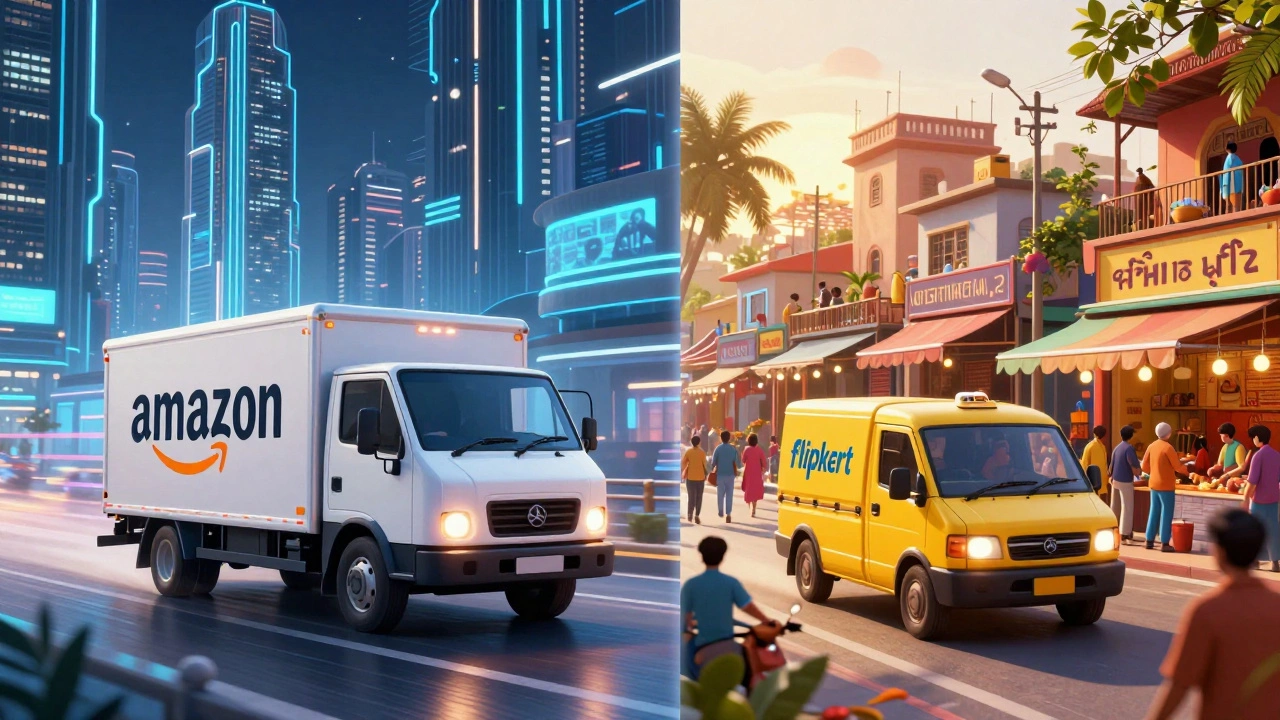
Amazon vs Flipkart: The Ultimate Showdown
Select the two platforms you want to compare to see a head-to-head breakdown of their strengths.
Amazon India
Launched 2013Global giant with Prime ecosystem
Flipkart
Founded 2007Walmart-owned local favorite
Comparison Verdict
Platform A
-
Platform B
-
| Category | Winner | Why? |
|---|
The Indian digital marketplace is a battleground of giants. When you ask who is the biggest e-commerce player in India, the answer isn't just one name-it’s a fierce duopoly between Amazon India and the subsidiary of Walmart that owns Flipkart. These two platforms control the vast majority of organized retail sales online. However, understanding "biggest" requires looking at different metrics: market share, gross merchandise value (GMV), and user trust. While Amazon often leads in overall revenue globally, Flipkart frequently claims the top spot in specific categories like fashion and electronics within India.
If you are exploring other international digital directories or niche online resources while researching global commerce trends, you might find interesting contrasts in how different regions handle online listings, such as this directory for specialized services abroad.
Understanding the Duopoly: Amazon vs. Flipkart
To grasp the landscape, we must look at the two titans. Amazon India launched its operations in 2013, bringing its global logistics prowess and Prime membership model to the subcontinent. It focuses heavily on fast delivery, a wide range of products from groceries to cloud services via AWS integration, and strong seller support tools.
On the other side stands Flipkart, which was founded in 2007 and later acquired by Walmart in 2018. Flipkart holds a deep advantage in local consumer behavior insights, especially in tier-2 and tier-3 cities where it pioneered cash-on-delivery options early on. Its Big Billion Days sale consistently rivals Amazon's Great Indian Festival in generating massive traffic spikes.
Both platforms operate under strict Foreign Direct Investment (FDI) regulations in India, which limit their ownership stakes in marketplace entities. This regulatory environment forces them to innovate through logistics networks rather than direct inventory hoarding, leading to robust infrastructure development across the country.
Market Share and Revenue Metrics
When analysts discuss market share, they refer to Gross Merchandise Value (GMV). In recent fiscal years, the combined GMV of Amazon and Flipkart has accounted for over 60% of India's organized e-commerce sector. Exact figures fluctuate quarterly due to seasonal sales events, but industry reports from firms like RedSeer and Bain & Company suggest that Amazon India generates approximately $15-$20 billion in annual GMV, while Flipkart closely trails with similar numbers depending on the quarter.
| Platform | Founded | Parent Company | Key Strengths | Primary User Base |
|---|---|---|---|---|
| Amazon India | 2013 | Amazon.com Inc. | Logistics speed, Prime ecosystem, diverse catalog | Urban professionals, metro users |
| Flipkart | 2007 | Walmart Inc. | Local language support, fashion dominance, tier-2/3 reach | Mass market, younger demographics |
| Myntra | 2007 | Flipkart Group | Pure-play fashion, brand partnerships | Fashion-conscious millennials |
| JioMart | 2019 | Reliance Industries | Offline-online integration, grocery focus | General consumers, grocery shoppers |
While Amazon and Flipkart lead in general merchandise, specialized players hold significant niches. For instance, Myntra dominates the online fashion segment, controlling nearly 40% of the apparel e-commerce market. Meanwhile, Nykaa leads in beauty and personal care. These vertical-specific platforms challenge the generalists by offering curated experiences and deeper brand integrations.
The Rise of New Challengers: JioMart and Meesho
The narrative of "biggest" is evolving. Reliance Industries entered the fray with JioMart, leveraging its massive network of offline Fair Price stores and Jio digital users. By integrating online ordering with physical store pickup, JioMart targets the everyday essentials market, particularly groceries, which represents the largest potential growth area in Indian e-commerce.
Another disruptor is Meesho, which focuses on social commerce. Meesho allows resellers to share product links on WhatsApp and Facebook, enabling micro-entrepreneurs-often women in smaller towns-to earn commissions. This model bypasses traditional marketing costs and taps into the vast unorganized retail sector, making Meesho one of the fastest-growing apps in terms of downloads and active users in lower-tier cities.
These challengers force Amazon and Flipkart to adapt. We see increased investments in quick commerce (delivery under 10 minutes) through subsidiaries like Blinkit (owned by Zomato, but competing directly with Amazon Fresh and Flipkart Minutes) and Zepto. The competition is no longer just about who has more products, but who can deliver faster and cheaper.
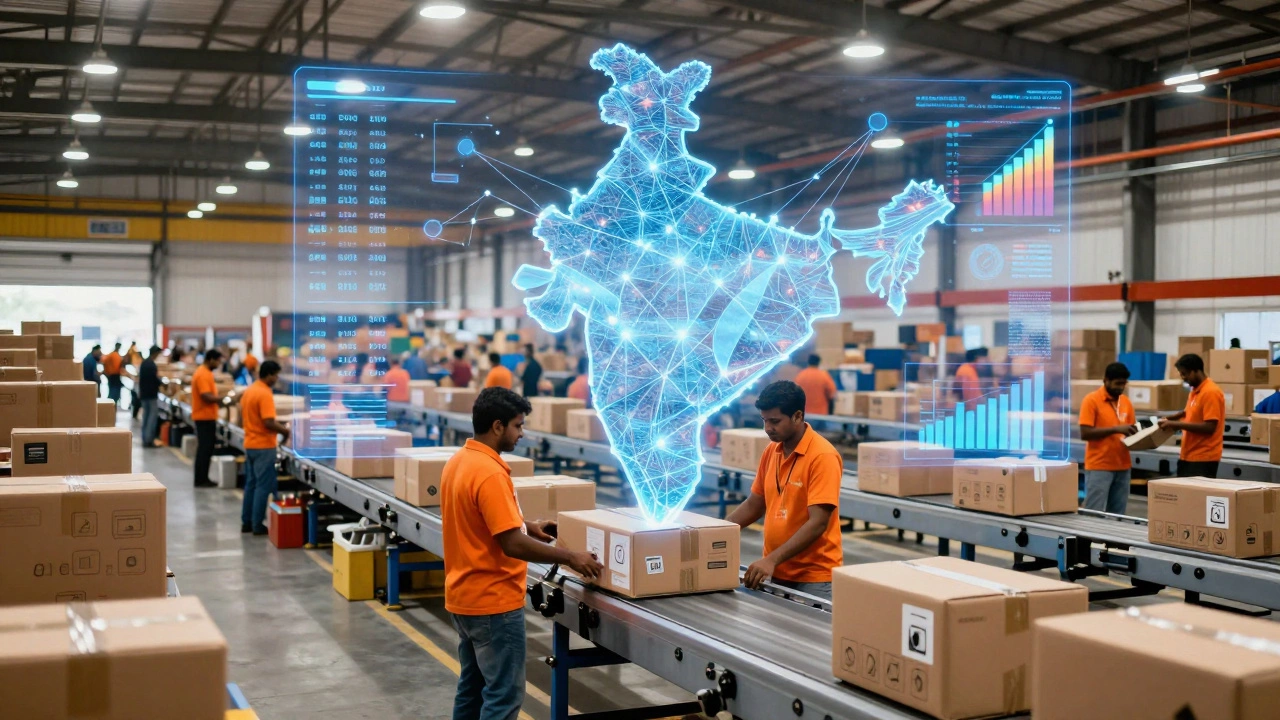
Factors Defining the "Biggest" Player
Defining the biggest e-commerce entity involves several key attributes:
- User Base Size: Monthly Active Users (MAUs) indicate popularity. Both Amazon and Flipkart boast over 100 million MAUs each, but engagement levels vary.
- Logistics Network: Ownership of last-mile delivery infrastructure reduces dependency on third parties. Amazon Logistics and Ekart (Flipkart’s arm) cover thousands of pin codes.
- Seller Ecosystem: The number of registered sellers reflects platform health. Amazon supports millions of small businesses through its Seller Central program.
- Technology Infrastructure: Cloud computing capabilities, AI-driven recommendations, and fraud detection systems differentiate tech-heavy players.
In terms of pure transaction volume during peak seasons like Diwali, Flipkart often edges out Amazon in electronics sales due to aggressive bundling and exchange offers. Conversely, Amazon maintains an edge in books, home goods, and cross-border imports.
Impact on Small Businesses and Sellers
For entrepreneurs, choosing the right platform depends on target audience. Amazon attracts higher-income urban customers willing to pay premium prices for reliability. Flipkart appeals to price-sensitive buyers seeking value deals. Many successful sellers list on both to maximize visibility.
However, rising customer acquisition costs and commission fees pose challenges. Platforms now charge referral fees ranging from 5% to 20%, plus optional advertising spend. This squeezes margins for small vendors unless they optimize listings using SEO techniques specific to each marketplace algorithm.
Additionally, return rates remain high in categories like fashion and electronics. Efficient reverse logistics become critical. Sellers who invest in quality packaging and accurate product descriptions experience fewer returns, improving their account health scores.

Future Trends Shaping Indian E-commerce
Looking ahead, several trends will redefine leadership:
- Bharat Focus: Growth lies beyond metros. Platforms investing in vernacular interfaces and voice search will capture new users.
- Quick Commerce Expansion: Instant delivery for groceries and FMCG items is becoming standard expectation in major cities.
- Sustainability Initiatives: Eco-friendly packaging and carbon-neutral shipping options attract conscious consumers.
- Regulatory Changes: Government policies regarding FDI limits and data localization may reshape competitive dynamics.
As internet penetration deepens and smartphone affordability increases, the total addressable market expands rapidly. The winner won’t necessarily be the one with the most capital, but the one best aligned with local needs and technological innovation.
Conclusion: Who Truly Leads?
There is no single definitive answer to who is the biggest e-commerce in India because leadership shifts based on metric choice. If measuring by global parent company valuation and tech infrastructure, Amazon holds sway. If evaluating domestic cultural resonance and mass-market penetration, Flipkart remains formidable. Meanwhile, emerging players like Meesho and JioMart threaten to fragment the market further by addressing underserved segments.
Consumers benefit from this rivalry through better prices, faster deliveries, and wider selections. Businesses gain access to scalable distribution channels. Ultimately, the "biggest" title belongs to whichever platform consistently delivers superior value to its unique user base while navigating complex regulatory landscapes.
Is Amazon bigger than Flipkart in India?
It depends on the metric used. Amazon generally has higher global revenues and stronger logistics technology, while Flipkart often leads in monthly active users during festive sales and has deeper penetration in tier-2 and tier-3 cities. Both companies report similar Gross Merchandise Values annually, making them neck-and-neck competitors.
What is the market share of Amazon and Flipkart combined?
Together, Amazon and Flipkart control approximately 60-70% of India's organized e-commerce market. The remaining share is distributed among niche players like Myntra, Nykaa, Meesho, and regional startups focusing on specific categories like groceries or fashion.
Which e-commerce app is best for small sellers in India?
For small sellers, Amazon offers robust tools for international reach and professional branding, whereas Flipkart provides easier entry points for budget-friendly products targeting mass markets. Meesho is ideal for zero-inventory reselling models. Choosing the best platform depends on your product type, pricing strategy, and target demographic.
How does JioMart compete with Amazon and Flipkart?
JioMart leverages Reliance's extensive offline retail network and Jio's digital subscriber base. Instead of competing purely on variety, it focuses on grocery and daily essentials, offering hybrid online-offline pickup options that appeal to cost-conscious shoppers in semi-urban areas.
Are there any new regulations affecting e-commerce in India?
Yes, the Indian government continues to refine rules around Foreign Direct Investment (FDI) in e-commerce, restricting discounts funded by investors and limiting inventory holding by marketplace operators. Data localization laws also require user data to be stored within India, impacting how global platforms operate locally.
