
GST Cash Flow Impact Calculator
Understand how delayed payments from buyers can lock up your working capital due to GST compliance rules.
Financial Impact Analysis
Tax Paid Upfront
Cash Blocked
This is the estimated interest you could have saved if you hadn't had to borrow money to cover the GST liability while waiting for payment.
Imagine running a small textile business in Surat. You just received an order from a retailer in Mumbai. Before you can ship the goods, you have to calculate Central Tax, State Tax, and maybe Integrated Tax if it’s interstate. Then, you wait for the buyer to pay so you can claim your Input Tax Credit (ITC). If they delay payment by three months, your cash flow takes a hit, even though you’ve already paid the government. This isn’t a hypothetical nightmare; it’s a Tuesday afternoon for millions of Indian businesses. While GST was pitched as a unified market solution, many entrepreneurs ask: why is GST not suitable in India?
The Goods and Services Tax replaced a complex web of central and state taxes in 2017 with the promise of "One Nation, One Tax." On paper, it looks elegant. In practice, it has created a friction point that stifles agility, especially for small and medium enterprises (SMEs). The issue isn’t that GST is inherently bad-it’s that its design clashes with the ground reality of India’s fragmented economy. Let’s break down why this system often feels more like a burden than a breakthrough.
The Complexity Trap for Small Businesses
Before GST, a small trader might deal with VAT and Excise Duty. It was messy, sure, but it was manageable with a basic accountant. Today, the GST Council meets regularly to tweak rates, classifications, and rules. These changes are frequent and often sudden. For a micro-entrepreneur, keeping up is exhausting. You aren’t just selling products; you’re becoming a part-time tax consultant.
Consider the classification issues. Is a specific type of software service taxed at 18% or 12%? Does a bakery item fall under food grains or prepared food? Misclassification leads to penalties. The GST Network (GSTN) portal, which handles registrations and returns, frequently faces downtime during peak filing periods. When the server crashes on the 20th of the month, late fees pile up regardless of your intent to comply.
- Frequent Rate Changes: Rates shift based on political and economic pressures, forcing constant re-pricing.
- Classification Ambiguity: Similar products often fall into different tax slabs, creating confusion.
- Digital Literacy Gap: Many traditional traders struggle with the mandatory digital filing requirements.
Cash Flow Disruptions via Input Tax Credit
This is arguably the biggest pain point. The core mechanism of GST is the Input Tax Credit (ITC), which allows businesses to deduct the tax paid on purchases from the tax collected on sales. Ideally, this eliminates cascading taxes. But there’s a catch: you can only claim ITC if your supplier files their return and pays the tax.
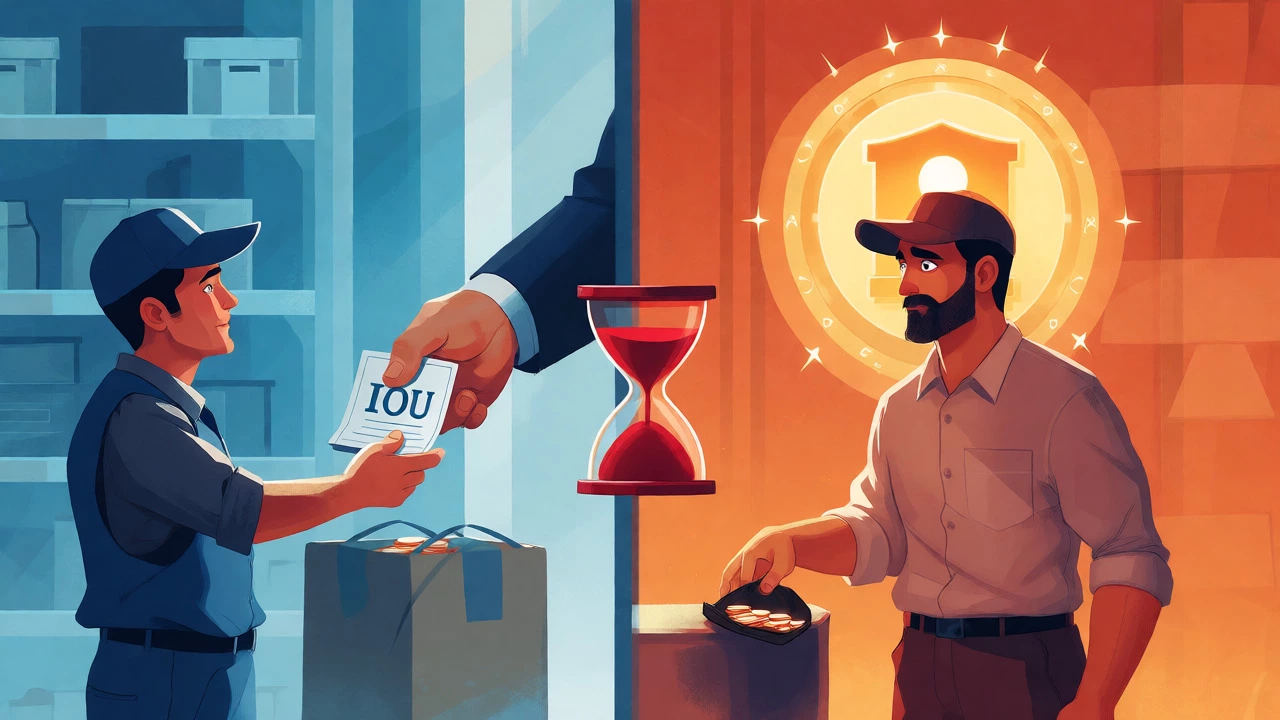
In India, payment cycles are slow. Large corporations often delay payments to smaller vendors by 60, 90, or even 120 days. Meanwhile, the vendor must file their GST return monthly and pay the tax out of pocket. If the buyer doesn’t pay, the vendor’s cash gets stuck. They’ve paid the government but haven’t received money from the client. This mismatch creates a working capital crunch that can kill a profitable business.
| Scenario | Seller Action | Cash Impact |
|---|---|---|
| Buyer pays on time | Claims ITC immediately | Neutral/Positive |
| Buyer delays payment by 3 months | Pays GST upfront, waits for refund/credit | Negative (Working Capital Blocked) |
| Buyer defaults completely | Must reverse ITC claimed earlier | Severe Loss + Penalty Risk |
The Exclusion of Key Sectors
A true unified tax should cover all goods and services. GST fails here because major sectors remain outside its net. Petroleum products, such as petrol and diesel, continue to be taxed by individual states through VAT and excise duties. Similarly, electricity, alcohol for human consumption, and real estate (for primary buyers) are largely excluded.
Why does this matter? Because these are high-value inputs for almost every business. A logistics company pays high fuel costs but cannot claim full ITC on that fuel. This partial exclusion reintroduces the very cascading effect GST was meant to eliminate. It also encourages states to hike fuel prices to compensate for lost revenue, indirectly inflating transport costs across the board.
Compliance Costs vs. Revenue Benefits
For large corporations, GST is manageable. They have dedicated teams and automated software. For the unorganized sector, which constitutes a massive portion of India’s GDP, the compliance cost is disproportionate. Hiring a professional to handle monthly GSTR-1, GSTR-3B, and annual returns costs money. Software subscriptions cost money. Time spent learning the portal is time not spent selling.
Studies from the National Institute of Public Finance and Policy (NIPFP) have highlighted that while GST improved formalization, the administrative burden disproportionately affects smaller entities. The threshold limit for registration helps some, but those slightly above the limit face a steep jump in overheads. This discourages growth-many businesses deliberately stay small to avoid the "GST trap."

Inter-State Trade Friction
GST introduced the concept of Integrated GST (IGST) for inter-state transactions, replacing the old Entry Tax and Octroi systems. This was supposed to make moving goods across borders seamless. However, enforcement varies wildly between states.
Some states still maintain checkposts or conduct random inspections to ensure e-way bills are valid. An e-way bill is a mandatory electronic document required for transporting goods valued over ₹50,000. Generating it requires accurate data entry. Errors lead to vehicle detention. Imagine your truck being held for six hours at a state border because of a typo in the HSN code. That’s lost revenue and frustrated drivers. The physical infrastructure hasn’t fully caught up with the digital mandate.
Is There a Better Way Forward?
So, is GST doomed? No. It’s a work in progress. The government has introduced schemes like the QRMP (Quarterly Return Monthly Payment) for smaller taxpayers to ease the burden. Simplification of return forms is ongoing. But the fundamental critique remains: GST assumes a level of digital sophistication and financial discipline that the average Indian small business owner doesn’t always possess.
If you’re running a startup or a small shop, don’t fight the system alone. Use cloud-based accounting tools that automate GST calculations. Keep meticulous records of invoices to protect your ITC claims. And remember, while GST is controversial, it has undeniably brought more businesses into the formal economy, potentially opening doors to bank loans and institutional investment later on.
Why do small businesses find GST difficult to manage?
Small businesses struggle due to high compliance costs, frequent rule changes, and the need for digital literacy. Unlike large firms, they lack dedicated finance teams, making monthly filings and ITC reconciliation time-consuming and expensive relative to their revenue.
How does GST affect cash flow for suppliers?
Suppliers must pay GST to the government before receiving payment from buyers. If buyers delay payments, suppliers face a working capital crisis because their funds are locked in Input Tax Credits until the buyer files their return and makes the payment.
Which sectors are excluded from GST in India?
Major exclusions include petroleum products (petrol, diesel), electricity, alcohol for human consumption, and real estate transactions for primary homebuyers. These sectors remain under separate state or central tax regimes, preventing full input credit chains.
What is the E-Way Bill and why is it problematic?
The E-Way Bill is a mandatory electronic document for transporting goods worth over ₹50,000. It is problematic because errors in generation can lead to vehicle detention at state borders, causing logistical delays and additional costs despite the intention to streamline interstate trade.
Does GST benefit consumers?
In theory, yes, by eliminating cascading taxes. In practice, benefits vary. Essential goods are often zero-rated or low-taxed, but luxury items and services may see price hikes. Consumers rarely see direct price reductions unless competition forces retailers to pass on savings.
