
Digital Marketing Efficiency Calculator
Input Campaign Data
Performance Analysis
Enter your data to see if your campaign is in the 'Failure Zone' or 'Success Zone'.
There is no single number for the failure rate of digital marketing. You won’t find a global statistic saying "70% of campaigns fail" because success depends entirely on how you define it. However, industry data from agencies and platforms like Google and Meta suggests that roughly 60-70% of paid advertising budgets are wasted due to poor targeting, lack of tracking, or misaligned goals. In the context of digital marketing in India, where competition is fierce and consumer behavior shifts rapidly, this waste can be even higher if strategies aren't localized.
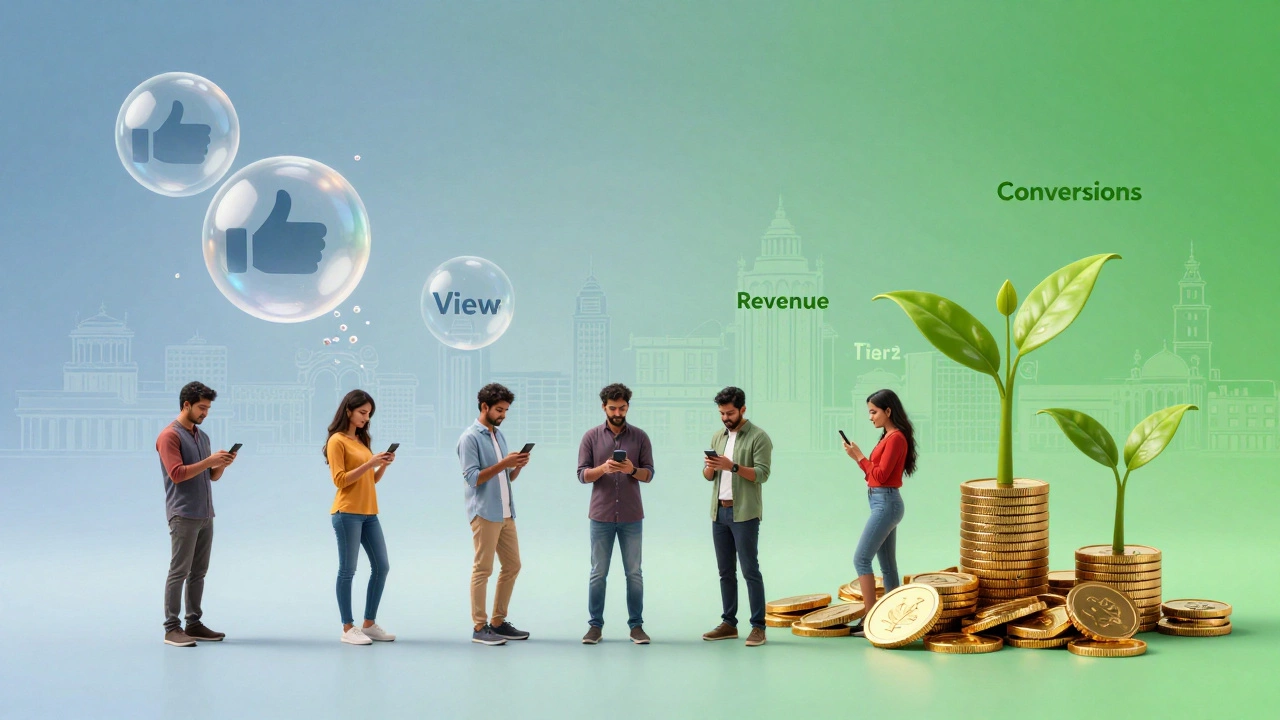
The real question isn't just about failure rates; it's about why so many businesses feel their marketing isn't working. Are you spending money on ads that don't convert? Is your organic reach dropping despite consistent posting? Understanding these pain points requires looking beyond vanity metrics like likes and shares. We need to look at actual revenue impact, customer acquisition costs, and long-term brand value.
Why Digital Marketing Campaigns Fail
Before we talk numbers, let's look at the root causes. Most failures aren't due to the platform itself but rather human error in strategy and execution. Here are the most common reasons campaigns flop:
- Lack of Clear Goals: Many businesses launch campaigns without defining what success looks like. Is it brand awareness? Lead generation? Direct sales? Without a specific goal, you can't measure performance accurately.
- Poor Audience Targeting: In India, with over 800 million internet users, assuming everyone is your customer is a mistake. Broad targeting leads to low relevance scores and high costs per click.
- Inadequate Tracking: If you don't have proper conversion tracking set up (like Google Analytics 4 or Facebook Pixel), you're flying blind. You might see clicks but not know if they lead to purchases.
- Ignoring Mobile Optimization: Over 95% of Indian internet users access the web via mobile. If your landing page isn't mobile-friendly, you'll lose most of your traffic.
- Inconsistent Effort: Digital marketing is not a one-time event. It requires continuous testing, tweaking, and optimizing. Stopping after a few weeks guarantees poor results.
Understanding the Metrics: What Actually Matters?
To determine if your marketing is failing, you need to look at the right metrics. Vanity metrics can make you feel good while hiding underlying problems. Here’s what you should focus on instead:
| Vanity Metric | Real KPI | Why It Matters |
|---|---|---|
| Social Media Likes | Engagement Rate | Likes don't pay bills. Engagement shows genuine interest and algorithm favorability. |
| Website Visits | Conversion Rate | Traffic is useless if visitors don't take action (buy, sign up, contact). |
| Follower Count | Customer Acquisition Cost (CAC) | Followers aren't customers. CAC tells you how much it costs to get a paying client. |
| Impressions | Return on Ad Spend (ROAS) | Being seen doesn't mean being bought. ROAS measures direct financial return. |
If your Conversion Rate is below 2% for e-commerce or 1% for lead generation, you might be experiencing a form of marketing failure. Similarly, if your Customer Acquisition Cost is higher than your Customer Lifetime Value (CLV), your business model is unsustainable.
The Indian Context: Unique Challenges and Opportunities
Digital marketing in India has its own set of dynamics. The market is diverse, with varying levels of digital literacy across states and cities. Here’s how this affects failure rates:
Language Barriers: English-only content misses out on a huge segment of the population. According to recent studies, non-English speakers make up a significant portion of new internet users in Tier 2 and Tier 3 cities. Ignoring regional languages like Hindi, Tamil, Bengali, or Marathi can drastically reduce your reach and effectiveness.
Payment Trust Issues: While UPI (Unified Payments Interface) has revolutionized payments, there is still hesitation among some consumers regarding online transactions, especially for high-ticket items. If your checkout process is complicated or lacks trust signals, cart abandonment rates will skyrocket, leading to perceived marketing failure.
Price Sensitivity: Indian consumers are highly price-sensitive. Aggressive discounting might drive short-term sales but can erode brand value and profit margins. Balancing promotional offers with perceived quality is crucial.
How to Calculate Your Own Failure Rate
You don't need to rely on generic industry stats. You can calculate your own marketing efficiency. A simple way to do this is by using the Marketing Efficiency Ratio (MER).
Formula: Total Revenue / Total Marketing Spend
If your MER is less than 1, you are losing money on every rupee spent on marketing. This is a clear indicator of failure. For most healthy businesses, an MER of 3-5 is considered good, meaning you earn ₹3-₹5 for every ₹1 spent.
Another useful metric is the Payback Period. How long does it take to recover your ad spend? If it takes more than 3 months, you might be burning cash faster than you can generate returns. In fast-moving sectors like fashion or food delivery, payback periods should be under 30 days.
Strategies to Reduce Failure Rates
So, how do you move from the failure zone to success? Here are actionable steps tailored for the current digital landscape:
- Implement Robust Attribution Models: Don't just credit the last click. Use multi-touch attribution to understand how different channels (social media, email, search) contribute to a sale. Tools like Google Analytics 4 help here.
- Focus on Content Quality Over Quantity: Algorithms now prioritize helpful, original content. Instead of posting daily without thought, create fewer, high-value pieces that solve specific problems for your audience.
- Leverage Video Content: Short-form video (Reels, Shorts, YouTube Shorts) dominates attention spans. Create engaging, concise videos that showcase your product or service in action.
- Build Email Lists: Social media algorithms change, but your email list is yours. Offer value (e.g., a free guide or discount) to capture emails and nurture leads directly.
- A/B Test Everything: From ad copy to landing page designs, constantly test variations. Small tweaks can lead to significant improvements in conversion rates.
- Localize Your Approach: As mentioned, use regional languages and cultural references relevant to your target audience in India.

Common Misconceptions About Marketing Failure
Many entrepreneurs blame the platform when things go wrong. "Facebook ads are dead," they say. Or "SEO doesn't work anymore." These are rarely true. More often, the issue lies in implementation. Let's debunk a few myths:
Myth 1: Organic Reach is Dead. While organic reach on platforms like Facebook has declined, it hasn't disappeared. For brands with strong communities, organic posts still drive meaningful engagement. The key is creating shareable, valuable content.
Myth 2: You Need a Huge Budget. Successful digital marketing doesn't require millions. Start small, test hypotheses, and scale what works. Micro-influencers in niche categories often deliver better ROI than celebrity endorsements.
Myth 3: Results Should Be Immediate. Digital marketing, especially SEO and brand building, takes time. Expecting overnight success leads to premature abandonment of strategies that could have worked.
The Role of AI in Modern Marketing
Artificial Intelligence is changing the game. Tools powered by AI can analyze vast amounts of data to predict trends, optimize bids, and personalize content. In India, AI-driven chatbots are becoming essential for handling customer queries in multiple languages simultaneously. Ignoring these tools can put you at a competitive disadvantage, effectively increasing your failure rate relative to competitors who adopt them.
However, AI is not a magic bullet. It requires clean data and clear objectives. Garbage in, garbage out applies here too. Ensure your data infrastructure is solid before relying heavily on automated decisions.
Conclusion: It's About Adaptation, Not Failure
Instead of worrying about a generic failure rate, focus on your own metrics. Track your ROI, monitor your customer acquisition costs, and listen to your audience. Digital marketing is dynamic; what worked yesterday might not work tomorrow. The businesses that succeed are those that adapt quickly, learn from data, and remain customer-centric.
Remember, failure is part of the learning process. Every failed campaign provides insights into what your audience doesn't want, which is just as valuable as knowing what they do. Keep testing, keep optimizing, and stay patient.
What is the average ROI for digital marketing in India?
The average Return on Investment (ROI) varies significantly by industry and channel. Generally, successful campaigns aim for a Return on Ad Spend (ROAS) of 3:1 to 5:1. This means for every ₹1 spent, you earn ₹3 to ₹5. However, this can range from 2:1 for highly competitive sectors to 10:1 for niche B2B services.
Why do most digital marketing campaigns fail?
Most failures stem from poor planning rather than platform issues. Common culprits include undefined goals, incorrect audience targeting, lack of conversion tracking, and inconsistent effort. Additionally, ignoring mobile optimization and local cultural nuances in markets like India can severely hinder performance.
Is SEO still effective in 2026?
Yes, SEO remains one of the highest ROI channels for long-term growth. While algorithms evolve, the core principle of providing high-quality, relevant content to users holds true. With the rise of AI-generated content, authenticity and expertise (E-E-A-T) are becoming even more critical ranking factors.
How much should I spend on digital marketing?
A common benchmark is to allocate 5-10% of your total revenue to marketing. For startups, this might be higher as you build brand awareness. The key is to start with a budget that allows for meaningful testing and scaling based on proven results, rather than guessing.
What are the best digital marketing channels for Indian audiences?
For India, a mix of platforms works best. WhatsApp is crucial for communication and commerce. Instagram and YouTube dominate visual content consumption. LinkedIn is ideal for B2B targeting. Search engines (Google) remain vital for intent-based queries. Tailor your choice based on where your specific audience spends their time.
