Franchise Suitability & Investment Estimator
Investor Profile
Recommendation
Waiting...Select your profile and click Analyze to see the best franchise sectors for you.
Everyone wants a shortcut to wealth, and buying into an established brand feels like the ultimate cheat code. You get the logo, the processes, and the customer base on day one. But when you ask "who is the most successful franchise?" the answer isn't just about who has the most stores. It’s about who survives, scales, and actually puts money back in your pocket.
In the Indian market, success looks different than it does in the US or Europe. We deal with intense price sensitivity, diverse regional tastes, and a logistical nightmare that would break lesser brands. So, who really wins here? Is it the global giant serving coffee, or the local hero selling snacks? Let's look at the data, the models, and the reality of running these businesses in 2026.
The Definition of Success: Scale vs. Profit
Before we name names, we need to agree on what "successful" means. For a corporation like Tata Group, a multinational conglomerate known for its diverse portfolio including automotive, IT, and retail, success is measured in billions of rupees in revenue. For you, the individual investor, success is measured by Return on Investment (ROI) and break-even time.
A franchise can have 1,000 outlets but still be a terrible investment if the royalty fees eat all your profit. Conversely, a smaller chain might have only 50 outlets but offer a 40% net margin because their operational costs are low. When evaluating the best franchise opportunities in India, you must look at the unit economics, not just the billboard presence.
- Market Penetration: How many cities do they cover?
- Brand Equity: Do customers trust them blindly?
- Support System: Does the franchisor provide training and marketing?
- Scalability: Can you open multiple units easily?
The Global Titans: Dominating the Premium Segment
If we talk about pure brand value and consistency, the global players are hard to beat. They bring standardized operations that work anywhere in the world. In India, this segment is dominated by food and beverage giants.
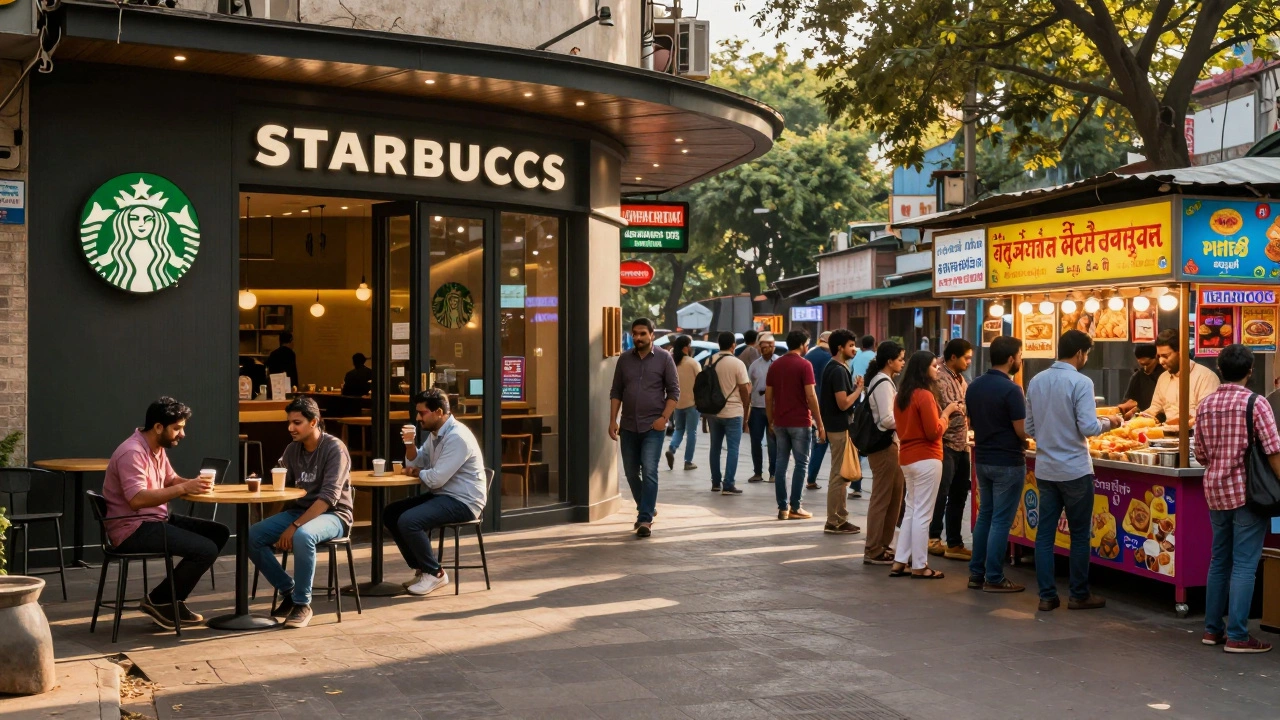
Starbucks is an American multinational coffeehouse chain known for its premium coffee experience and third-place culture. Since entering India in partnership with Tata Coffee, Starbucks has become a status symbol. Their success lies in creating an environment where people stay for hours. For a franchisee, the advantage is massive brand recognition. You don’t need to convince anyone to try Starbucks; you just need to manage the store efficiently. However, the initial investment is high, often exceeding ₹3-5 crores depending on the location size.
Then there is McDonald's, the world's largest fast-food restaurant chain specializing in hamburgers, fries, and breakfast items. McDonald’s operates on a master franchise model in India through Allied Blenders & Distillers. Their supply chain is legendary. They grow their own potatoes and raise chickens specifically for their burgers. This vertical integration keeps costs low and quality consistent. If you are looking for a franchise that teaches you rigorous operational discipline, McDonald’s is the gold standard. The challenge? The competition from local QSRs (Quick Service Restaurants) is fierce, and margins can be thin due to heavy promotional activities.
The Local Heroes: Understanding the Indian Palate
While global brands shine in metros, the real volume game in India is played by domestic chains. These brands understand the local taste buds and pricing psychology better than any foreign entity could.
Domino's Pizza India is a leading pizza delivery chain in India, part of Jubilant FoodWorks, known for its tech-driven ordering system and rapid delivery. Domino’s didn’t just sell pizza; they sold technology. Their app-first approach allowed them to dominate the delivery space long before Swiggy or Zomato became giants. For franchisees, Domino’s offers a proven model with strong digital infrastructure. The key to their success is speed and consistency. You can order a Margherita from Delhi or Bangalore, and it tastes the same. This predictability reduces risk for investors.
Another powerhouse is Bajaj Finserv, a financial services platform offering insurance, loans, and investment products through a network of advisors. While not a food brand, Bajaj Finserv’s franchise model for insurance advisory is incredibly successful. It requires low capital investment compared to retail stores. The demand for financial literacy and insurance in India is skyrocketing. If you have good communication skills and a network, this is one of the most scalable franchises available. It’s less about managing inventory and more about building relationships.
Sector Breakdown: Where is the Money?
To find the right fit, you need to look beyond the brand name and examine the sector. Different industries offer different risk-reward profiles.
| Sector | Initial Investment Range | Break-even Period | Risk Level | Key Success Factor |
|---|---|---|---|---|
| Food & Beverage (QSR) | ₹10 Lakhs - ₹5 Crores | 18-36 Months | High | Location & Footfall |
| Education & EdTech | ₹5 Lakhs - ₹25 Lakhs | 12-24 Months | Medium | Teacher Quality & Results |
| Healthcare & Diagnostics | ₹15 Lakhs - ₹1 Crore | 24-48 Months | Low-Medium | Trust & Accuracy |
| Retail & Convenience Stores | ₹5 Lakhs - ₹20 Lakhs | 12-24 Months | Medium | Supply Chain Efficiency |
| Financial Services | ₹1 Lakh - ₹5 Lakhs | 6-12 Months | Low | Sales Network |
Notice how Financial Services have the lowest barrier to entry. This makes them attractive for first-time entrepreneurs. On the other hand, Healthcare is recession-proof. People will always need health checkups, regardless of the economy. Thyrocare and Dr. Lal PathLabs are examples of diagnostic chains that have successfully expanded through franchises by leveraging trust and scientific accuracy.
Why Education Franchises Are Booming
India is obsessed with education. Parents will spend almost anything to give their children a competitive edge. This creates a fertile ground for educational franchises. Brands like Byju's (despite recent controversies, the model remains relevant) and Aakash Institute have shown the scale possible in this sector.
However, the real opportunity lies in niche coaching centers. Think about coding bootcamps for kids, spoken English classes, or competitive exam preparation for government jobs. These require minimal infrastructure-just a room, a projector, and good teachers. The recurring revenue model (monthly fees) provides cash flow stability that seasonal businesses lack.
The downside? High dependency on human resources. If your best teacher leaves, your students leave. Unlike a burger joint where the product is standardized, education is personal. You need robust retention strategies and a strong brand promise to keep parents coming back.
Pitfalls to Avoid When Choosing a Franchise
Not every franchise is a golden ticket. Many new entrepreneurs fall into traps set by aggressive sales tactics. Here is what you must watch out for:
- Hidden Costs: The initial fee is just the start. Ask about mandatory marketing contributions, software licensing fees, and renewal charges. Some franchisors make money primarily by forcing you to buy supplies from them at inflated prices.
- Territory Rights: Ensure your territory is protected. If the franchisor opens another outlet next door, your profits will vanish. Get this in writing.
- Lack of Support: A successful franchise is a partnership. If the head office ignores your calls or provides outdated training materials, run away. Talk to existing franchisees, not just the ones the company refers you to.
- Overvaluation: Don’t pay for hype. Just because a brand is famous doesn’t mean it’s profitable for franchisees. Look at the Disclosure Document (FDD) if available, or similar legal disclosures in India, to see average earnings claims.

How to Evaluate Your Own Fit
The "most successful" franchise for someone else might be a disaster for you. It depends on your background, capital, and risk appetite.
If you are a corporate professional looking for a side hustle, a home-based service franchise like cleaning or tutoring might suit you. You have low overheads and flexible hours. If you have significant capital and want a legacy business, a large-format QSR or healthcare center could be the way to go. But remember, these require active management. You can’t just invest and walk away.
Also, consider your location. A luxury cafe franchise works in South Mumbai or Indiranagar, Bangalore. It will fail in a tier-3 city where consumers prioritize value over ambiance. Localize your choice. Research the demographics of your target area. What do people there spend money on? Is it convenience, status, or savings?
The Future of Franchising in India
By 2026, the landscape is shifting towards hybrid models. Physical stores are no longer enough. Successful franchises now integrate online ordering, loyalty apps, and social media engagement seamlessly. Brands that ignore the digital channel are losing relevance.
We also see a rise in "dark kitchens" and cloud franchises. You don’t need a dine-in area; you just need a kitchen optimized for delivery. This reduces rent and utility costs significantly. This model is particularly attractive for young entrepreneurs with limited capital who want to enter the food industry.
Furthermore, sustainability is becoming a key differentiator. Consumers, especially younger generations, prefer brands that use eco-friendly packaging and source locally. Franchises that adapt to these trends will likely dominate the next decade.
Final Thoughts on Finding Your Winner
There is no single "most successful" franchise. There is only the most successful franchise for your situation. Do your homework. Visit outlets incognito. Talk to current franchisees. Analyze the numbers. The brands mentioned above-Starbucks, Domino’s, Bajaj Finserv-are leaders because they execute well. But leadership doesn’t guarantee your profitability. Your execution does.
Start small if you’re unsure. Test the waters with a lower-investment model before committing your life savings. The Indian market is vast and forgiving of mistakes, but only if you learn quickly. Choose a partner who respects you as a business owner, not just a revenue source.
What is the minimum investment required for a franchise in India?
The minimum investment varies widely by sector. Home-based service franchises can start under ₹1 lakh. Small retail kiosks may cost ₹5-10 lakhs. Large QSR or healthcare franchises typically require ₹20 lakhs to ₹5 crores or more. Always factor in working capital for the first 6 months.
Which franchise sector has the highest ROI in 2026?
Financial services and educational franchises often show higher ROIs due to lower capex and recurring revenue models. However, high-end QSRs in prime locations can also yield significant returns if managed efficiently. ROI depends heavily on location and operational efficiency.
Is it better to choose a national or international brand?
International brands offer stronger brand equity and standardized systems but come with higher fees and stricter controls. National brands often provide better localization support and flexibility. Choose based on your target audience and budget.
How do I verify the credibility of a franchisor?
Check their registration with the Ministry of Corporate Affairs. Look for reviews from existing franchisees on independent forums. Verify their track record of store closures vs. openings. A reputable franchisor will transparently share performance data and legal documents.
Can I run a franchise as a passive investment?
Most franchises require active involvement, especially in the first two years. While you can hire managers, your oversight is crucial for maintaining standards and profitability. Truly passive investments are rare in the franchise model unless you are investing in a large portfolio.
