Indian E-Commerce Market Share Simulator
Select a priority factor to see which platform dominates that specific metric in the Indian market.
Market Dominance by Category
Key Insight:
Amazon generally leads in overall Gross Merchandise Value (GMV) due to its vast logistics network and Prime membership retention.
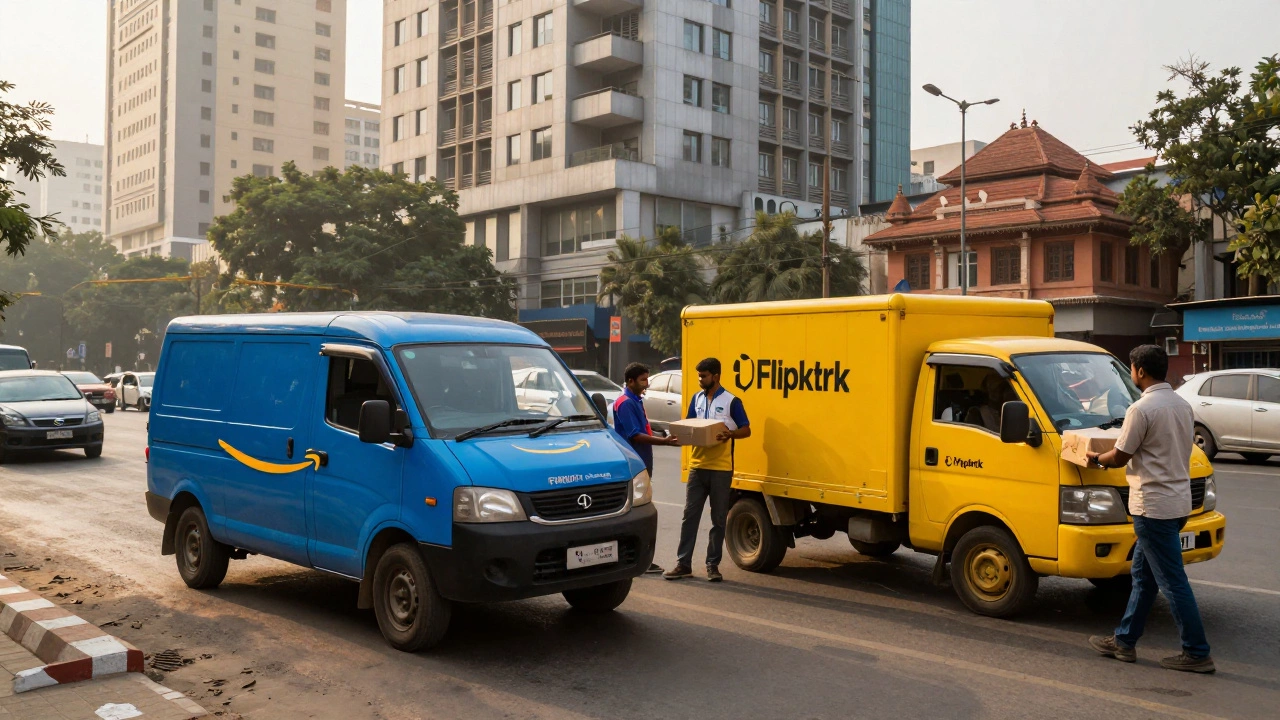
Walking through any major city in India today, you can’t miss the delivery trucks. The blue ones for Amazon is a global technology company that operates one of the world's largest online marketplaces, offering everything from electronics to groceries with a focus on logistics and customer convenience. and the yellow ones for Flipkart is an Indian multinational e-commerce company headquartered in Bangalore, owned by Walmart, known for its strong presence in mobile phones and fashion.. But if you’re trying to figure out who actually holds the crown for the biggest online retailer in India, the answer isn’t just about who has more apps downloaded. It’s about revenue, market share, and sheer scale.
The Current Market Leaders: Amazon vs. Flipkart
For over a decade, the Indian e-commerce landscape has been defined by a two-horse race. While there are many players like Myntra is a leading online fashion and lifestyle destination in India, acquired by Flipkart in 2014, specializing in clothing, footwear, and accessories., Tata Neu is a loyalty and commerce platform launched by Tata Digital, integrating services across the Tata Group ecosystem including retail, travel, and insurance., and emerging giants like Meesho, the top spot for general merchandise consistently swings between Amazon India and Flipkart.
As of 2025 and early 2026, Amazon India generally holds a slight edge in terms of gross merchandise value (GMV) and overall market capitalization influence. However, Flipkart remains fiercely competitive, often leading in specific categories like mobile phones and during major sales events like Big Billion Days compared to Amazon’s Great Indian Festival.
| Platform | Ownership | Key Strengths | Market Position |
|---|---|---|---|
| Amazon India | Amazon.com Inc. (USA) | Logistics network, Prime membership, wide product range | #1 or #2 (Fluctuates quarterly) |
| Flipkart | Walmart Inc. (USA) | Mobile phone sales, vernacular support, Myntra integration | #1 or #2 (Fluctuates quarterly) |
| Meesho | Private Equity / Founders | Reseller model, tier-2/3 city penetration, low-cost goods | Rapidly growing challenger |
| Tata Neu | Tata Sons | Ecosystem loyalty, trusted brand heritage | Niche but expanding |
Why Amazon Often Takes the Lead
Amazon’s strategy in India has always been long-term investment over short-term profit. They’ve built an extensive logistics network that reaches even remote villages. This infrastructure allows them to offer faster delivery times, which is a huge factor for customers. Their Amazon Prime is a subscription service offering free fast shipping, exclusive deals, and access to streaming content like video and music. service bundles shopping benefits with entertainment, creating high user retention.
Additionally, Amazon’s marketplace model attracts a vast number of third-party sellers. This means when you search for a product, you’re likely to find dozens of options at different price points. For the average consumer looking for variety and reliability, this makes Amazon a go-to choice.
Flipkart’s Stronghold and Growth
Don’t count Flipkart out, though. As an indigenous player, they understand local nuances deeply. They were the first to introduce features like cash-on-delivery on a massive scale, which was crucial for building trust in the Indian market. Today, their integration with Myntra gives them dominance in the fashion sector, a category that sees immense growth in India.
Flipkart also excels in vernacular language support and voice-based search, making e-commerce accessible to non-English speakers. During festive seasons, their marketing campaigns often resonate more emotionally with the Indian audience, driving significant traffic spikes.

The Rising Star: Meesho
If we talk about “biggest” purely in terms of user acquisition speed and reach into smaller towns, Meesho deserves attention. Unlike Amazon and Flipkart, which target urban consumers directly, Meesho empowers resellers-often women in semi-urban areas-to sell products via WhatsApp and social media. This unique model has allowed Meesho to grow rapidly without heavy spending on traditional advertising.
In recent quarters, Meesho has reported GMV figures that rival those of established players, especially in the unorganized retail segment. While they aren’t yet the overall biggest retailer in terms of total revenue, their trajectory suggests they could challenge the duopoly in the coming years.
Other Key Players in the Ecosystem
Beyond the big three, several other entities shape the market:
- JioMart is an online grocery and general merchandise platform owned by Reliance Industries, leveraging its physical store network for quick deliveries.: Backed by Reliance Jio, JioMart focuses heavily on groceries and daily essentials. With thousands of physical stores, they aim to bridge online and offline retail seamlessly.
- CRED is a fintech app focused on credit card bill payments, which has expanded into a commerce platform offering exclusive discounts on premium brands.: Originally a payment app, CRED now offers curated shopping experiences, targeting high-income users.
- Ajio is a fashion e-commerce platform owned by Reliance Industries, featuring both international brands and private labels.: Another fashion-focused player under the Reliance umbrella, competing directly with Myntra.
Factors Defining “Biggest”
When determining who is the biggest, it’s essential to define the metric:
- Gross Merchandise Value (GMV): The total value of merchandise sold. Amazon and Flipkart lead here.
- User Base: Number of active users. Meesho has shown explosive growth in this area.
- Revenue: Actual income after costs. Amazon and Flipkart still dominate due to higher average order values.
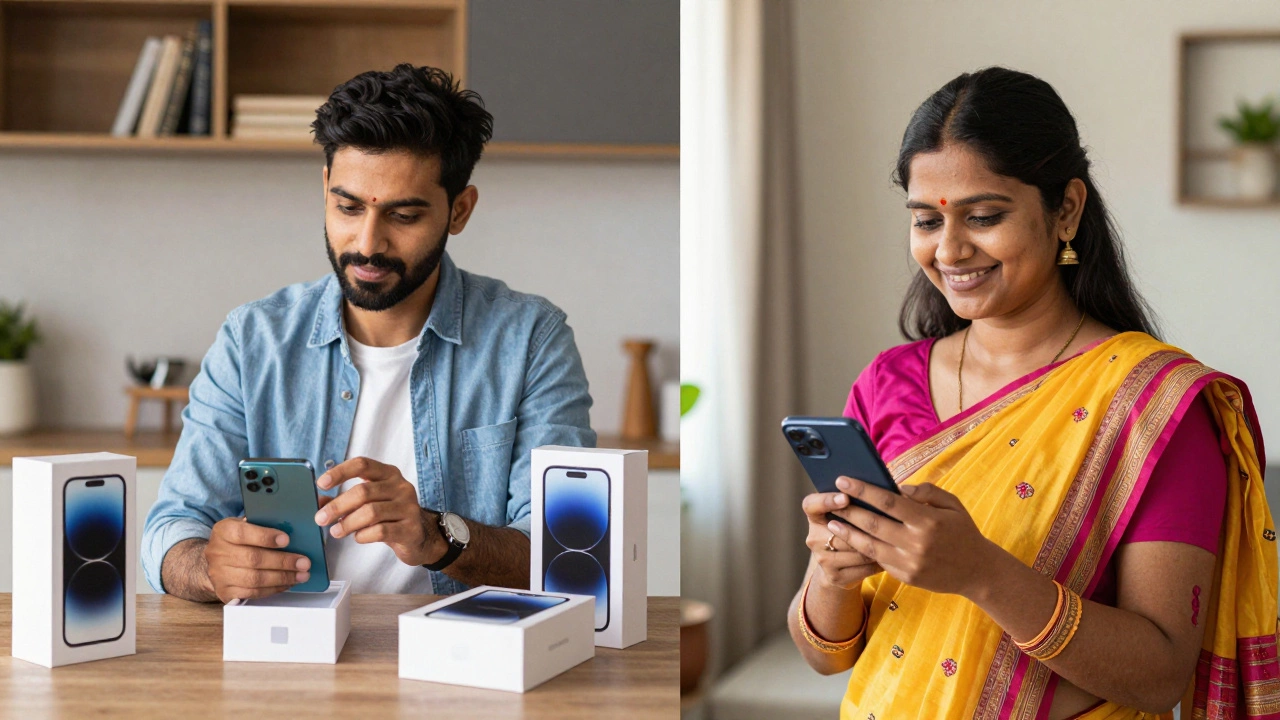
- Category Dominance: Flipkart leads in mobiles; Amazon in electronics and books; Myntra in fashion.
Challenges Facing Online Retailers in India
The path to staying on top isn’t easy. Regulatory pressures are increasing. The government has introduced stricter rules on foreign direct investment (FDI) in e-commerce to ensure fair competition for small retailers. Both Amazon and Flipkart have had to adjust their business models to comply with these norms.
Additionally, logistics remain a challenge despite improvements. Delivering to rural areas with poor address systems requires innovative solutions. Companies are investing heavily in AI-driven route optimization and last-mile partnerships to overcome this.
What Does the Future Hold?
Looking ahead, the lines between pure e-commerce and traditional retail will blur further. Expect more omnichannel strategies where online orders can be picked up in-store. Also, the rise of social commerce-shopping directly through Instagram or WhatsApp-will create new competitors.
While Amazon currently edges out as the biggest online retailer in India by most standard metrics, the gap is narrowing. Flipkart’s localized approach and Meesho’s grassroots growth mean no single player can rest on their laurels. For consumers, this competition translates to better prices, faster delivery, and more choices.
Is Amazon bigger than Flipkart in India?
Yes, Amazon India typically has a slightly larger market share and GMV than Flipkart, but the difference is marginal and fluctuates based on sales events and seasonal trends. Both companies are neck-and-neck leaders.
Who owns Flipkart?
Flipkart is majority-owned by Walmart, the American retail giant. Walmart acquired a controlling stake in Flipkart in 2018 for approximately $16 billion.
What is Meesho?
Meesho is an e-commerce platform that enables individuals, primarily in tier-2 and tier-3 cities, to become resellers. Users buy products at wholesale prices and sell them at a markup via social networks. It has grown rapidly by tapping into the unorganized retail sector.
Which app is best for buying mobile phones in India?
Flipkart is traditionally considered the leader in mobile phone sales in India due to early partnerships with manufacturers and targeted promotions. However, Amazon India is very close behind and often matches deals during major sales.
Are there any new regulations affecting e-commerce in India?
Yes, the Indian government has implemented stricter FDI rules preventing marketplaces from owning inventory or influencing pricing significantly. These rules aim to protect small brick-and-mortar stores from unfair competition by large tech firms.
