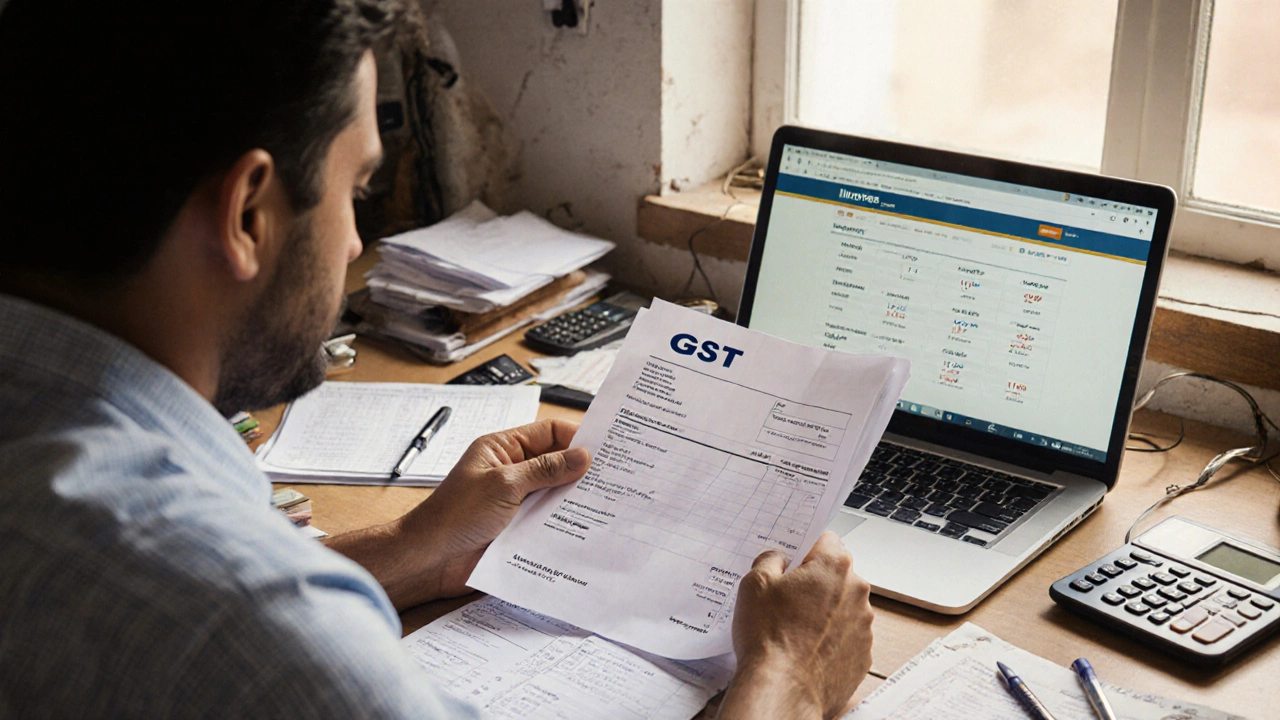
GST tax calculation: How to Compute It Right for Your Business in India
When you sell a product or service in India, GST tax calculation, the system that determines how much tax you collect and pay on goods and services. Also known as Goods and Services Tax, it’s not just a number on an invoice—it’s the backbone of how businesses track, report, and pay taxes in India today. If you’re a small seller, freelancer, or startup, getting this wrong can mean penalties, cash flow problems, or even suspension of your ability to sell. And no, you don’t need an accountant to do it right—you just need to understand the basics.
GST registration India, the process of officially joining the GST system. Also known as GST enrolment, it’s not optional if your annual turnover crosses ₹20 lakh (or ₹10 lakh in special category states). Once you’re registered, you start collecting GST from customers and paying it to the government. But here’s the catch: you don’t just add 18% to your price and call it done. You have to calculate input tax credit—what you paid on your own purchases—and subtract that from what you collected. That’s your net GST liability. If you’re selling handmade crafts from home, buying raw materials, and using UPI to get paid, you’re already part of this system. Ignoring it doesn’t make it go away.
GST payment India, the actual act of transferring the tax amount to the government via the GST portal. Also known as GST remittance, it’s due by the 20th of every month for most businesses. You can’t wait until year-end. The portal doesn’t forgive delays. Late payments mean interest at 18% per year, plus penalties. And if you’re filing late, you’re also blocked from claiming input credit until you get back on track. That’s cash you can’t use to buy inventory or pay your team. The system is built so you pay as you go—like a weekly grocery bill, but for taxes.
What you’ll find in these posts
You’ll see real examples of how small businesses in Andhra Pradesh handle GST tax calculation—from a street food vendor using WhatsApp invoices to a digital freelancer filing monthly returns. You’ll learn how to spot common errors, what documents you actually need, and how to use the GST portal without getting lost in menus. Some posts break down exact calculations for different product categories. Others show what happens when you skip filing. There’s no theory here—just what works on the ground, in 2025, for people like you.
Learn how to calculate GST in India step by step, including correct tax rates, invoice rules, input tax credit, and common mistakes to avoid. Essential for small businesses and freelancers.