Central Government Schemes for Startups in India: What You Can Actually Use
When you hear central government schemes, financial and operational support programs launched by the Indian government to boost entrepreneurship and small businesses. Also known as national startup incentives, these programs are designed to help founders launch, scale, and survive without needing deep pockets or VC connections. Many founders think these are just paperwork with slow payouts—but that’s not true anymore. In 2025, the real winners are those who know which schemes actually move the needle: tax credits, UPI integration support, subsidized cloud credits, and zero-interest loans for women-led startups in tier-2 cities.
These central government schemes, financial and operational support programs launched by the Indian government to boost entrepreneurship and small businesses. Also known as national startup incentives, these programs are designed to help founders launch, scale, and survive without needing deep pockets or VC connections. don’t just hand out money—they remove roadblocks. Take Digital India, a national initiative to transform India into a digitally empowered society and knowledge economy, enabling startups to leverage public digital infrastructure. It’s not just a slogan. It’s what lets a food vendor in Vijayawada use UPI to accept payments, or a coding tutor in Kurnool reach students across Andhra Pradesh without paying for ads. Physics Wallah didn’t become a $4 billion company because of VC money alone—they used Digital India’s infrastructure, free government-hosted platforms, and state-backed digital literacy programs to scale fast and cheap.
Then there’s MSME schemes India, government programs targeting micro, small, and medium enterprises with subsidies, credit guarantees, and simplified compliance. If you’re running a home-based business with under 5 employees, you’re likely eligible for GST filing fee waivers, free business registration, and even free training on how to use the GST portal. No one tells you this, but the government already paid for your first year of compliance if you registered after 2020. And if you’re in Andhra Pradesh? You get extra layers—state-level top-ups on central grants, faster approvals, and local incubators that connect you directly to scheme officers.
Don’t get fooled by the noise. You don’t need a fancy pitch deck to qualify. You need to know what’s out there—and how to claim it. The central government schemes aren’t for big tech unicorns. They’re for the single mom selling handmade soaps online, the mechanic fixing phones from his garage, the college student building a WhatsApp-based delivery service. These are the real startups winning in 2025—not because they raised millions, but because they used what the government already gave them for free.
Below, you’ll find real examples of founders who used these exact schemes to cut costs, skip red tape, and grow faster than their competitors. No theory. No fluff. Just what worked—and how you can do it too.
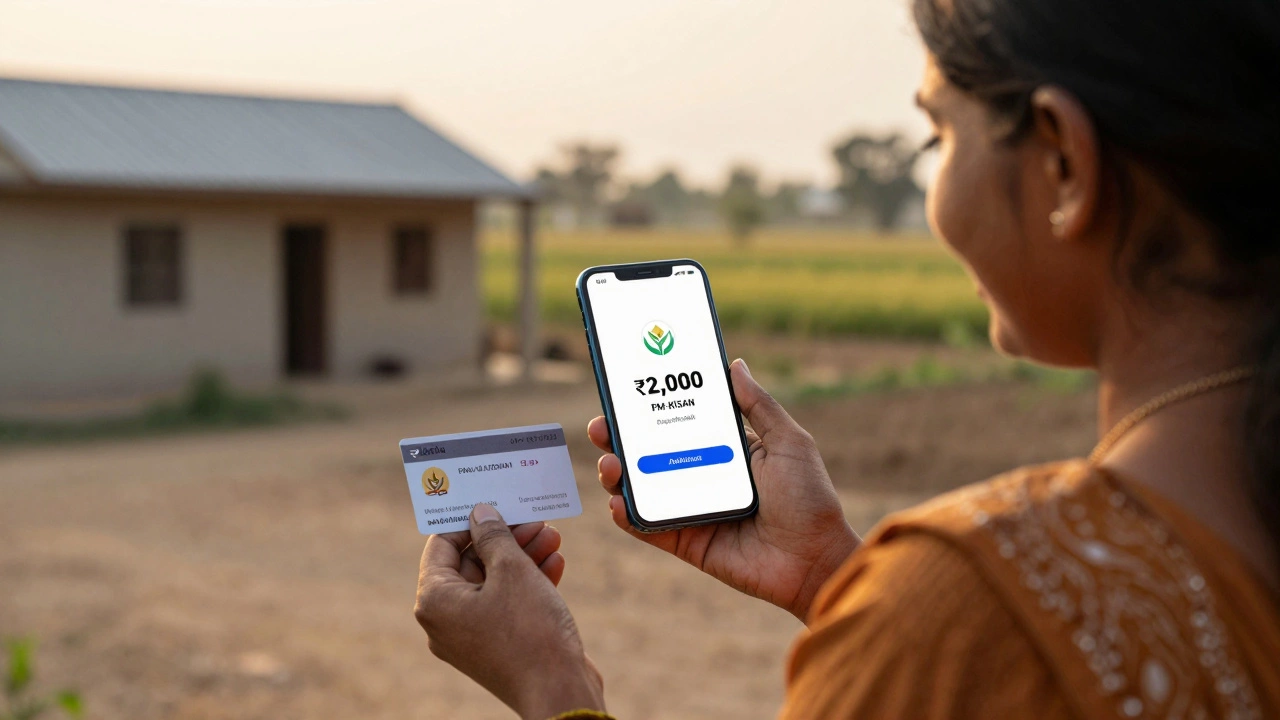
India's central government leads in scale and digital delivery of welfare schemes like PM-KISAN, Ujjwala, and PM-AWAS, transforming lives across rural and marginalized communities through direct cash transfers and digital access.