Government Scheme Eligibility Checker
Find out which government schemes you may qualify for based on your location, income, and family size. Based on data from India's central and state government programs.
When people ask which government is leading in India, they’re not talking about political power or elections. They’re asking: which government is actually delivering the most help to regular people? The answer isn’t a single party or leader-it’s a mix of policies, reach, and real-world impact. Over the last decade, India’s central government has rolled out more direct benefit schemes than any previous administration, transforming how subsidies, healthcare, and financial aid reach millions.
What Makes a Government Scheme "Leading"?
Not all schemes are created equal. A leading scheme doesn’t just sound good on paper. It has to be simple to access, reach the right people, and actually change lives. The best ones share three things: direct cash transfers, digital enrollment, and low bureaucracy.
Take the Pradhan Mantri Jan Dhan Yojana (PMJDY). Launched in 2014, it opened over 500 million bank accounts for people who never had one. Before this, many rural families kept cash under mattresses. Now, money from pensions, scholarships, and subsidies goes straight into their accounts. No middlemen. No delays. No corruption.
Compare that to older schemes where people had to stand in line for hours, fill out five forms, and still get turned away. The shift to digital IDs (Aadhaar) and mobile banking made the difference.
The Big Three: PM-KISAN, PM-AWAS, and Ujjwala
Three schemes stand out for scale, speed, and impact.
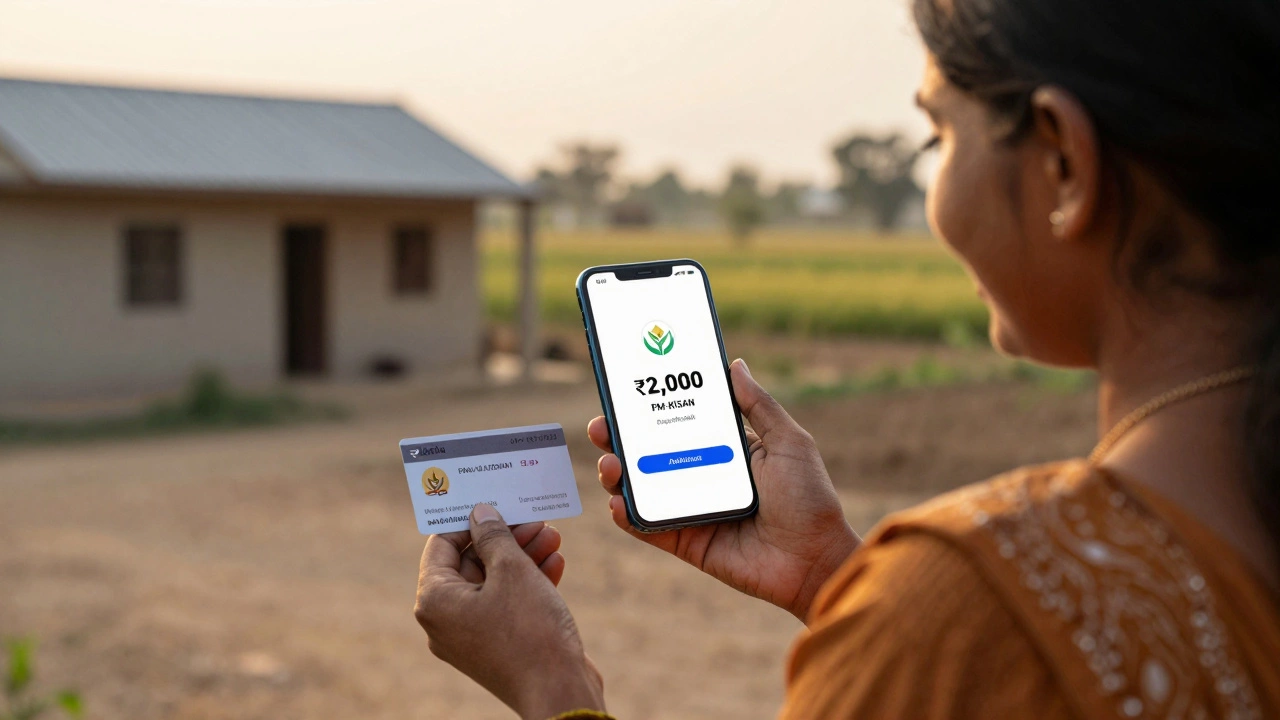
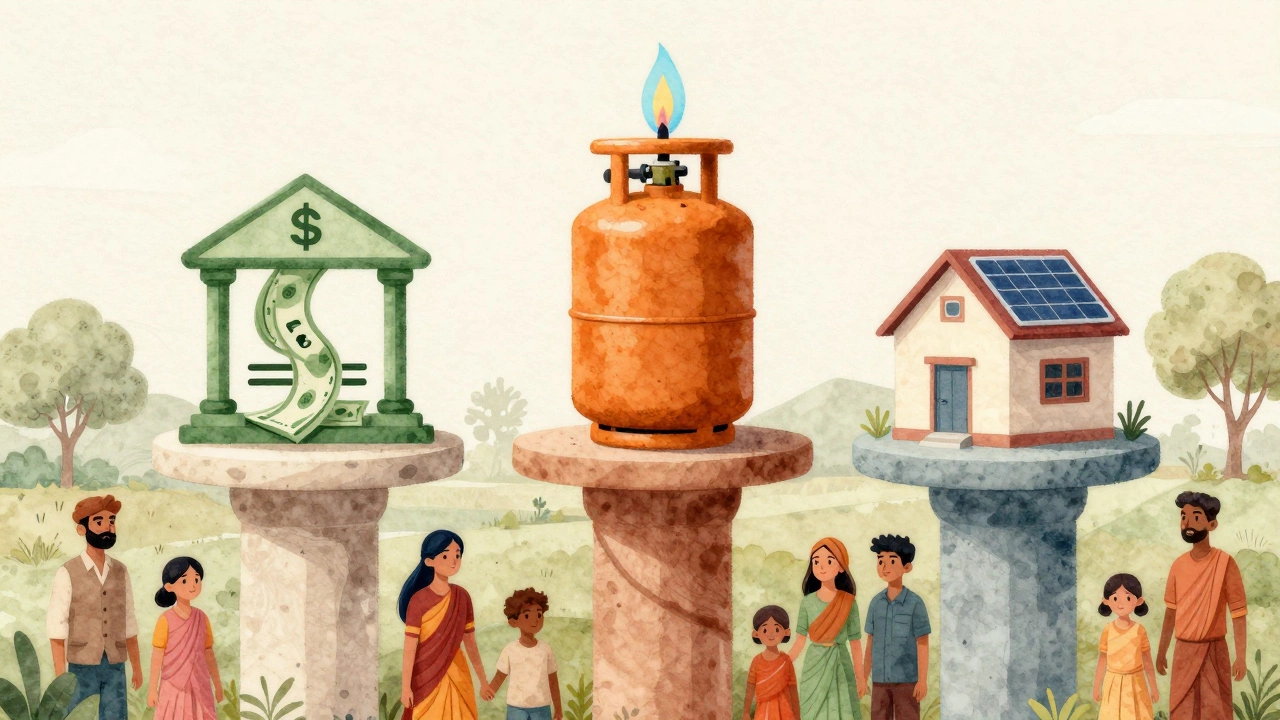
- PM-KISAN gives ₹6,000 per year directly to small farmers in three installments. Over 110 million farmers have received this since 2019. That’s not just money-it’s seed, fertilizer, and a chance to keep farming.
- PM-AWAS (Pradhan Mantri Awas Yojana) has built over 30 million homes for low-income families since 2015. In villages where people used to sleep on dirt floors, there are now concrete houses with toilets and electricity.
- Ujjwala Yojana gave free LPG connections to over 95 million poor households. Before this, women in rural India spent hours collecting firewood and breathing smoke indoors. Now, they flip a switch and cook safely.
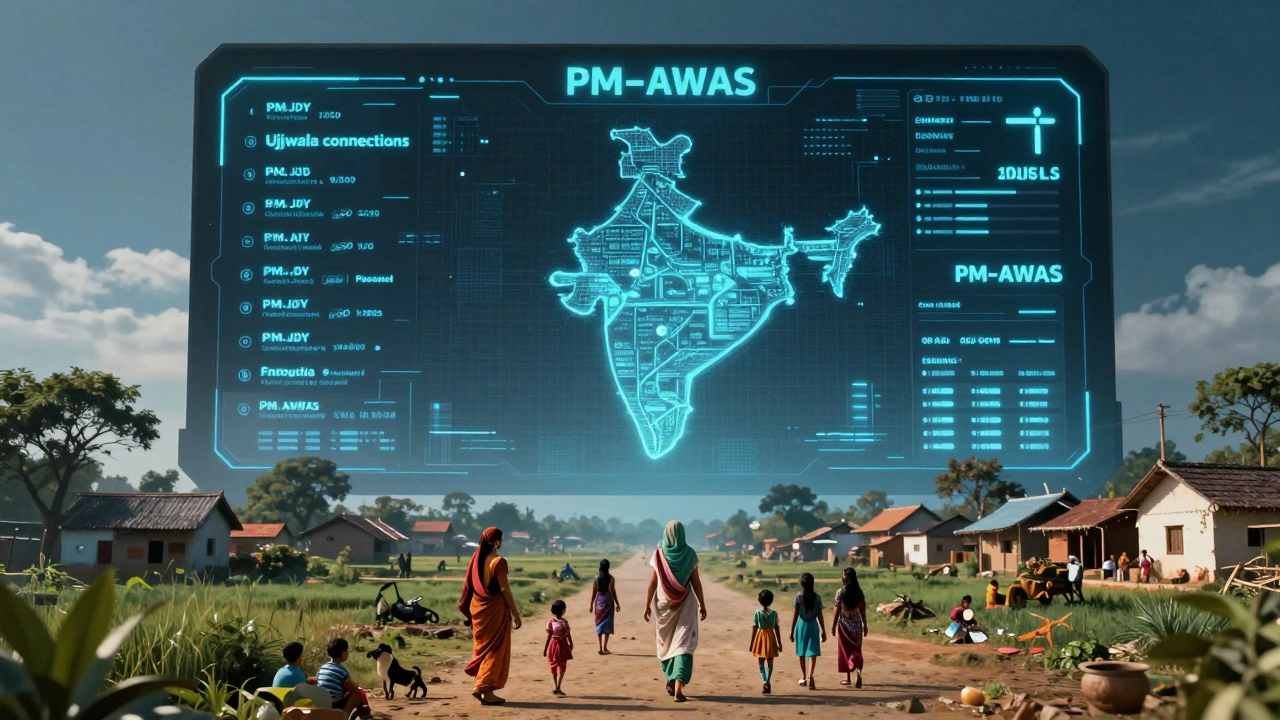
These aren’t small projects. They’re national infrastructure changes. And they’re tracked in real time. You can check your scheme status online using your Aadhaar number. No visit to an office needed.
State Governments Are Also Playing a Big Role
While the central government sets the framework, state governments make it work on the ground. Some states have gone further than the center.
In Tamil Nadu, the Chief Minister’s Comprehensive Health Insurance Scheme covers up to ₹5 lakh per family per year for hospital treatment. That’s more than most private insurance plans.
Madhya Pradesh launched the Mukhyamantri Kisan Samman Yojana, giving an extra ₹5,000 on top of PM-KISAN. That’s ₹11,000 a year for farmers-enough to cover a full crop cycle.
Delhi offers free electricity up to 200 units a month and free bus rides for women. Over 7 million women use it daily. The program cuts household expenses and increases mobility.
These aren’t handouts. They’re smart investments. When a woman can travel safely, she can work. When a farmer isn’t drowning in debt, he can invest in better seeds. When a family isn’t sick from indoor smoke, kids do better in school.
How Are These Schemes Paid For?
People often wonder: where’s the money coming from? The answer is tax reform and digital efficiency.
Before GST (Goods and Services Tax), India had 17 different taxes. That meant businesses paid more, prices went up, and the government collected less. After GST was rolled out in 2017, tax compliance improved. The government started collecting more revenue-not by raising rates, but by closing loopholes.
That extra money, combined with cutting wasteful subsidies (like fuel subsidies that mostly helped the rich), freed up funds for direct support. For example, the government stopped giving diesel subsidies to truck owners and instead gave cash to farmers who needed it most.
The result? More money for people, less waste. In 2024, over ₹3.2 trillion (about $38 billion) flowed directly to citizens through these schemes. That’s more than the entire annual budget of countries like Ireland or Portugal.
Who Benefits the Most?
The biggest winners aren’t the urban middle class. They’re the ones who were left out for decades:
- Women: 85% of Ujjwala connections went to women. PM-KISAN payments go to the female head of the household by default.
- Rural households: 70% of PM-AWAS homes are in villages. Digital payments mean even remote villages get money on time.
- SC/ST communities: Schemes like Deen Dayal Antyodaya Yojana specifically target marginalized groups with skill training and microloans.
These aren’t just economic changes. They’re social shifts. When a woman controls the money, she spends it on her children’s education and health. That breaks cycles of poverty.
What’s Missing?
For all the progress, gaps remain. Some farmers still don’t get their PM-KISAN money on time because their bank account isn’t linked to Aadhaar. Some elderly people can’t use the apps to check their benefits. In remote areas, internet is slow or nonexistent.
Also, some schemes overlap. A family might get help from three different programs, but not know how to apply for all of them. There’s no single portal that shows everything you’re eligible for.
And while the central government leads in scale, some states are better at outreach. Kerala, for example, uses local volunteers to help people enroll. That’s something the center could learn from.
What’s Next?
The next phase isn’t about launching more schemes. It’s about making the existing ones smarter.
AI is being tested to predict who needs help before they ask. For example, if a family stops receiving a pension or a child’s school attendance drops, the system flags them for support. No paperwork needed.
Mobile apps like UMANG and DigiLocker now let people store all their documents-birth certificates, land records, ration cards-in one place. Soon, you’ll be able to apply for 10 schemes with one click.
The goal? Make government help as easy as ordering food online.
Final Answer: Who’s Leading?
The central government is leading in scale, funding, and digital infrastructure. But the real leadership comes from how these schemes are used by people on the ground. The government that connects a farmer to his money, a woman to clean gas, and a child to a safe home isn’t just leading-it’s transforming India.
It’s not about who’s in power. It’s about who’s delivering.
Which government scheme in India has the most beneficiaries?
The Pradhan Mantri Jan Dhan Yojana (PMJDY) has the most beneficiaries, with over 500 million bank accounts opened since 2014. It’s the largest financial inclusion program in the world. Nearly every adult in India now has access to a bank account, thanks to this scheme.
Are state government schemes better than central ones?
It depends. Central schemes reach more people and have bigger budgets. But state schemes often work better locally because they’re designed for regional needs. For example, Tamil Nadu’s health insurance covers more than the central Ayushman Bharat scheme. The best outcomes happen when both levels work together.
Can I get help if I live in a remote village?
Yes. Most major schemes use Aadhaar and mobile-based verification, so location doesn’t matter. Even in the most remote areas, you can receive cash transfers, LPG subsidies, or pension payments. Community workers and post offices often help people without smartphones enroll and check their status.
How do I know if I’m eligible for a government scheme?
Visit the official website of the scheme or use the UMANG app. You can also visit your nearest Common Service Centre (CSC) or post office. All you need is your Aadhaar number. The system checks your income, location, and other details automatically to see what you qualify for.
Are these schemes only for poor people?
Most are targeted at low- and middle-income households, but some benefits are universal. For example, free electricity up to 200 units in Delhi applies to all residents. Similarly, free bus rides for women are open to anyone with a valid ID. The goal is to reduce inequality, not just help the poorest.
