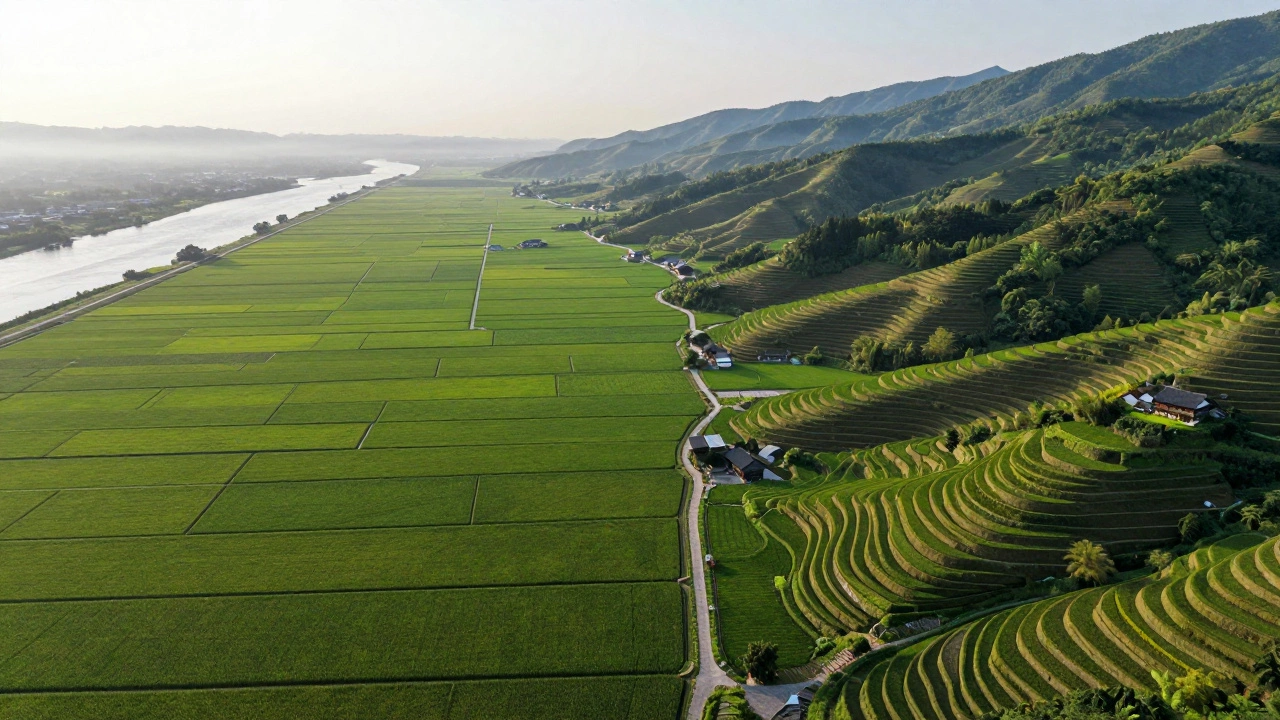
Let's start with the basics. China is the world's largest producer and consumer of rice, utilizing vast river basins to feed a population of over 1.4 billion people. On the other hand, Japan is a mountainous archipelago with limited arable land and a strictly controlled domestic rice market. The sheer scale of China's appetite isn't just because they have more people; it's because their agricultural system is designed for volume, while Japan's is designed for precision and protection.
The Geography of Hunger: Land and Water
You can't grow rice without water and flat land. China has the Yangtze River and the Pearl River, which create massive, fertile plains perfect for paddy fields. This allowed China to scale up production to an industrial level. When you have that much land, rice becomes the cheapest way to provide calories to a massive workforce.
Japan is a different story. About 70% of Japan is mountainous. They simply don't have the space to compete with China's volume. This scarcity led to a culture of high-quality, small-batch farming. While a Chinese farmer might focus on the total tonnage of the harvest to meet national demand, a Japanese farmer often focuses on the specific grade and polish of the grain. This means Japan doesn't just eat less rice because they have fewer people; they eat it as a premium product rather than a bulk commodity.
Dietary Shifts and the "Wheat Invasion"
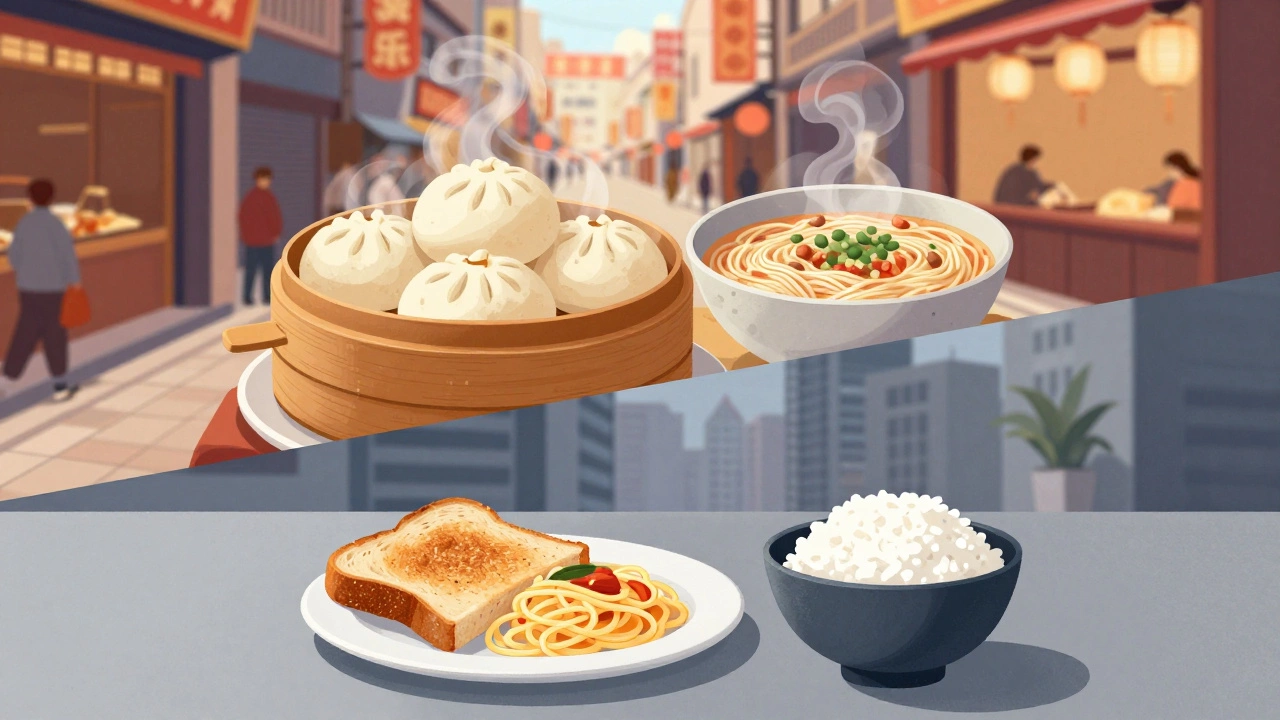
One of the biggest reasons for the consumption gap is how diets are changing. In Northern China, there has been a massive shift toward wheat. You'll see more noodles and steamed buns (mantou) in Beijing than you will in Guangzhou. However, the Southern provinces remain deeply rooted in rice. Even with this shift, the total volume of rice consumed in China dwarfs Japan's because of the sheer number of meals served daily.
In Japan, the shift is more dramatic. The post-war era brought in a huge amount of Western influence. Bread and pasta have become staples in the Japanese breakfast and lunch. Many Japanese urbanites now eat rice only once a day, or even every other day. This "bread-ification" of the Japanese diet has shrunk their domestic rice demand far more aggressively than any trend seen in China. For an exporter, this means Japan is a tough nut to crack because the demand is shrinking, whereas China's demand remains high but is shifting toward specialized or organic varieties.
The Protectionist Wall: Trade Policies
If you're trying to export grain, you need to understand the Ministry of Agriculture, Forestry and Fisheries (MAFF) in Japan. Japan protects its rice farmers with some of the highest tariffs in the world. They treat rice as a matter of national security and cultural identity. This creates a closed loop: high prices discourage over-consumption, and high tariffs block foreign competitors.
China is more open to imports, but they play a different game. They use State Trading Companies to manage imports. China doesn't just buy rice; they strategically import specific types of rice to supplement their domestic shortfalls or to balance their trade relations. For an Indian exporter, China is a more realistic target for volume, while Japan is a niche market for ultra-premium, specialty grains.
| Attribute | China Market | Japan Market |
|---|---|---|
| Primary Driver | Population Scale & Caloric Need | Quality & Cultural Tradition |
| Land Availability | High (River Basins) | Low (Mountainous) |
| Import Barriers | Moderate (State Managed) | Very High (Tariffs) |
| Dietary Trend | Shift to Wheat in North | Shift to Bread/Pasta |
| Export Opportunity | Bulk and Medium Grade | Ultra-Premium/Organic |
Why This Matters for Indian Exporters
India is one of the top rice exporters globally. If you are looking at these two markets, you can't use the same pitch. For China, you are competing on price and reliability. You need to navigate the General Administration of Customs of the People's Republic of China (GACC) regulations, which are strict on phytosanitary standards. Your goal here is volume. If you can provide high-quality long-grain or jasmine-style rice at a competitive price, there is a massive market.
Japan is a different beast entirely. You aren't selling "calories"; you are selling a "luxury experience." To enter Japan, your rice needs to be virtually flawless. The Japanese consumer will notice a single broken grain. The opportunity here lies in organic certifications and "fair trade" labels. It is a low-volume, high-margin game. While the Chinese market asks "How much can you deliver?", the Japanese market asks "How perfect is this batch?"
Common Pitfalls in Asian Grain Trade
Many exporters make the mistake of treating "Asia" as one block. They assume that because both countries eat rice, the requirements are the same. This is a recipe for failure. In China, the risk is often related to sudden policy changes or shifts in state quotas. You might have a deal today that vanishes tomorrow because the government decided to prioritize domestic production.
In Japan, the risk is the "quality wall." If your shipment arrives and doesn't meet the exact moisture content or polish level specified in the contract, the entire lot can be rejected. There is no room for "close enough." Also, ignore the lure of the Japanese market unless you have a partner who understands the local Keiretsu or distribution networks. Without a local middleman, your rice will never leave the port.
Does China import most of its rice?
No, China is largely self-sufficient. However, they import specific varieties to diversify their diet and to maintain strategic reserves. The imports are often targeted at high-end markets or specific industrial uses.
Why is rice so expensive in Japan?
The high price is due to government subsidies and extreme import tariffs designed to protect local farmers. Additionally, the intensive labor required for high-quality Japanese rice increases the production cost.
Which type of rice is most popular in China?
Indica rice is the most common, especially in the south. It is preferred for its texture and ability to pair with a wide variety of stir-fried and steamed dishes.
Is the demand for rice falling in Asia?
In developed nations like Japan and South Korea, yes. In emerging economies and giant markets like China, it is stabilizing or shifting toward higher-quality grains rather than disappearing.
How can an Indian business start exporting to these regions?
Start by getting GACC registration for China and seeking organic certifications for Japan. Finding a reliable local distributor is more important than the product itself in both markets.
Next Steps for New Exporters
If you are just starting, don't try to conquer both markets at once. Choose your path: volume or value. If you have the capacity to move thousands of tons, focus on the Chinese trade routes. Research the current state quotas and find a partner in the logistics chain who can handle the customs clearance in ports like Ningbo or Shanghai.
If you have a boutique product-perhaps a rare heirloom variety or a strictly organic Basmati-pivot toward Japan. Spend your time on packaging and branding. The Japanese buyer cares as much about the story and the purity of the grain as they do about the taste. Focus on small, high-value shipments to test the waters before scaling up.
