Education Cost Calculator
Compare Your Education Costs
Your Savings Estimate
Government Infrastructure EnabledAnnual Cost Comparison
₹0 /year
Why this difference? Government programs like Digital India and PM-WANI made low-cost access possible.
Your savings comes from reduced data costs, free public Wi-Fi, and digital education infrastructure built through government initiatives.
Physics Wallah isn’t just another online learning app. It’s the reason millions of Indian students stopped buying expensive coaching books and started watching free YouTube videos on their old smartphones. By 2023, it had over 10 million active users. By 2025, it was valued at nearly $4 billion. But is it really a unicorn? And more importantly - did government schemes help make it happen?
What exactly is a unicorn?
A unicorn is a private startup valued at over $1 billion. That’s the official definition. Companies like Paytm, Ola, and Byju’s hit that mark. Physics Wallah crossed it in early 2024 after raising $300 million from SoftBank and other investors. So yes - technically, it’s a unicorn. But calling it that misses the real story.
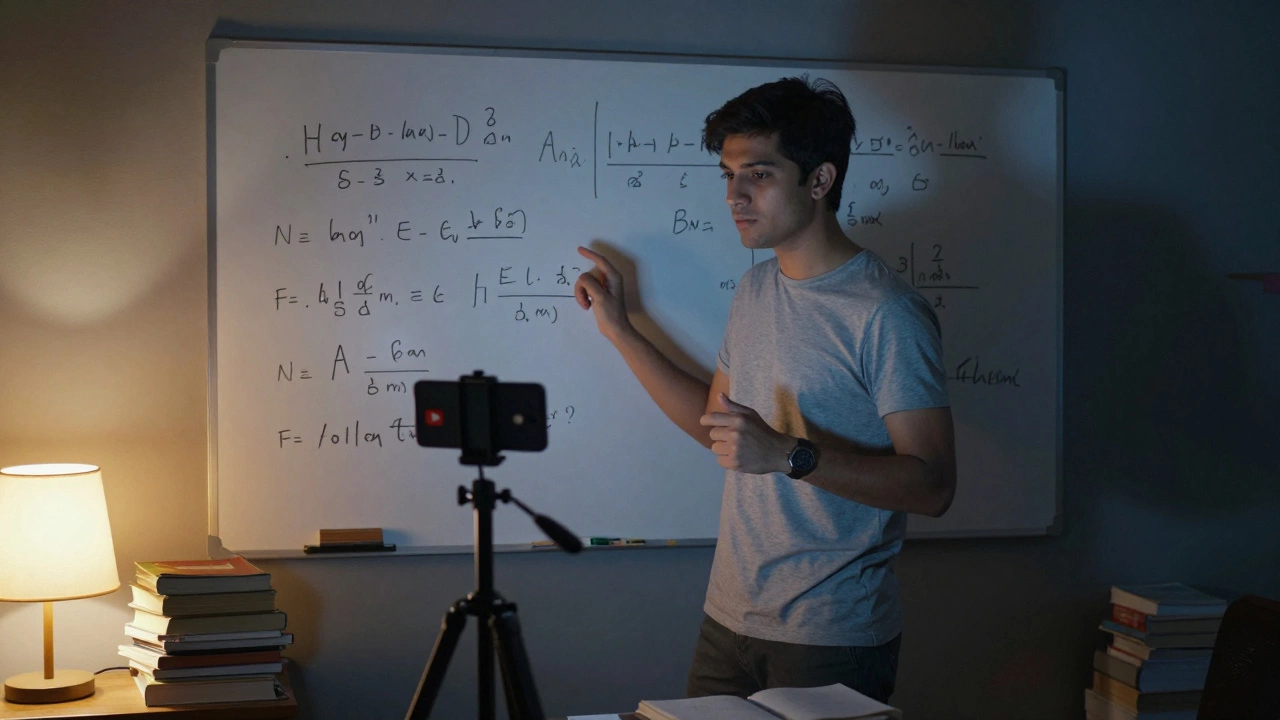
Most unicorns are built with venture capital, flashy marketing, and global ambitions. Physics Wallah was built by a physics teacher named Alakh Pandey, who started recording lectures in his bedroom in Allahabad. No office. No fancy team. Just a phone, a whiteboard, and a dream to help kids who couldn’t afford coaching.
How Physics Wallah grew without traditional funding
For the first five years, Physics Wallah didn’t take a single rupee from investors. Alakh paid for servers out of his own pocket. He used free tools like YouTube and WhatsApp to reach students. His videos were simple: no animations, no celebrities, just clear explanations of Newton’s laws and electromagnetic waves.
By 2019, he had over 500,000 YouTube subscribers. That’s when the government’s Digital India initiative started showing real results. More rural students got smartphones. Internet data became cheaper than a cup of tea. And suddenly, a guy teaching physics from his home could reach students in Jharkhand, Bihar, and Odisha - places where coaching centers didn’t even exist.
Physics Wallah didn’t need VC money to scale. It needed affordable data, better mobile access, and a government policy that pushed digital inclusion. That’s what made the difference.
The hidden role of government schemes
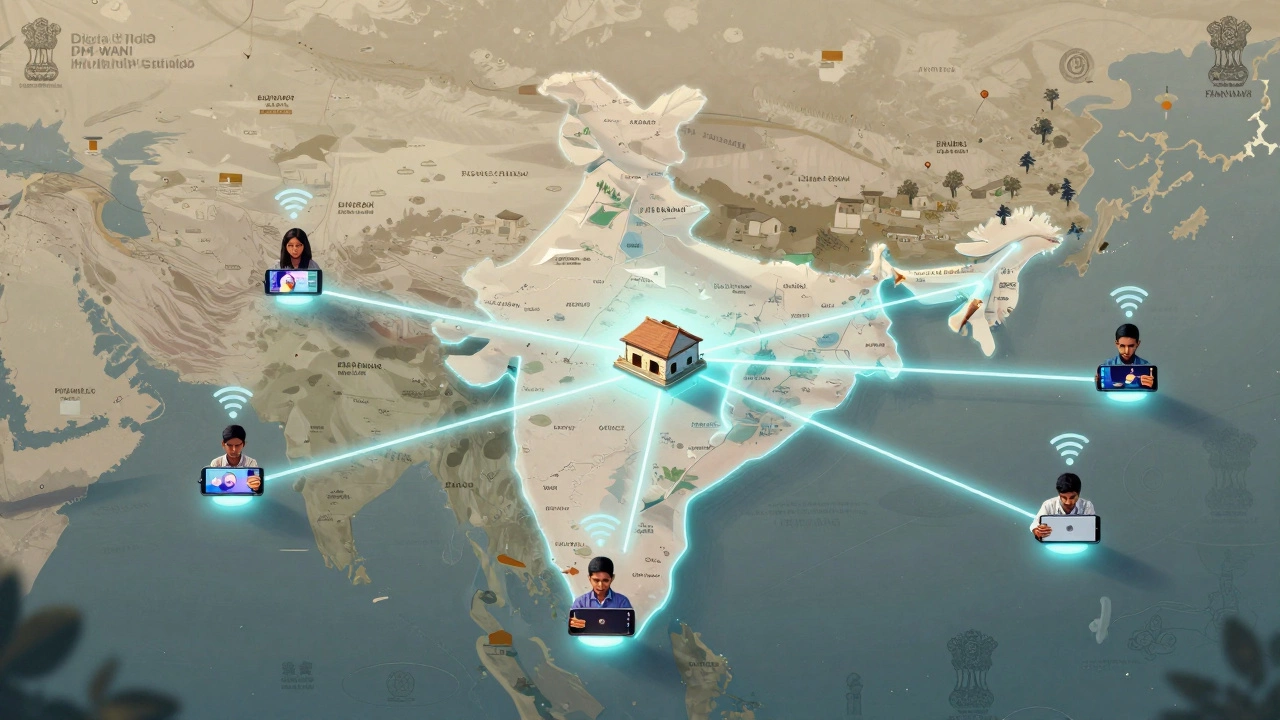
Physics Wallah didn’t get a single grant from the government. But it rode the wave of multiple public programs:
- Digital India - Expanded internet access to 90% of villages by 2023.
- Pradhan Mantri Gramin Digital Saksharta Abhiyan (PMGDISHA) - Trained over 60 million rural citizens in basic digital skills.
- National Digital Education Architecture (NDEAR) - Encouraged states to use free platforms like PW for school syllabus delivery.
- PM-WANI - Enabled public Wi-Fi hotspots in towns, letting students access PW without using their own data.
These weren’t direct investments in Physics Wallah. But they created the infrastructure that made it possible. Imagine trying to build an app if no one had smartphones or internet. That was India in 2015. By 2020, 80% of students in tier-2 and tier-3 cities had access. Physics Wallah didn’t create that change - it just used it.
Why Physics Wallah isn’t like other unicorns
Most unicorns chase global markets. Physics Wallah only cares about India. Most unicorns hire ex-Google engineers. Physics Wallah hires school teachers. Most unicorns spend millions on ads. Physics Wallah spends nothing on ads - its students become its marketers.
One student in Rajasthan recorded himself watching a PW video, shared it on Instagram, and got 200,000 views. That’s organic growth. No paid campaign. No influencer. Just a kid who understood how hard it was to pass JEE without money.
Its pricing model is also different. Free YouTube videos. Paid apps for advanced courses - but still priced under ₹1,500 per year. Compare that to Allen or FIITJEE, where annual fees hit ₹3 lakh. Physics Wallah didn’t disrupt the market by being better tech - it disrupted it by being affordable.
The dark side of being a unicorn
Once you hit $1 billion, everything changes. Investors want returns. Growth targets get aggressive. Physics Wallah started hiring sales teams. It launched paid webinars. It opened physical centers in 15 cities. Some longtime users felt betrayed. "I used to watch PW because it was free," one student posted on Reddit. "Now they’re pushing paid courses like a bank."
And then came the controversy: in 2024, the National Education Policy (NEP) 2020 was being implemented, and schools were encouraged to use digital platforms. Physics Wallah was listed as a recommended partner in several state education departments. Critics accused it of becoming too close to the government - a "state-backed startup."
Alakh Pandey denied it. He said the partnership was only about curriculum alignment, not funding. But the line blurred. Was Physics Wallah still a grassroots movement? Or had it become just another corporate edtech player?
Is it still a unicorn - or something bigger?
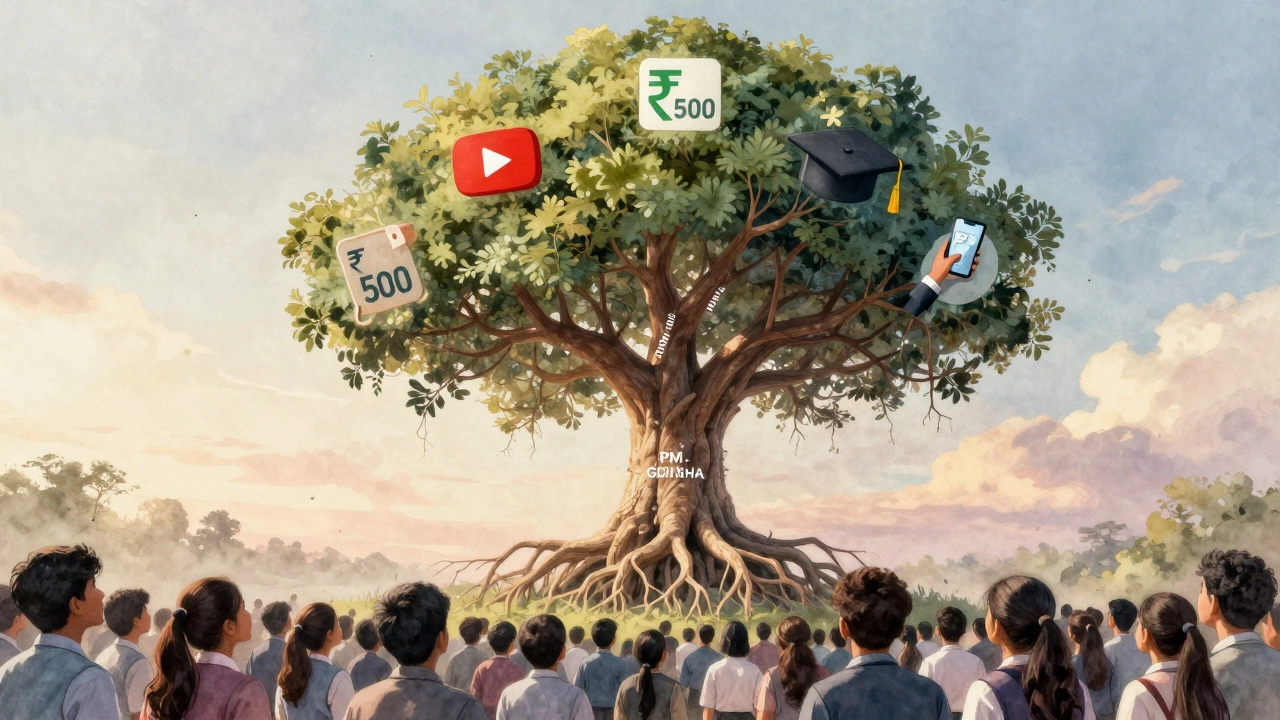
Yes, Physics Wallah is a unicorn. But calling it that reduces its story to a financial metric. It’s more than that. It’s proof that India’s public infrastructure - not private capital - can build global-scale impact.
It didn’t need Silicon Valley. It needed free data. It didn’t need venture capitalists. It needed a government that believed every child deserved a good education. Physics Wallah didn’t create opportunity - it unlocked it.
Its real value isn’t in its $4 billion valuation. It’s in the 12 million students who passed their exams because they had access to someone who explained physics without charging them a fortune.
What’s next for Physics Wallah?
In 2025, Physics Wallah launched PW Skills - a vocational training arm targeting non-engineering students. It now offers courses in digital marketing, accounting, and basic coding - all aligned with the National Skills Qualification Framework (NSQF). This move is backed by the Ministry of Skill Development and Entrepreneurship.
It’s no longer just a JEE prep platform. It’s becoming India’s largest free-to-low-cost skill builder. And it’s doing it without taking government money - just using the systems the government built.
If you’re looking for the next unicorn, don’t look for a startup with a fancy pitch deck. Look for the teacher in a small town who’s still recording videos after midnight - because someone, somewhere, is watching.
Is Physics Wallah officially recognized by the Indian government?
Physics Wallah is not a government entity, but it is officially listed as a recommended digital learning partner by several state education boards under the National Education Policy 2020. It has partnered with state departments to align its content with NCERT and state syllabi, but it does not receive direct funding from the government.
Did Physics Wallah receive any government grants or subsidies?
No, Physics Wallah has never received direct government grants, subsidies, or equity investment from any public agency. Its growth was fueled by organic user growth and private venture capital, not public funding.
How did Digital India help Physics Wallah grow?
Digital India expanded internet access to over 90% of rural villages by 2023 and made mobile data affordable. This allowed students in small towns to access free YouTube videos from Physics Wallah without needing expensive coaching centers. The program also enabled public Wi-Fi hotspots through PM-WANI, giving students free access to learning content.
Is Physics Wallah profitable?
Yes, Physics Wallah became profitable in 2023. It generates revenue through paid courses, test series, and mobile app subscriptions. Its free YouTube content drives traffic, while its low-cost paid offerings (starting at ₹500/year) attract millions of students who can’t afford traditional coaching.
Why is Physics Wallah cheaper than other coaching institutes?
Physics Wallah uses a scalable digital model. One video can be watched by millions, so the cost per student is near zero. Traditional coaching centers need physical classrooms, teachers, and infrastructure - which drives up prices. PW cuts out the overhead and passes the savings to students.
Can Physics Wallah replace traditional coaching centers?
For many students, especially in rural and semi-urban areas, Physics Wallah has already replaced coaching centers. It’s not perfect - some students still need personal mentorship - but for foundational learning, practice tests, and doubt-solving, it’s more accessible and affordable than any brick-and-mortar institute.
