Indian Business Comparison Tool
Compare Top Indian Businesses
Select companies to compare key metrics: revenue, market value, employees, and business segments.
| Revenue | Market Value | Employees | Business Sectors | |
|---|---|---|---|---|
| Reliance Industries | ₹9 trillion ($108B) | ₹18 trillion ($215B) | 500,000+ | Oil Telecom Retail Digital |
| Tata Group | ₹7 trillion ($84B) | ₹8 trillion ($95B) | 800,000+ | Steel Automotive IT Services Hospitality |
| HDFC Bank | ₹1.4 trillion ($16.8B) | ₹14 trillion ($167B) | 40,000+ | Banking Insurance Digital Payments |
| Infosys | ₹1.3 trillion ($15.6B) | ₹12 trillion ($144B) | 350,000+ | IT Services AI/Cloud Digital Transformation |
| Adani Group | ₹5 trillion ($60B) | ₹12.5 trillion ($150B) | 250,000+ | Ports Energy Mining Airports |
When you hear the word richest in business, you probably think of billionaires. But in India, the real story isn’t just about personal wealth-it’s about the companies that built empires, moved entire industries, and now dominate markets from Mumbai to Manila. These aren’t just big names. They’re the engines behind millions of jobs, billions in taxes, and the backbone of India’s economic rise.
Let’s cut through the noise. This isn’t a list of richest people. This is a look at the businesses that actually generate the most revenue, hold the largest market value, and control the most critical sectors of India’s economy. These are the companies that don’t just make money-they shape how India lives, works, and buys.
Reliance Industries: The Undisputed Giant
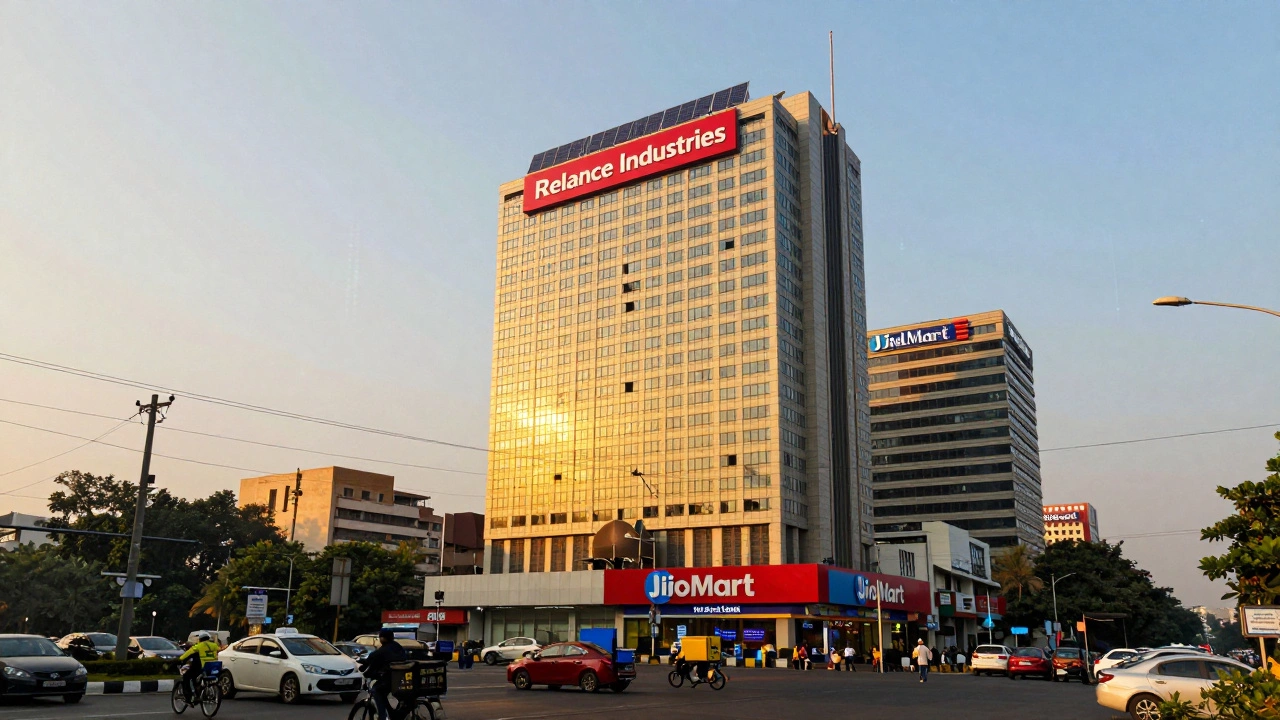
If you’re looking for the single richest Indian business, Reliance Industries is it. Founded by Dhirubhai Ambani in 1966, it started as a textile company and now spans oil, telecom, retail, and digital services. In 2025, its market capitalization crossed ₹18 trillion (over $215 billion), making it the most valuable company in India and one of the top 50 globally.
How? It didn’t just grow-it absorbed entire markets. Jio, its telecom arm, shattered India’s mobile pricing model in 2016. Within two years, it added over 400 million subscribers and forced competitors out. Meanwhile, Reliance Retail runs over 17,000 stores-from grocery outlets to luxury fashion-and handles more daily footfall than Walmart’s entire U.S. network. Its digital platform, JioMart, now processes over 2 million orders a day. That’s not a side hustle. That’s infrastructure.
Reliance doesn’t just sell things. It owns the pipeline: crude oil refineries, petrochemical plants, fiber factories, data centers, and even satellite networks. It’s the only Indian company with its own space-based broadband infrastructure. No other Indian business controls so many critical nodes in the economy.
Tata Group: The Institutional Powerhouse
Where Reliance is a hyper-focused empire, Tata Group is a sprawling nation within a nation. With over 100 companies under its umbrella, Tata operates in steel, software, hospitality, automotive, defense, and even tea. It’s not owned by one family-it’s governed by trusts, which means its profits flow back into education, healthcare, and research across India.
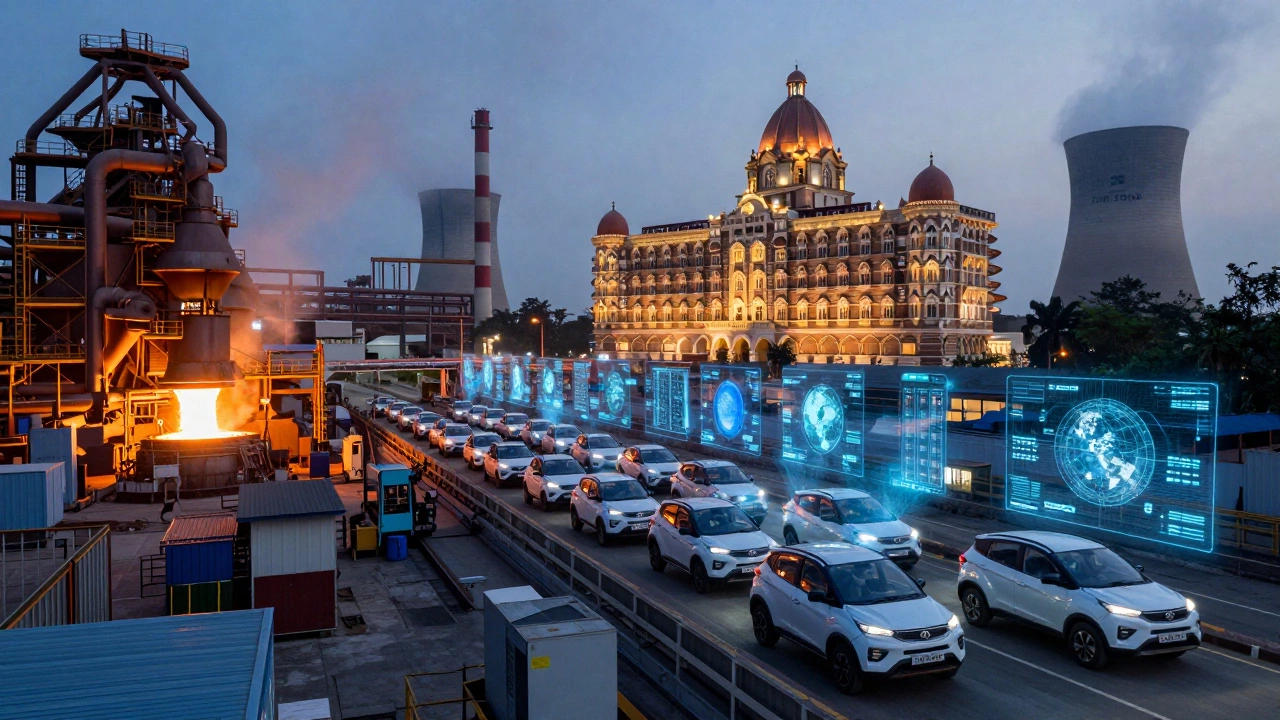
Tata Steel alone produces over 30 million tons of steel annually. Tata Motors makes everything from the Nano to the Tata Nexon EV, which now outsells Tesla in India. Tata Consultancy Services (TCS) is the largest IT services firm in India, with over 600,000 employees and $30 billion in annual revenue. TCS doesn’t just serve Indian clients-it runs core banking systems for 40% of the world’s top banks.
And then there’s Taj Hotels. The Taj Mahal Palace in Mumbai? It’s not just a luxury stay. It’s a national symbol. When the 2008 attacks happened, the world watched. Tata didn’t just rebuild-it doubled down. Today, Taj operates 300+ properties across 20 countries. That’s not hospitality. That’s soft power.
HDFC Bank: The Financial Backbone
Most people think of tech or manufacturing when they think of wealth. But the real money? It flows through banks. And no bank in India is more central than HDFC Bank.
Founded in 1994, HDFC Bank grew from a housing finance company into India’s largest private bank by market cap. As of 2025, its market value sits at ₹14 trillion ($167 billion). It has over 6,000 branches and 17,000 ATMs. But what makes it richer than others? Its digital adoption. Over 80% of its transactions happen through apps or online channels. It has more than 120 million customers-more than the population of Australia.
HDFC doesn’t just lend money. It builds financial systems. Its UPI-based payment platform processes over 2 billion transactions a month. Its credit card division is the largest in India, with over 40 million active cards. Even its insurance arm, HDFC Life, has more than 25 million policyholders. In a country where 40% of adults are still unbanked, HDFC is the bridge.
Infosys and Wipro: The Tech Titans
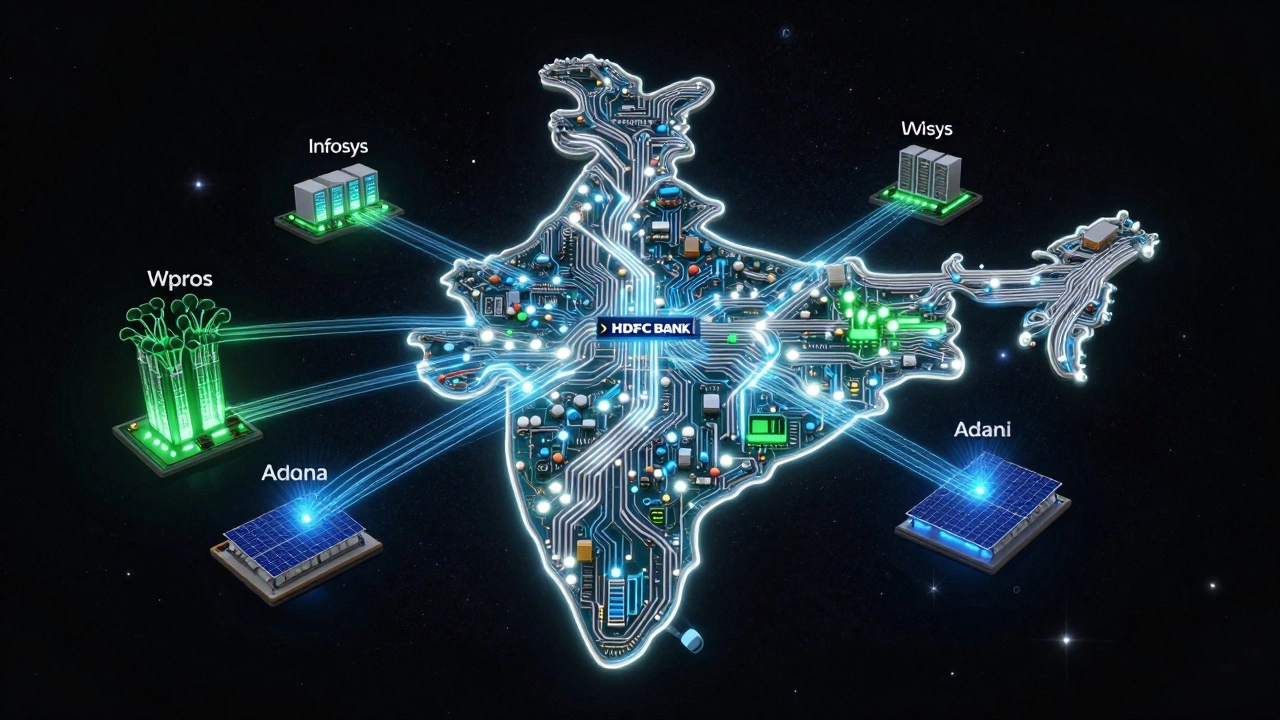
India’s tech giants don’t just code software-they run the backend of global corporations. Infosys, founded in 1981, has over 350,000 employees and $18 billion in annual revenue. It’s not just an outsourcing firm. It’s a digital transformation partner for Microsoft, Apple, and Siemens. Infosys handles cloud migration for Fortune 500 companies. Its AI-powered automation tools now reduce client operational costs by 30-50%.
Wipro, with $9 billion in revenue, is equally massive. It runs data centers for NASA and manages cybersecurity for European banks. Its R&D labs in Bengaluru are among the most advanced in Asia. Both companies have over 50 global delivery centers. They’re not just Indian businesses-they’re global infrastructure.
Here’s the kicker: these firms don’t just make money. They train India’s next generation of engineers. Over 60% of India’s software engineers have worked at Infosys or Wipro at some point. That’s not a company. That’s a national institution.
Adani Group: The Controversial Giant
Adani Group’s rise has been explosive-and polarizing. From a trading company in 1988, it’s now a $150 billion conglomerate with interests in ports, power, mining, renewables, and even airports. Adani Ports handles 25% of India’s total cargo volume. Its Mundra Port is the largest private port in the country.
Its renewable energy division, Adani Green Energy, is building the world’s largest solar park in Gujarat-6,000 MW, enough to power 5 million homes. Adani Power owns 12 coal-fired plants and is rapidly shifting to solar. It’s betting big on clean energy, even as critics question its debt levels.
Adani doesn’t just build infrastructure-it owns it. It runs six major airports in India-including Ahmedabad and Lucknow. It’s the only private company in India to operate a coal mine in Australia. It’s controversial, yes. But it’s undeniably rich. Its market value in 2025 was $150 billion-more than the entire GDP of Sri Lanka.
Why These Businesses Matter More Than Billionaires
Let’s be clear: Mukesh Ambani’s net worth is $100 billion. Gautam Adani’s is $80 billion. But those numbers are personal. The real wealth? It’s in the systems these companies built.
Reliance’s retail network feeds 100 million households a month. HDFC’s digital payments keep small businesses afloat. TCS employs more people than the entire U.S. Air Force. Jio gave internet access to 500 million Indians who never had it before.
These aren’t just companies. They’re public utilities in private hands. They set prices, define standards, and control access to essentials like electricity, internet, banking, and transport.
When you ask who the richest Indian businesses are, you’re really asking: who controls India’s future? The answer isn’t a person. It’s a handful of corporations that have turned profit into power.
What’s Next for These Giants?
Reliance is building a $100 billion AI and quantum computing hub in Navi Mumbai. Tata is launching its own electric vehicle battery plant. HDFC Bank is testing blockchain for cross-border payments. Infosys is acquiring AI startups in Germany and Israel. Adani is planning a $50 billion green hydrogen plant.
These aren’t guesses. These are billion-dollar bets being made right now. And they’re not just about profit. They’re about dominance.
India’s next economic leap won’t come from startups. It’ll come from these giants-scaling up, going global, and rewriting the rules of business.
Which Indian business has the highest revenue?
As of 2025, Reliance Industries leads in revenue, with over ₹9 trillion ($108 billion) in annual income. It outpaces Tata Group and Adani Group due to its diversified operations in oil, retail, telecom, and digital services. Its Jio and Reliance Retail divisions alone contribute more than 60% of its total revenue.
Is HDFC Bank the richest company in India?
HDFC Bank isn’t the richest by revenue, but it is the most valuable Indian company by market capitalization after Reliance. With a market cap of ₹14 trillion in 2025, it leads private banks and is often considered the most profitable due to its high net interest margins, low bad loans, and massive digital customer base of over 120 million.
Do Indian businesses make more money than global ones?
In absolute terms, no-Apple, Amazon, and Saudi Aramco still dwarf Indian firms. But India’s top 5 companies now rank among the top 100 globally by market cap. Reliance Industries is bigger than Shell and BP in market value. HDFC Bank is larger than Deutsche Bank and HSBC. India’s biggest businesses are no longer just regional players-they’re global competitors.
Which Indian business has the most employees?
Tata Group employs over 800,000 people across its 100+ companies, making it the largest private employer in India. Infosys and Wipro each have over 300,000 employees. Reliance Industries employs around 500,000, with nearly half working in its retail and telecom divisions. No other Indian company comes close to this scale of workforce.
Are these businesses profitable or just big?
They’re both. Reliance’s net profit in 2024 was ₹74,000 crore ($8.8 billion). HDFC Bank posted a net profit of ₹27,000 crore ($3.2 billion). TCS made ₹19,000 crore ($2.3 billion). Even Adani Green Energy, despite its massive capital spending, turned profitable in 2023. These aren’t vanity metrics-they’re sustainable, scalable profits built on real demand, not speculation.
These businesses didn’t get rich overnight. They didn’t rely on luck. They built systems, invested in tech, took risks when others hesitated, and kept growing even during downturns. If you want to understand India’s economic power, stop looking at billionaires. Look at the companies that move the country.
