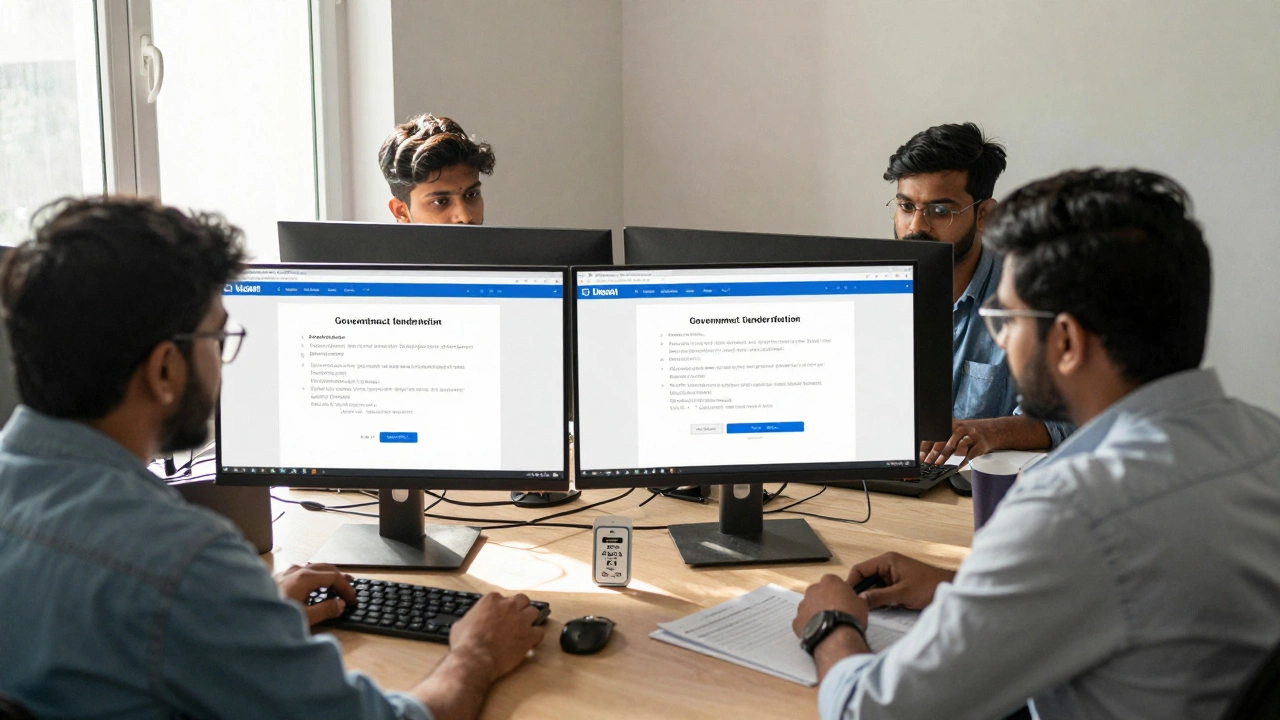
Government IT Tender Eligibility Checker
Check Your Eligibility
Determine if you meet the basic requirements for government IT projects in India. The government prioritizes MSMEs with proper documentation and experience.
Getting government IT projects in India isn’t about who you know-it’s about knowing the system. Every year, the Indian government spends over ₹1.2 lakh crore on digital infrastructure, software development, cybersecurity, and e-governance tools. But most small IT firms and startups miss out because they don’t know where to look, how to qualify, or how to compete. This isn’t a secret club. It’s a public process. And if you follow the steps right, you can win real contracts-no connections needed.
Understand the government’s IT spending structure
The Indian government doesn’t buy IT services from one central office. It’s spread across ministries, public sector units (PSUs), and state-level departments. The biggest buyers are:- Ministry of Electronics and Information Technology (MeitY) - Runs national digital missions like Digital India, Aadhaar, and UPI infrastructure.
- Department of Telecommunications (DoT) - Funds telecom network upgrades, 5G trials, and rural connectivity projects.
- National Informatics Centre (NIC) - Handles backend IT for most government portals and data centers.
- State IT Departments - Each state has its own IT tender pipeline for e-governance apps, citizen portals, and health records systems.
- Public Sector Undertakings (PSUs) - Companies like BHEL, ONGC, and NTPC regularly outsource software, automation, and ERP systems.
Most contracts are under ₹5 crore. That’s not a billion-dollar deal-but it’s enough to fund your team, build a portfolio, and scale. You don’t need to chase mega-tenders. Start small. Win three ₹2 crore projects, and you’ve got credibility.
Get registered on the right portals
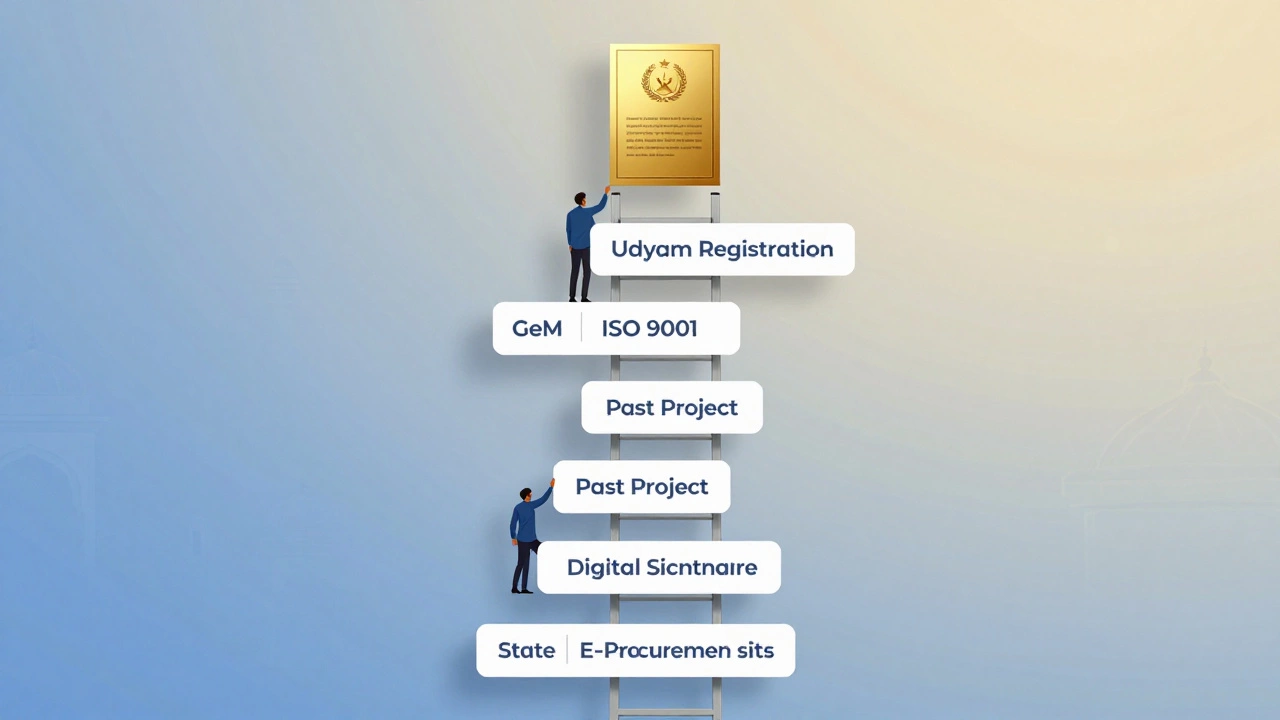
You can’t bid if you’re not on the list. The government uses only official e-procurement platforms. Missing one means missing all opportunities.- GeM (Government e-Marketplace) - gem.gov.in is the main portal for IT goods and services under ₹25 lakh. You can sell software licenses, cloud hosting, cybersecurity tools, and SaaS products here. Registration is free. You need your Udyam registration, PAN, and GST.
- Tender Portal (Central Public Procurement Portal) - eprocure.gov.in is where larger contracts (₹25 lakh+) are posted. This includes custom software development, system integration, and infrastructure projects. You must register as a vendor and upload your company documents.
- State e-Procurement Portals - Maharashtra has MahaProcure, Karnataka has Karnataka e-Procurement, and so on. If you’re based in a state, register there too. Many local projects never appear on the central portal.
Don’t skip GeM. Even if you think it’s too small, 78% of government IT buyers under ₹10 lakh start on GeM. It’s your foot in the door.
Meet the eligibility criteria
The government doesn’t just pick the cheapest bid. They pick the most reliable. Here’s what they check:- Udyam Registration - Mandatory for MSMEs. You get priority in 25% of government tenders reserved for small businesses. Register at udyamregistration.gov.in. It takes 10 minutes. Your Udyam number must be on every bid.
- ISO 9001 Certification - Not always required, but it boosts your score by 5-10%. Many IT tenders give extra points for quality management systems.
- Previous Experience - You need at least one completed IT project in the last 3 years. Doesn’t have to be government. A school’s website, a local clinic’s patient portal, or a small NGO’s donation system counts.
- Financial Stability - You’ll need your audited financial statements for 2 years. If you’re new, a bank guarantee or CA-certified net worth statement works.
Many startups fail here because they think they need a big office or 50 employees. You don’t. A team of 5 people working from home with clean documentation can win a ₹50 lakh project.
Build a winning proposal
Government tenders don’t ask for flashy pitches. They ask for clarity, compliance, and cost breakdown.Here’s what works:
- Follow the format exactly - If they ask for a 10-page response, don’t give them 15. If they want a Gantt chart, give one. Ignoring instructions = automatic disqualification.
- Break down your cost - Don’t say “₹40 lakh for development.” Say: “₹12 lakh for UI/UX design, ₹18 lakh for backend development, ₹5 lakh for testing, ₹5 lakh for training.”
- Highlight compliance - Mention if your software follows Indian IT Rules 2021, NDMI standards, or ISO 27001 for data security.
- Include a support plan - Government agencies care about maintenance. Say: “24/7 helpdesk for 1 year, free bug fixes for 6 months, quarterly updates.”
One firm in Pune won a ₹3.2 crore project from the Maharashtra Health Department because their proposal included a Tamil and Marathi language interface-something no one else thought to offer. They didn’t have the biggest team. They had the most thoughtful plan.
Target the right schemes
The government runs special programs to boost local tech startups. Use them:- Digital India Internship Program - MeitY funds startups to build tools for rural districts. You get ₹15-20 lakh in grants if you partner with a government department.
- Startup India Seed Fund Scheme - If you’re registered under Startup India, you can get up to ₹20 lakh for product development. Use this to build a prototype for a government tender.
- IT@Scale - MeitY’s program to scale Indian tech products. If your software is used by 10+ government bodies, you can get funding to expand.
- State Digital Mission Grants - States like Telangana, Gujarat, and Kerala give grants to local IT firms for building civic apps. Check your state’s IT department website.
Don’t wait for tenders. Apply for these schemes first. They give you funding, credibility, and a pilot project-all before you bid.
Track opportunities daily
Tenders are posted at 9 AM on Mondays. Many are closed within 48 hours. You need to be alert.Set up alerts:
- Subscribe to daily email digests from eprocure.gov.in and gem.gov.in.
- Use free tools like Tenders India (tendersindia.gov.in) or IndiaMART Government Tenders to get push notifications.
- Join WhatsApp groups run by local IT associations-many small tenders are shared there before they go public.
One Delhi-based developer found a ₹1.8 crore project for a district health portal because his friend in the local IT chamber shared a screenshot of the tender notice 12 hours before it went live. He was the only one to bid. He won.
Don’t make these mistakes
Most people lose because of simple errors:- Missing Udyam registration - 63% of rejected bids lack this.
- Using the wrong format - One company lost a ₹75 lakh contract because they submitted a PDF instead of a Word file.
- Underbidding too much - If you bid ₹20 lakh for a ₹40 lakh project, they assume you’ll cut corners.
- Ignoring deadlines - Late bids are rejected instantly. No exceptions.
- Not having a digital signature - All bids must be signed with a Class 3 DSC. Get one from eMudhra or NSDL.
One firm in Jaipur lost three tenders in a row because they used a personal email (gmail.com) instead of their company domain. The government flagged it as “unprofessional.”
Start small, build trust
Your first project might be for a panchayat’s digital attendance system. Or a district hospital’s appointment app. It won’t make headlines. But it will give you:- A government reference
- Proof of delivery
- Access to more tenders
After you complete one project, ask for a certificate of completion. Upload it to your GeM profile. Mention it in your next bid. Government buyers love proven vendors. They’d rather pay a little more to someone who’s delivered before.
There’s no magic trick. No insider channel. Just discipline, documentation, and persistence. The government needs tech solutions. You have the skills. The system is open. You just need to play by the rules.
Do I need a big company to win government IT projects in India?
No. Most government IT projects under ₹10 crore are won by small teams or startups. What matters is Udyam registration, past experience, and a clean, compliant proposal. A team of 3 people with a solid track record has won contracts worth ₹50 lakh or more.
How long does it take to get paid after winning a government IT project?
Payment timelines vary, but most agencies pay within 30 to 60 days after project completion and acceptance. Some states have faster systems-like Karnataka, where payments are often processed in under 20 days. Always include payment terms in your proposal. Avoid contracts that ask for 100% advance or delay payment beyond 90 days.
Can foreign companies bid on Indian government IT projects?
Foreign companies can bid on some large tenders, but most government IT projects-especially those under ₹25 crore-are reserved for Indian firms. You must have a registered Indian entity, GST number, and Udyam registration. Without these, you won’t be eligible for the majority of opportunities.
Is it better to bid alone or partner with another company?
For beginners, bidding alone is better. It keeps control simple and builds your own reputation. But if a project needs both software and hardware, or if you lack experience in a specific area like cybersecurity, partnering with a complementary firm can help. Just make sure the partnership is clearly documented in your bid, and that responsibilities are split in writing.
What’s the most common reason government IT bids get rejected?
The most common reason is missing documents-especially Udyam registration, DSC signature, or financial statements. Technical errors like wrong file formats or late submissions are also top causes. Many firms lose bids not because their solution is weak, but because they didn’t follow the rules.
Can I bid on government IT projects without a website?
Yes, you can. But you’ll need a professional email address ([email protected]), a LinkedIn profile, and a simple Google Site or Canva page that shows your team, past work, and contact info. The government doesn’t require a website, but they do expect professionalism. A shaky online presence raises red flags.
Are there any free training programs to learn how to bid on government IT tenders?
Yes. MeitY and NASSCOM run free webinars on government procurement. You can also check your state’s MSME development corporation-they often host workshops on tender bidding. YouTube has recorded sessions from past MeitY training programs. Search for “MeitY tender bidding workshop 2025.”
Next steps: Your 7-day action plan
If you’re serious about winning government IT projects, do this:- Day 1: Register for Udyam at udyamregistration.gov.in.
- Day 2: Get a Class 3 Digital Signature Certificate from eMudhra or NSDL.
- Day 3: Create a company email and set up a simple online profile (Google Site or LinkedIn).
- Day 4: Register on GeM (gem.gov.in) and eProcure (eprocure.gov.in).
- Day 5: Find and review 3 active tenders on GeM-note the requirements.
- Day 6: Prepare a template for your proposal (cost breakdown, timeline, support plan).
- Day 7: Submit your first bid. Doesn’t matter if it’s small. Just get started.
Don’t wait for the perfect moment. The system doesn’t reward perfection. It rewards action.
