Government Fund Finder & Comparison Tool
Find the right government funds for you
Answer a few questions to identify which government fund types may apply to you and compare key features.
India’s government spends over ₹40 lakh crore every year on programs that help farmers, small businesses, students, women, and rural communities. But not all of this money works the same way. Some funds are given as direct cash, others as low-interest loans, and some only after you meet strict conditions. If you’re trying to figure out where to apply for help - whether you’re a farmer, a startup founder, or a student - knowing the types of government funds in India is the first step.
Central Government Funds: National-Level Support
The central government runs the biggest and most visible funding programs. These are funded from the Union Budget and managed by ministries like Finance, Agriculture, MSME, and Women & Child Development.
One major type is direct benefit transfers (DBT). Money goes straight into a beneficiary’s bank account, cutting out middlemen. The PM-KISAN scheme, for example, gives ₹6,000 per year to small farmers in three equal installments. Over 110 million farmers received this in 2025.
Another type is subsidized credit. Programs like the Pradhan Mantri Mudra Yojana offer loans up to ₹10 lakh to micro-enterprises at near-zero interest. Banks don’t lend this money out of goodwill - the government guarantees 75-85% of the loan, so lenders take less risk.
Then there are grant-based schemes like the Startup India initiative. Eligible startups get funding up to ₹50 lakh for innovation, patent filing, or prototyping. Unlike loans, you don’t repay this. But you must submit quarterly progress reports and show measurable impact.
State Government Funds: Local Priorities, Local Rules
While the center sets broad goals, states adapt funds to their own needs. Maharashtra funds electric rickshaw drivers. Tamil Nadu gives ₹10,000 to women who start home-based food businesses. Rajasthan offers free land for agro-processing units in rural areas.
State funds often come with local eligibility rules. For example, to get the Uttar Pradesh Skill Development Scheme, you must be a resident for at least five years and have completed 10th grade. These rules aren’t arbitrary - they’re designed to keep money within the state’s economy.
Some states run their own versions of central schemes. Kerala’s ‘Kerala Startup Mission’ offers higher grants than the central Startup India program, but only to companies registered in the state. The catch? You need to hire at least two local employees within six months.
Public Sector Undertaking (PSU) Funds: Corporate-Led Support
India has over 300 public sector companies - like ONGC, NTPC, and Indian Railways - that are required by law to spend a portion of their profits on social development. This is called Corporate Social Responsibility (CSR), and it’s not optional.
PSUs fund everything from rural schools to clean water projects. In 2025, PSUs spent over ₹22,000 crore on CSR. Many of these funds go to NGOs or local panchayats, but some are open to individuals. For example, ONGC gives ₹5 lakh per year to five students from low-income families to study engineering.
These aren’t loans or grants you apply for like a bank. You usually need to be nominated by a local authority or recommended by a registered NGO. The selection process is often slower, but the funding amounts are larger and less restrictive.

Special Purpose Funds: Targeted, Time-Bound Support
Some funds are created for one specific goal and disappear after it’s achieved. The Atmanirbhar Bharat Abhiyan fund, launched in 2020, was meant to revive the economy after the pandemic. It gave out ₹20,000 crore in emergency loans to MSMEs. That fund is now closed.
But new ones keep appearing. In 2024, the government launched the Green Energy Transition Fund to help small manufacturers switch from diesel to solar. It offers up to ₹25 lakh per unit, with 40% as a grant and 60% as a low-interest loan. Only companies with fewer than 50 employees qualify.
These funds often have tight deadlines. You might get only 3-6 months to apply. The application window for the Green Energy Fund closes in March 2026. Missing it means waiting another year - or longer.
International and Multilateral Funds: Global Partnerships
India also gets money from global organizations like the World Bank, Asian Development Bank (ADB), and Green Climate Fund. These aren’t gifts - they’re loans with very low interest (1-2%) and long repayment periods (15-30 years).
The ADB funded the National Clean Air Programme, which gave ₹1,200 crore to 122 cities to reduce pollution. But the money didn’t go to individuals. It went to municipal corporations to buy air monitors, plant trees, and upgrade public transport.
Some multilateral funds do support individuals. The World Bank’s ‘Skills for Employment’ project gave scholarships to 50,000 youth in Bihar and Jharkhand to train in solar panel installation. These are highly competitive - only 1 in 10 applicants gets selected.
How to Find the Right Fund for You
Not every fund is right for everyone. Here’s how to cut through the noise:
- Identify your category - Are you a farmer? A student? A woman entrepreneur? A disabled person? Each fund targets a specific group.
- Check your location - State funds only work if you live there. Central funds are nationwide, but some have regional quotas.
- Look at the paperwork - If a fund requires 10 documents, it’s probably not for casual applicants. Simpler applications often mean faster payouts.
- Watch the deadlines - Many funds open for only 30-45 days. Set calendar reminders.
- Use the official portal - https://www.india.gov.in/topics/government-schemes is the only government-mandated source. Avoid third-party sites that charge fees to help you apply.
Common Mistakes People Make
Most applicants fail not because they’re ineligible - but because they misunderstand the rules.
- Applying for a business loan when you need a grant. Loans require collateral and credit history. Grants don’t.
- Thinking a state fund works nationwide. A scheme from Gujarat won’t help someone in Assam unless it’s also listed under central programs.
- Waiting until the last day to apply. Systems crash. Documents get lost. Apply at least two weeks early.
- Not tracking the status. Many applicants don’t know how to check if their application is approved. Use the SMS alerts or portal login you get after applying.
What’s New in 2026?
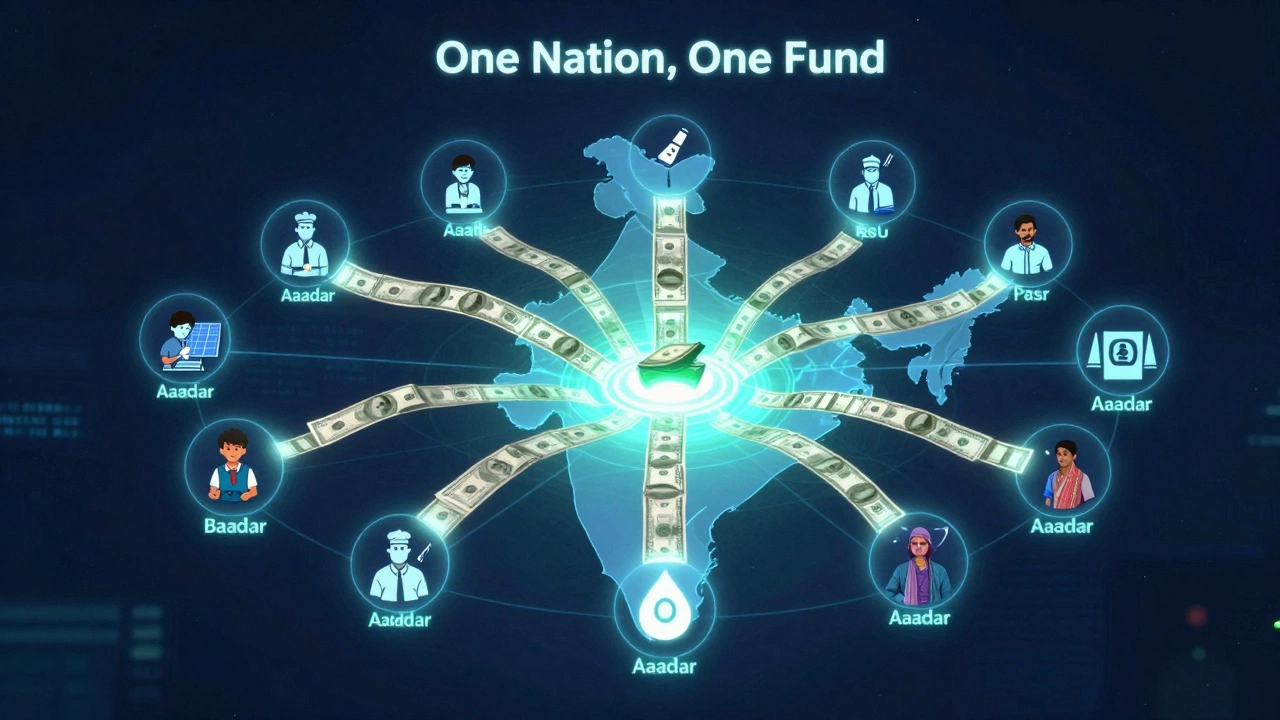
This year, the government launched the One Nation, One Fund dashboard - a single portal that shows all active schemes across central and state governments. You can filter by category, income level, state, and education. It’s live as of January 2026.
Also, Aadhaar-linked payments are now mandatory for all new fund disbursements. If you don’t have your Aadhaar linked to your bank account, you won’t receive any money - even if you’re approved.
And for the first time, the government is using AI to detect fraud. If your application looks too similar to another (same address, same phone, same documents), it gets flagged automatically. Don’t try to copy someone else’s application. It won’t work.
What’s the difference between a grant and a loan from the government?
A grant is free money - you don’t pay it back. Examples include the PM-KISAN scheme or Startup India grants. A loan must be repaid, usually with low interest. Examples include Mudra loans or the Green Energy Transition Fund’s 60% loan portion. Grants are for specific goals like education or innovation. Loans are for assets like machines, vehicles, or buildings.
Can I apply for multiple government funds at once?
Yes, you can apply for multiple funds as long as they’re for different purposes. For example, you can get a Mudra loan to buy a delivery bike and a state grant to install solar panels on your shop. But you can’t get two grants for the same expense. The system checks for duplicate claims using your Aadhaar and bank details.
Do I need to pay a fee to apply for government funds?
No. All government funds are free to apply for. If someone asks you for money to help you apply - whether it’s a consultant, agent, or website - it’s a scam. Official applications are done through government portals like https://www.india.gov.in or state-specific sites. No fee is ever required.
How long does it take to get government funds after applying?
It varies. Direct benefit transfers like PM-KISAN take 15-30 days. Grants like Startup India can take 3-6 months because of review panels. Loans through banks may take 2-4 weeks after approval. Always check the timeline listed on the scheme’s official page. If it’s been over 90 days and you haven’t heard anything, contact the nodal officer listed on the website.
What happens if I don’t use the government fund as intended?
If you misuse funds - like using a farmer subsidy to buy a smartphone instead of seeds - you’ll be asked to return the money. In serious cases, you could be banned from future schemes, fined, or even face legal action. The government uses bank transaction tracking and on-ground verification to check usage. Always keep receipts and photos of how you used the money.
