U.S. Export Revenue Calculator for India
Based on current India market data from the U.S. Department of Commerce and industry reports
Every year, American companies ship more than $100 billion worth of goods to India. That’s not just a number-it’s a lifeline for manufacturers, tech firms, farmers, and small exporters who’ve found real growth where others see only complexity. If you’re thinking about exporting from the U.S. to India, you’re not chasing a trend. You’re stepping into one of the most strategic markets in the world right now.
India’s economy is growing faster than most of the world
India’s GDP growth has hovered around 6.5% to 7% for the past five years, even when global economies slowed. In 2025, it’s expected to overtake Japan as the world’s third-largest economy by nominal GDP. That kind of momentum means more people are earning more money-and spending it. The middle class in India now includes over 400 million people, a number bigger than the entire population of the United States. These aren’t just consumers. They’re buyers of American-made medical devices, semiconductors, aircraft parts, agricultural equipment, and software.
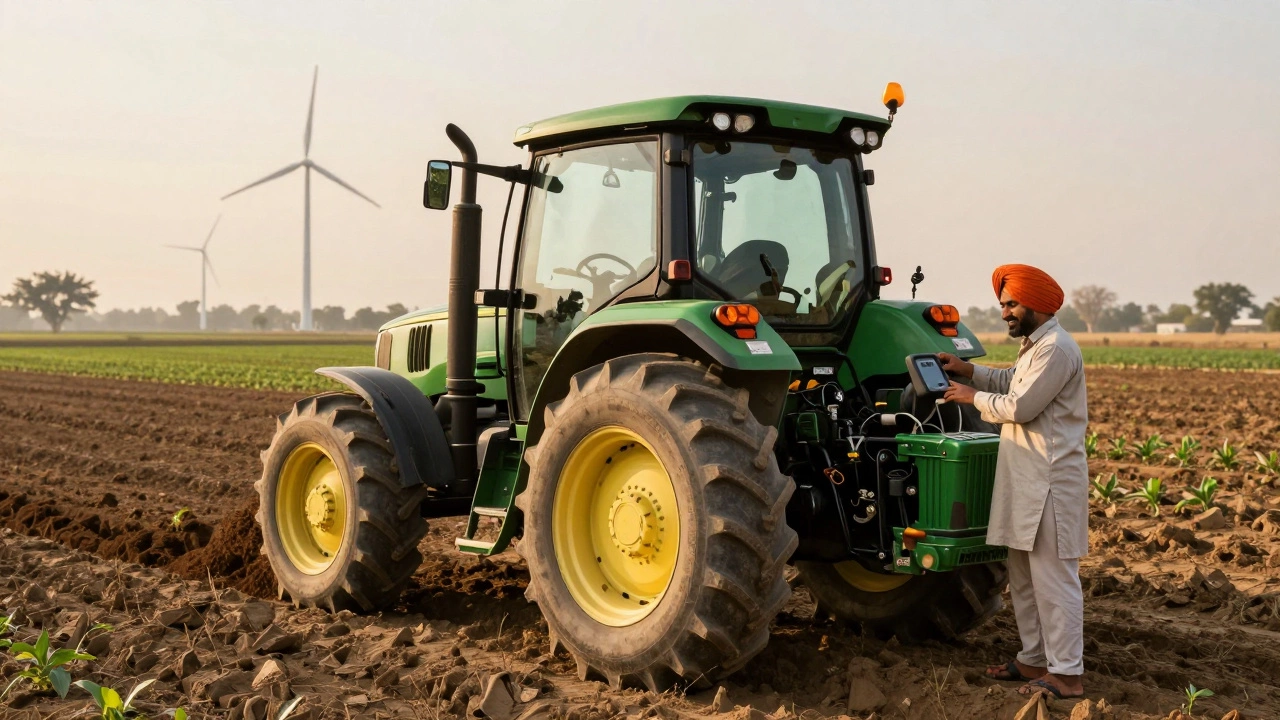
Take the case of John Deere. In 2023, the company sold over 12,000 tractors in India, up 30% from the year before. Why? Because Indian farmers are modernizing. They need reliable, high-efficiency machines. And when they do, they don’t buy cheap knockoffs-they buy brands they trust. American brands have that reputation.
India needs what America makes best
India doesn’t just want anything from the U.S. It wants specific things it can’t make at scale or quality yet. In 2024, India imported $18 billion in pharmaceutical ingredients from the U.S.-more than from any other country. That’s because American labs produce the purest active pharmaceutical ingredients (APIs) used in life-saving drugs. India’s own drugmakers rely on them to meet global standards.
Same with aerospace. Boeing sells more planes to India than to any country outside the U.S. Airlines like IndiGo and Vistara are expanding fast. They need fuel-efficient, reliable aircraft-and they’re choosing American-made models over European or Chinese alternatives. Why? Because maintenance networks, parts availability, and safety records matter when you’re flying millions of passengers a year.
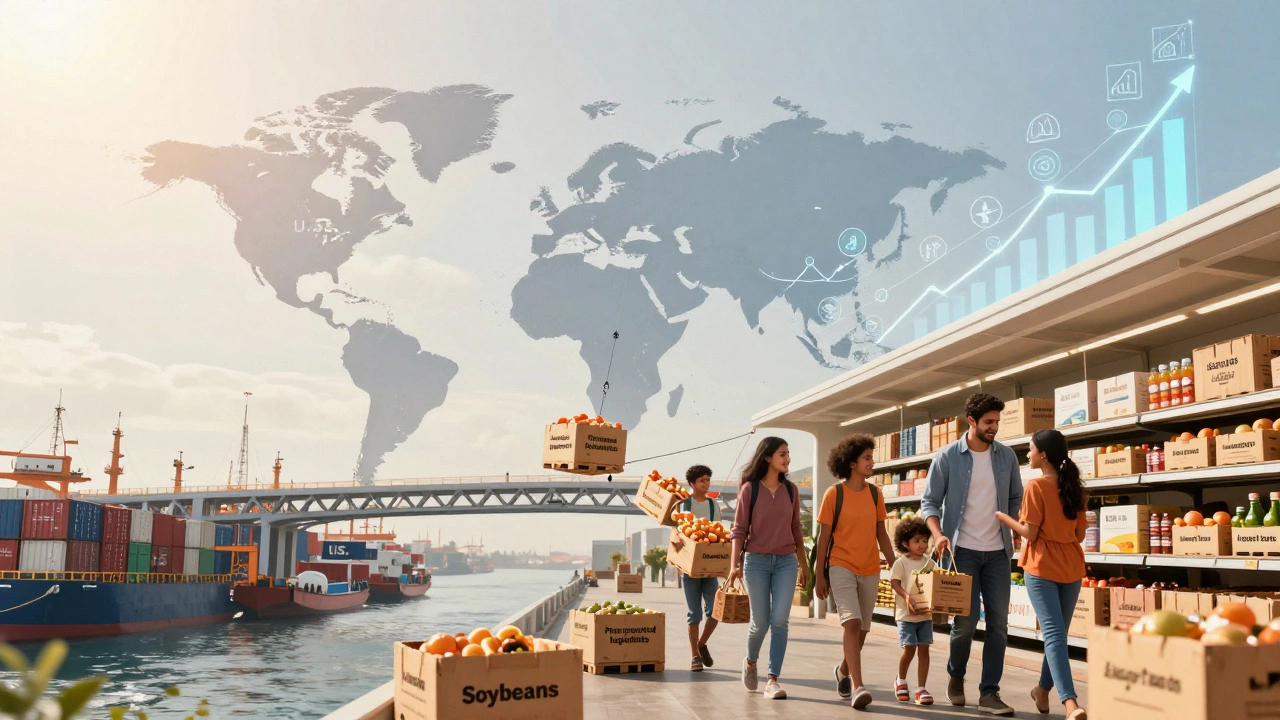
Even agriculture is changing. U.S. soybeans, almonds, and dairy products are in high demand as Indian diets shift toward protein-rich foods. In 2024, India imported $1.2 billion in U.S. almonds alone. That’s a 40% increase since 2020. Indian consumers aren’t just eating more nuts-they’re paying premium prices for quality, safety, and traceability. That’s where American producers have the edge.
The digital and tech connection is deeper than you think
When people think of India and tech, they think of call centers. But that’s 2010. Today, India is home to over 100,000 tech startups. And many of them are built on U.S. cloud platforms, software tools, and AI frameworks.
Microsoft Azure and Amazon Web Services (AWS) together serve over 70% of India’s cloud computing market. Why? Because Indian developers need scalable, secure, and reliable infrastructure. Local providers still can’t match the uptime, global compliance, or AI tools that American platforms offer. Startups in Bangalore, Hyderabad, and Pune rely on these tools to build apps for global markets-and they pay in U.S. dollars.
Even U.S.-made semiconductors are critical. India’s push to become a chip manufacturing hub means it’s importing $8 billion in chips annually from the U.S. Companies like Intel and NVIDIA are setting up design centers in India. But they still depend on American-made chips for prototypes, testing, and high-end applications.

Trade policies are shifting in America’s favor
Back in 2019, the U.S. removed India’s preferential trade status under the Generalized System of Preferences (GSP). Many thought that would hurt exports. It didn’t. Instead, both countries started negotiating new trade terms. By 2025, the U.S.-India Initiative on Critical and Emerging Technology (iCET) had opened up fast-track approvals for U.S. tech exports, medical devices, and clean energy equipment.
India now has a 10-year roadmap to reduce import tariffs on 1,000 U.S. products. That includes industrial machinery, precision tools, and even certain types of food processing equipment. The goal? To build supply chains that are more resilient-and less dependent on China.
There’s also the Inflation Reduction Act. U.S. companies exporting solar panels, batteries, and EV components to India can now access federal tax credits if they partner with Indian manufacturers. That’s a direct financial incentive to build joint ventures and export more.
Logistics and payments are easier than ever
Five years ago, exporting to India meant dealing with customs delays, unclear documentation, and banking hurdles. Today? It’s different.
Platforms like Flexport and DHL now offer end-to-end tracking from U.S. warehouses to Indian ports-with real-time updates in English and Hindi. U.S. exporters can use PayPal, Stripe, or Razorpay (which now accepts U.S. cards) to get paid in days, not weeks. Letters of credit are still used, but digital trade finance tools are cutting the time to approval from 14 days to under 48 hours.
And the Indian government’s e-Biz portal lets you file export documents online. No more printing stacks of forms. No more waiting in line at customs offices. Everything is digitized. You can register, pay duties, and track your shipment-all from your laptop in Texas or California.
It’s not just about sales-it’s about long-term partnerships
Successful U.S. exporters to India don’t just ship products. They build relationships. That means hiring local agents, attending trade shows like India Expo Mart or the India International Trade Fair, and understanding cultural expectations. Indians value trust over price. A U.S. company that visits regularly, responds quickly, and honors warranties will win repeat business-even if their price is 10% higher.
Look at the story of a small Iowa-based farm equipment maker. In 2022, they sent one tractor to a distributor in Punjab. The distributor was so impressed with the machine’s durability and after-sales support that they ordered 50 more the next year. Then 120. Today, that Iowa company has a full-time service technician based in Ludhiana. They didn’t just export a product. They built a brand.
What U.S. businesses should avoid
Not every U.S. product will succeed in India. Avoid exporting low-quality or overpriced goods. Indian buyers are savvy. They’ll compare prices across Alibaba, Dubai, and U.S. suppliers. If your product doesn’t clearly outperform the alternatives in reliability, warranty, or support, you’ll lose.
Also, don’t assume India is one market. Tamil Nadu has different buying habits than Uttar Pradesh. Mumbai buyers care about brand prestige. Rural buyers care about repairability. Know your customer segment. Work with local distributors who understand regional differences.
And never skip compliance. India has strict rules on labeling, packaging, and safety certifications. A U.S. company that ignored India’s BIS (Bureau of Indian Standards) certification for electronic goods lost $300,000 in a shipment stuck at customs for six months.
The bottom line
India isn’t a future opportunity. It’s a present-day engine of growth for U.S. exporters. From farm machinery to microchips, from almonds to AI tools, American companies are finding demand where they least expected it. The infrastructure is ready. The policies are improving. The customers are ready to buy.
If you’re a U.S. business looking to grow beyond domestic markets, India should be at the top of your list-not because it’s trendy, but because it’s necessary. The numbers don’t lie. The relationships are forming. The window is open.
What are the top U.S. exports to India right now?
The top U.S. exports to India in 2025 include petroleum products, aircraft and parts, pharmaceutical ingredients, semiconductors, agricultural products like soybeans and almonds, and medical devices. These categories make up over 60% of total U.S. exports to India.
Is it hard to export to India as a small business?
Not anymore. Platforms like Export.gov, Flexport, and U.S. Commercial Service offer free tools for small businesses to navigate documentation, find local partners, and understand tariffs. Many small exporters now use third-party logistics providers who handle customs clearance and delivery, making it as easy as selling on Amazon.
Do I need to set up a company in India to export there?
No. You can export directly as a U.S.-based company using an Indian distributor or agent. However, if you plan to sell large volumes or offer after-sales service, setting up a liaison office or branch in India can help with faster payments and better customer trust.
What certifications do U.S. products need for India?
Most electronics, machinery, and food products require Bureau of Indian Standards (BIS) certification. Medical devices need CDSCO approval. Chemicals and cosmetics must comply with India’s Hazardous Substances Rules. Always check the specific category on India’s DGFT portal before shipping.
How long does it take to get paid when exporting to India?
Payment terms vary. With digital platforms like Stripe or PayPal, you can get paid in 2-5 days. With traditional letters of credit, expect 15-30 days. To reduce risk, use escrow services or request a 30% advance payment. Many Indian buyers now use UPI or NEFT transfers, which are fast and secure.
