Government Scheme Explorer
Imagine trying to build a house without a foundation. No matter how beautiful the walls or how sturdy the roof, the structure will eventually collapse. In India, government schemes act as that critical foundation for millions of citizens. They are not just paperwork filed in New Delhi; they are the engines driving social mobility, economic stability, and infrastructure growth across the country.
You might wonder why these programs get so much attention. The answer lies in scale. India is home to over 1.4 billion people with vast disparities in wealth, access to education, and healthcare. Without structured intervention, the gap between the rich and the poor would widen exponentially. Government schemes bridge this gap by providing direct resources, financial aid, and opportunities to those who need them most.
Bridging the Economic Divide
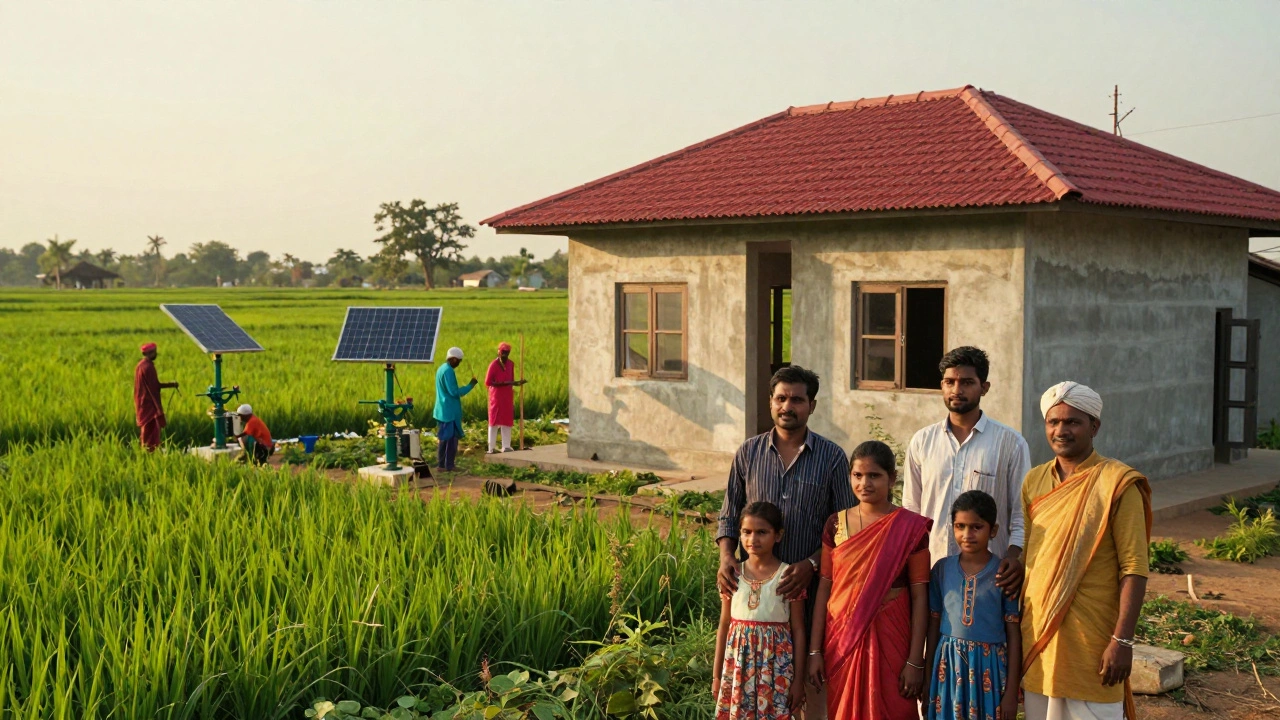
The primary reason government schemes are important is their ability to redistribute resources. In a market-driven economy, capital naturally flows to where it can generate the highest returns-usually urban centers and established industries. This leaves rural areas and marginalized communities behind. Schemes like Pradhan Mantri Awas Yojana (PMAY), which aims to provide affordable housing to the homeless, directly inject capital into local construction markets while solving a basic human need.
Consider the impact on small businesses. When the government introduces subsidies for solar panels under the KUSUM Scheme, farmers can install solar pumps at a fraction of the cost. This doesn't just help the farmer save on electricity bills; it creates jobs for technicians, boosts demand for solar equipment manufacturers, and reduces the load on the national power grid. It’s a ripple effect that starts with policy but ends up strengthening the entire local economy.
Without these interventions, many sectors would stagnate. For instance, the agricultural sector employs nearly half of India's workforce but contributes less than 20% to the GDP. Schemes that provide crop insurance, better seeds, and irrigation facilities help stabilize incomes for millions of families who otherwise live paycheck to paycheck-or rather, harvest to harvest.
Empowering Women and Marginalized Groups
Social equity is another pillar where government schemes play an irreplaceable role. Historically, women in India have faced significant barriers to financial independence and education. Programs like Beti Bachao Beti Padhao focus on saving the girl child and ensuring her education. This isn't just about moral obligation; it’s about economic logic. Educated women participate more actively in the workforce, make better health decisions for their families, and contribute to long-term demographic stability.
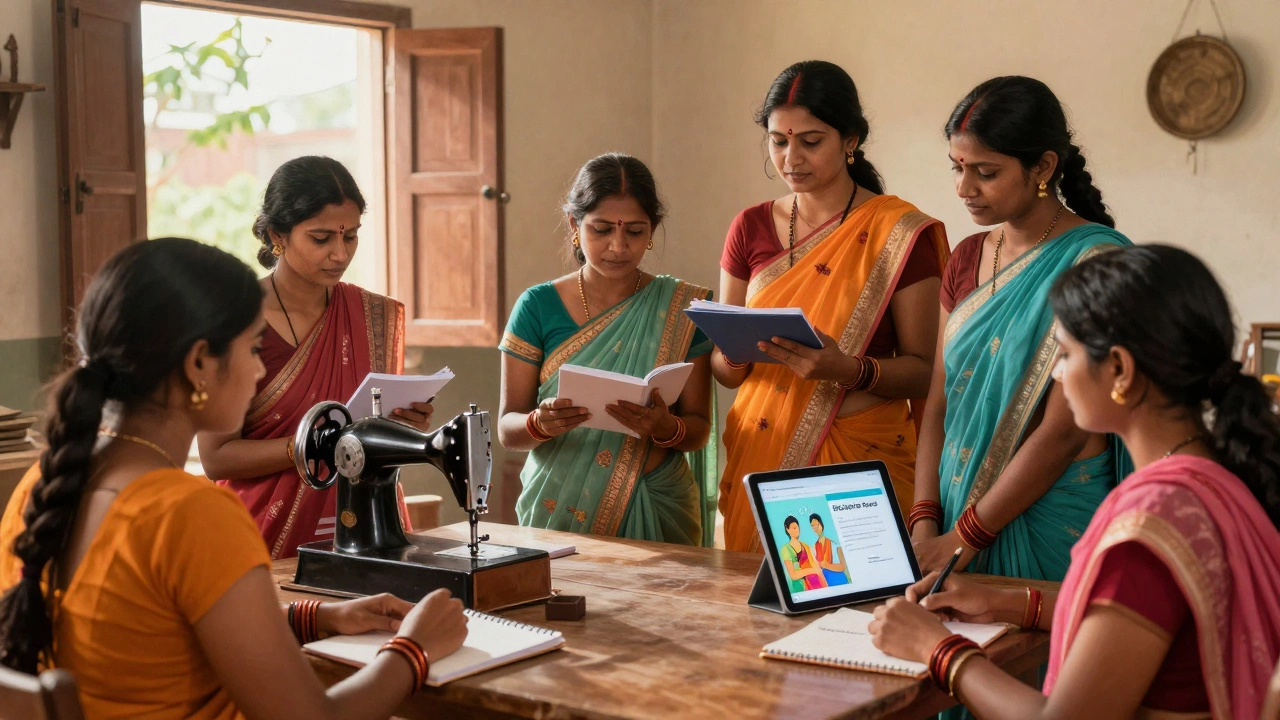
Take the example of Self-Help Groups (SHGs) supported by various state and central initiatives. These groups allow women in rural areas to pool money, lend to each other at low interest rates, and start micro-enterprises. A woman who couldn’t afford a sewing machine five years ago might now run a tailoring business because a government-backed SHG provided the initial loan. This shift from dependency to entrepreneurship transforms entire communities.
Similarly, reservations and scholarships for Scheduled Castes (SCs), Scheduled Tribes (STs), and Other Backward Classes (OBCs) ensure that talent isn’t wasted due to lack of opportunity. By guaranteeing seats in educational institutions and government jobs, these policies create a more diverse and representative leadership class.
Boosting Digital Infrastructure and Connectivity
In today’s world, connectivity is currency. You can’t do business, access education, or even apply for a bank loan without being online. The Digital India initiative has been crucial in bringing high-speed internet to remote villages. Before this push, many rural areas had no reliable network coverage. Now, a student in a village in Bihar can attend online classes taught by experts in Bangalore.
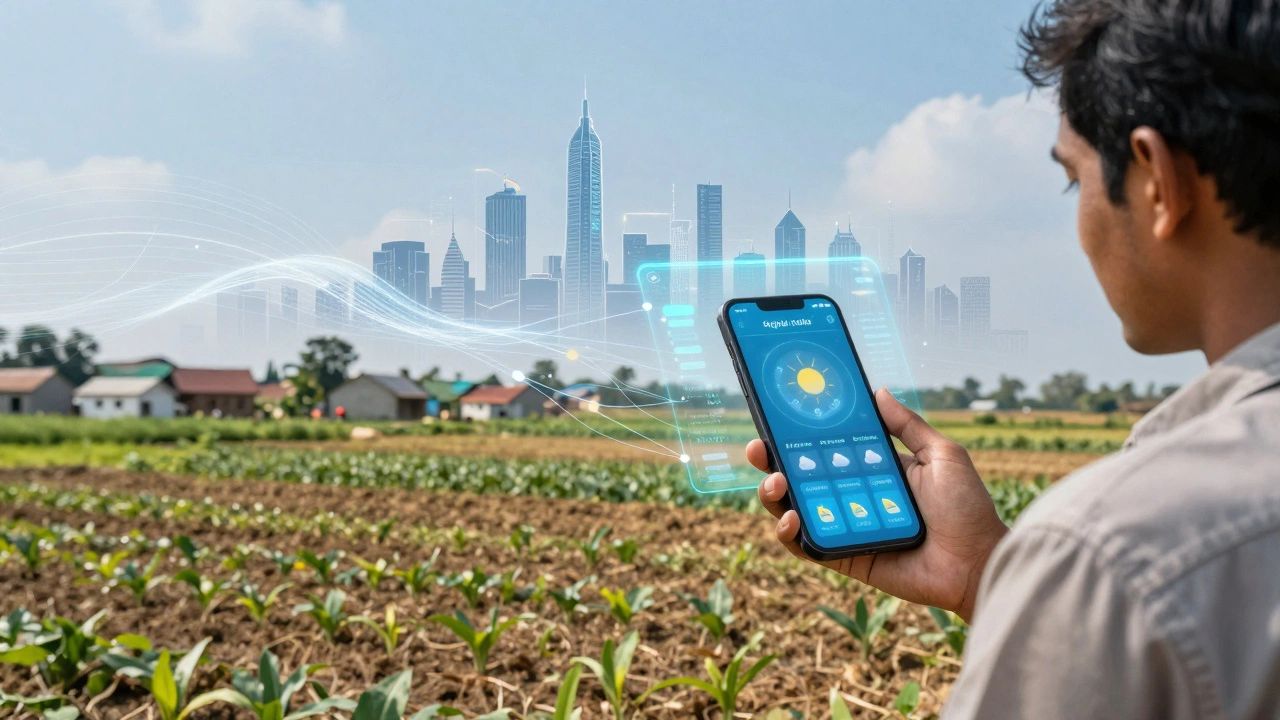
This digital leapfrogging has enabled new business models. Farmers use apps to check real-time market prices for their crops, avoiding exploitation by middlemen. Small shopkeepers accept UPI payments, integrating them into the formal economy. The government’s investment in digital infrastructure pays off through increased tax compliance, reduced corruption, and greater transparency in service delivery.
Moreover, digital IDs like Aadhaar have revolutionized how benefits are delivered. Instead of cash flowing through multiple hands-with leaks at every stage-Direct Benefit Transfers (DBT) send money straight to the beneficiary’s bank account. This efficiency saves billions of rupees annually that would otherwise be lost to fraud or administrative overhead.
Healthcare Access for All
Health is wealth, but only if you can afford it. Out-of-pocket healthcare expenses push millions of Indians into poverty every year. Schemes like Ayushman Bharat aim to change this narrative by providing health insurance coverage to vulnerable families. Under this program, eligible households can receive secondary and tertiary care hospitalization up to ₹5 lakh per family per year, free of cost.
This safety net allows people to seek timely medical attention instead of delaying treatment until conditions become critical. It also encourages preventive care through the establishment of Health and Wellness Centers in primary health units. Imagine a pregnant woman in a remote area getting regular check-ups and vaccinations because she knows the care is covered. That’s the tangible impact of such schemes.
Furthermore, during crises like the pandemic, existing health infrastructure built through these schemes proved vital. Hospitals equipped under earlier phases could handle surges in patients, and telemedicine services expanded rapidly thanks to prior digital investments. Preparedness matters, and government planning ensures resilience against future shocks.
Supporting Education and Skill Development
Education is the great equalizer, but access remains uneven. Government schemes fund schools, provide mid-day meals, and offer scholarships to keep children in classrooms. The National Education Policy (NEP) 2020 reforms curriculum and emphasizes vocational training from an early age. This shift prepares students not just for exams but for actual jobs.
Skill development programs like Skill India train young adults in industry-relevant skills such as coding, welding, hospitality, and nursing. With a large youth population entering the job market every year, aligning education with employer needs reduces unemployment. A graduate who learns Python programming through a government-supported institute is far more employable than one with only theoretical knowledge.
These initiatives also support higher education through loans with moratorium periods and interest subsidies. Students from low-income backgrounds can pursue engineering, medicine, or law degrees without falling into debt traps. This upward mobility strengthens the middle class, which is essential for sustainable economic growth.
| Scheme Name | Primary Objective | Target Beneficiaries |
|---|---|---|
| PM Awas Yojana | Affordable Housing | Urban/Rural Poor |
| Ayushman Bharat | Health Insurance | Vulnerable Families |
| Digital India | Internet Connectivity | All Citizens |
| Skill India | Vocational Training | Youth Unemployed |
| KUSUM | Solar Energy for Farmers | Agricultural Sector |
Challenges and the Way Forward
Despite their importance, government schemes face challenges. Implementation gaps, bureaucratic delays, and lack of awareness among beneficiaries often reduce their effectiveness. Sometimes, funds intended for one group get diverted or misused. Transparency and accountability mechanisms need constant strengthening.
Technology offers solutions here. Blockchain for fund tracking, AI for predicting dropout rates in schools, and mobile apps for grievance redressal can improve outcomes. Citizen participation is equally crucial. People must know their rights and how to access benefits. Community leaders and NGOs play a key role in spreading awareness and monitoring implementation on the ground.
As India grows, the nature of schemes must evolve too. Climate change demands green energy incentives. Aging populations require pension reforms. Urban migration calls for smarter city planning. Future policies should be flexible, data-driven, and inclusive to address emerging needs.
How do I check if I am eligible for a government scheme?
Visit the official portal of the specific ministry or department running the scheme. Most sites have an eligibility checker tool. Alternatively, contact your local Common Service Center (CSC) or gram panchayat office for assistance. Always verify information through .gov.in domains to avoid scams.
Are government schemes only for poor people?
No. While many welfare schemes target economically weaker sections, others benefit everyone. Examples include Digital India (internet access), Swachh Bharat Mission (sanitation), and skill development programs. Some tax relief measures also help middle-class taxpayers.
What happens if my application for a scheme is rejected?
Most schemes have an appeal process. Check the rejection reason mentioned in the notice. You can file an appeal within the specified timeframe, usually 30-90 days, providing additional documents if needed. Local administration offices can guide you through this procedure.
Do government schemes really reach the intended beneficiaries?
Yes, especially with Direct Benefit Transfer (DBT). Since Aadhaar seeding became mandatory, leakage has decreased significantly. However, awareness levels vary by region. Rural areas may still face hurdles due to digital literacy or documentation issues, requiring community support.
Can businesses benefit from government schemes?
Absolutely. Many schemes support startups, MSMEs, exporters, and manufacturers through subsidies, loans, and tax holidays. Programs like Startup India and Make in India offer grants, mentorship, and easier compliance norms to boost private sector growth.
