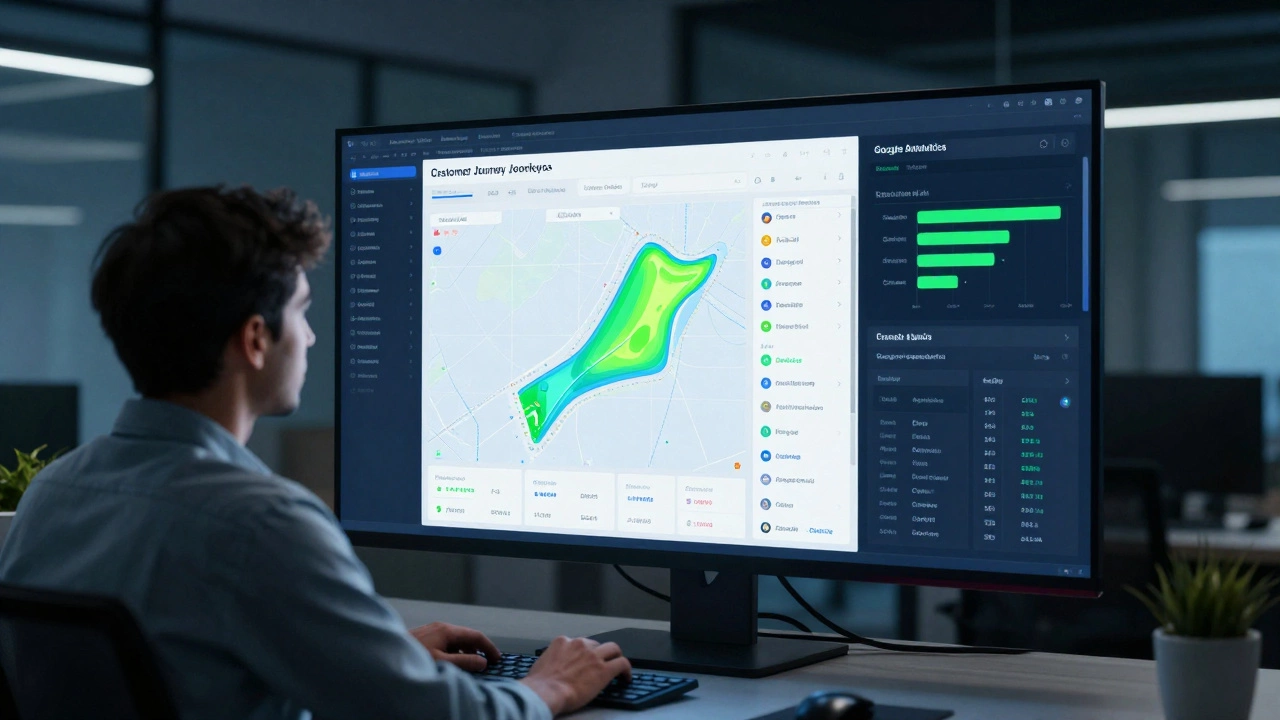
Digital Marketing Skill Value Calculator
Understand how your current skills compare to the highest-paying digital marketing roles. This calculator estimates your potential earning power based on data analytics proficiency.
Your Digital Marketing Skill Value
Estimated Annual Salary: ₹0 lakhs
Skill Level: Beginner
Skill Gap: Intermediate
According to industry data, professionals with your current skill level earn approximately ₹15-20 lakhs per year in top Indian companies like Flipkart and Razorpay.
Recommended Next Steps
Based on your assessment, focus on learning GA4 explorations and basic SQL queries to increase your value.
There’s a myth floating around that if you know how to run Facebook ads, you can make six figures in digital marketing. That used to be true - but not anymore. Today, the highest paying skill in digital marketing isn’t about posting content or tweaking ad copy. It’s about understanding data well enough to predict what customers will do before they even click. That skill is marketing analytics powered by AI.
Why traditional digital marketing skills don’t pay as much anymore
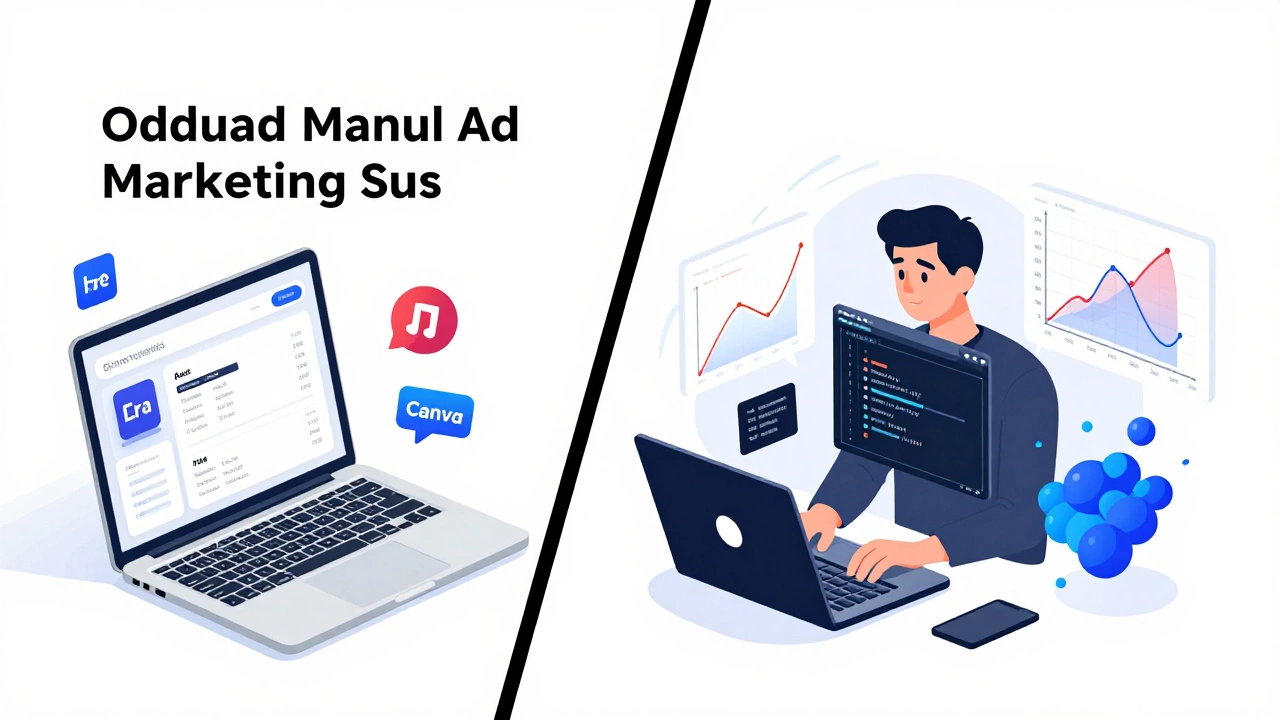
Five years ago, someone who could manage Google Ads or run Instagram campaigns was in high demand. Companies paid $500-$1,000 a month for freelancers to handle their social media. Today, those tasks are automated. Tools like Hootsuite, Buffer, and even Canva’s AI features let beginners post content, schedule ads, and generate visuals with minimal effort. The barrier to entry dropped. So did the pay.
Think about it: if a tool can do 80% of your job, why would a company pay you $3,000 a month? They’ll hire someone for $800 who can oversee the system - not manually run it.
The real money now goes to people who can answer questions like:
- Which 5% of customers are responsible for 60% of your revenue?
- Why did sales drop 30% last week even though ad spend stayed the same?
- What’s the exact moment a visitor turns from a browser into a buyer?
These aren’t guesswork questions. They require deep data analysis, machine learning models, and the ability to connect dots across platforms - CRM, Google Analytics, Shopify, email platforms, and ad networks.
The skill that’s paying $150,000+ in India
In 2026, the top earners in digital marketing aren’t content creators or social media managers. They’re marketing data scientists. These are professionals who combine:
- Statistical analysis (regression, clustering, time-series forecasting)
- AI tools like Google’s Vertex AI, Meta’s Prophet, or open-source Python libraries (scikit-learn, TensorFlow)
- Deep knowledge of customer journey mapping across touchpoints
- Experience with attribution modeling - not last-click, but algorithm-driven multi-touch attribution
Companies in India are paying ₹15-20 lakhs per year (around $18,000-$24,000 USD) for these roles. Senior roles at companies like Flipkart, Razorpay, or BYJU’S offer ₹25+ lakhs. And they’re struggling to find qualified people.
Why? Because most digital marketing courses still teach how to create ads - not how to decode why those ads work (or fail). There’s a massive gap between what’s being taught and what the market actually needs.
Real example: How one company doubled ROI using data, not more ads
A skincare brand in Bangalore was spending ₹8 lakhs a month on Meta and Google ads. Sales were flat. Their agency kept saying, “Just spend more.”
They hired a data analyst who pulled together:
- Google Analytics 4 behavior flow data
- Customer purchase history from Shopify
- Email open and click patterns from Klaviyo
- Return rate data from their logistics partner
The analysis revealed something shocking: 72% of their buyers came from users who had visited their site at least three times - but only after seeing a retargeting ad and receiving a discount email within 48 hours.
They didn’t increase ad spend. They changed the timing and sequence of their automated emails. They also paused low-performing ad sets targeting first-time visitors.
Result? A 112% increase in ROI. Ad spend stayed the same. Profit jumped.
That’s the power of analytics. Not more budget. Smarter decisions.
What you need to learn to get there
You don’t need a PhD in statistics. But you do need to move beyond surface-level tools. Here’s a realistic roadmap:
- Master Google Analytics 4 - not just traffic reports, but custom events, user properties, and explorations.
- Learn SQL - enough to pull data from databases. You don’t need to be an engineer, but you must know how to write basic SELECT, JOIN, and GROUP BY queries.
- Get comfortable with Excel or Google Sheets for pivot tables, VLOOKUP, and forecasting functions.
- Take a free course on Python for marketing - try Google’s “Marketing Analytics with Python” on Coursera.
- Practice on real data. Sign up for a Shopify free trial, connect it to GA4, and try to answer: “Who are my most valuable customers?”
Within 6-9 months, you’ll be able to speak the language of data. And that’s when companies will start competing for you.
What doesn’t work anymore
Here’s what’s losing value fast:
- Just running ads without measuring lift
- Using vanity metrics like “likes” or “followers” as success indicators
- Believing “more content = more sales”
- Trusting agency reports that don’t show revenue impact
These are dead-end skills. They won’t get you promoted. They won’t get you hired by top companies. They’ll just keep you busy.
The market doesn’t reward effort. It rewards insight.

Who’s hiring - and where
The biggest demand is in:
- E-commerce companies (Flipkart, Myntra, Meesho)
- Fintech startups (Razorpay, PhonePe, CRED)
- Edtech platforms (BYJU’S, Unacademy, Vedantu)
- Global SaaS companies with India offices (Salesforce, HubSpot, Adobe)
Job titles vary: “Marketing Data Analyst,” “Growth Scientist,” “Customer Insights Manager,” or “AI Marketing Specialist.”
Even small companies are starting to hire for these roles. Why? Because they realize they can’t afford to waste money on guesswork.
What’s next for digital marketing in India
By 2027, every digital marketer will need to understand data. The ones who don’t will either become assistants to data-driven marketers or get replaced by automation.
The future belongs to people who can translate numbers into strategy. Not just “we got 10,000 clicks,” but “those clicks came from users who are 4.2x more likely to refer others, so we should double down on this segment.”
That’s the difference between being a marketer - and being a business multiplier.
Start now - before the flood hits
Right now, there are more job openings than qualified people. That won’t last. In two years, everyone will have taken a Google Analytics course. The edge won’t be in knowing how to use tools - it’ll be in knowing how to ask the right questions.
Don’t wait until you’re competing with 10,000 other freelancers offering “Facebook ads management.” Build a skill that only 2% of marketers have. That’s where the real money is.
