GST Registration Eligibility Checker
Answer a few questions to see if you likely qualify for a GST registration exemption.
Quick Summary
- Small businesses with an annual turnover below ₹20 lakh (₹10 lakh for special states) generally don't need GST registration.
- Certain goods and services, like fresh produce and healthcare, are completely exempt from tax.
- Agriculture-focused activities are mostly outside the scope of GST.
- Inter-state sellers must register regardless of turnover, unless they sell only exempt supplies.
- Specific categories like handloom weavers with low turnover are granted special exemptions.
Think you need to register for GST the moment you start selling a product? Not necessarily. Many entrepreneurs panic about the paperwork and tax compliance before they even make their first sale. The truth is, the Indian government doesn't want to burden tiny micro-businesses with complex filings. That's why there's a built-in safety net called exemptions. If you fall under these rules, you can run your business without worrying about charging GST or filing monthly returns.
The Magic Number: Understanding Turnover Thresholds
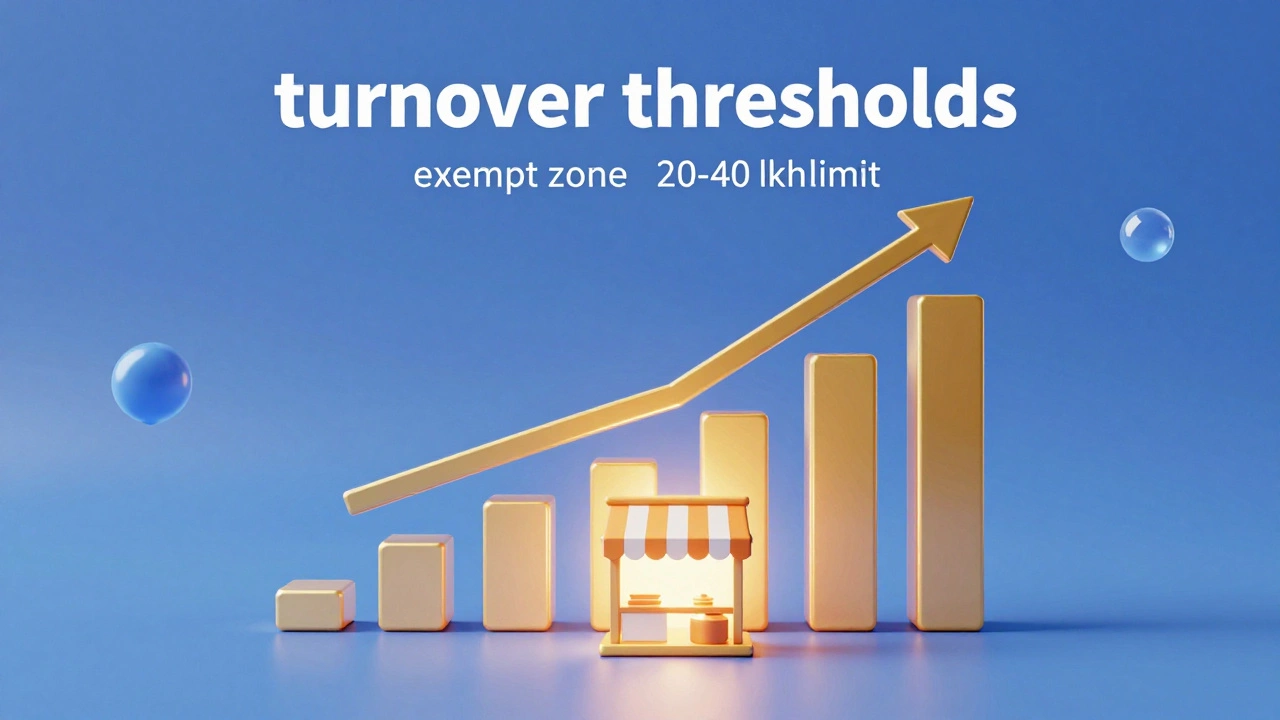
The biggest relief for most small business owners is the turnover limit. In simple terms, if you aren't making a lot of money yet, the government leaves you alone. GST registration india is the mandatory process of enrolling in the Goods and Services Tax system to collect tax on behalf of the government. However, this is only mandatory once you hit a specific financial ceiling.
For most states in India, the threshold for a service provider is ₹20 lakh. If you sell goods, that limit bumps up to ₹40 lakh. But wait-it's not the same everywhere. If you're operating in "Special Category States" like Manipur, Mizoram, Nagaland, or Tripura, the limit is much lower, usually ₹10 lakh for services and ₹20 lakh for goods. Why the difference? These regions have different economic structures, and the government wants to keep the tax net tighter there while still supporting local trade.
If your total sales for the year stay under these numbers, you are effectively exempt from registering. You don't have to get a GSTIN, and you can't collect tax from your customers. If you do collect tax without a registration, you're actually breaking the law.
Goods That the Government Doesn't Tax
Even if your business is huge and you're registered, some of the things you sell might be exempt. This is where we talk about Exempt Supplies, which are goods or services that attract a 0% tax rate or are specifically listed as non-taxable in the GST schedule.
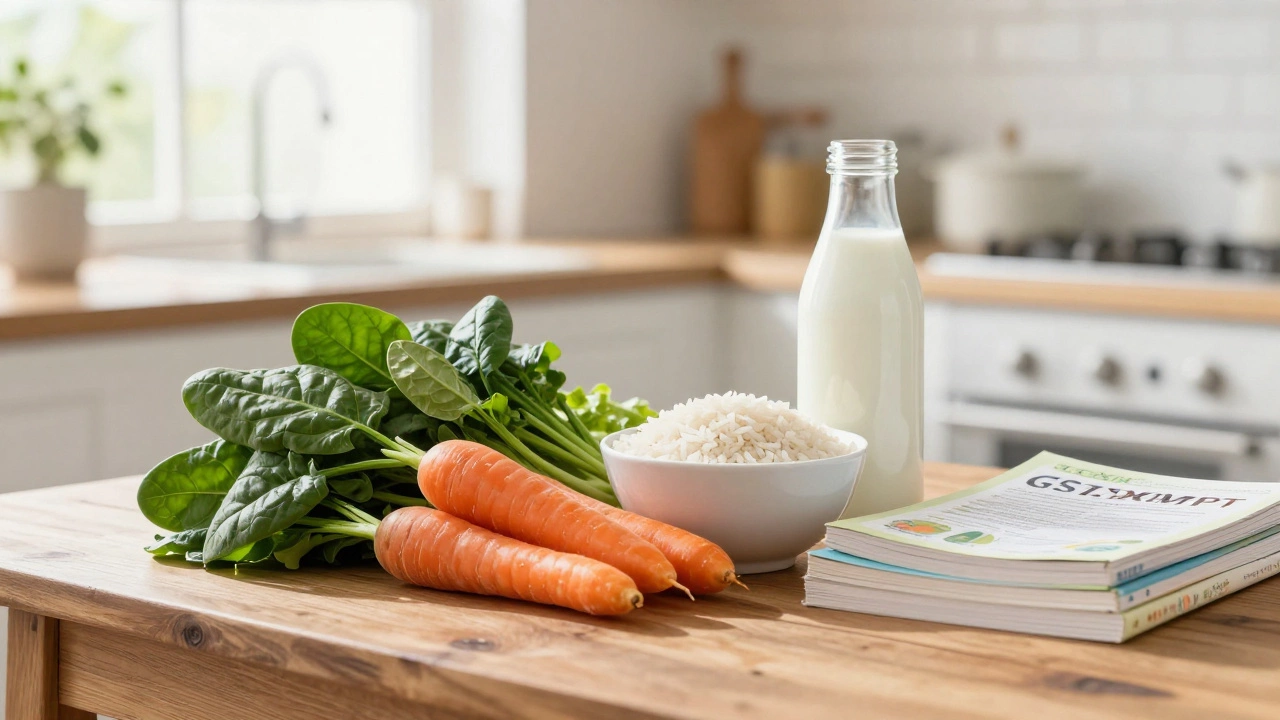
Think about your daily groceries. Fresh milk, eggs, curd, and raw vegetables aren't taxed. Why? Because these are essential items. If the government taxed raw wheat or fresh spinach, it would drive up food prices for everyone. Similarly, books (printed) are exempt. The goal here is to keep education and basic nutrition affordable.
| Exempt (0% GST) | Taxable (5% - 28% GST) | Reason for Exemption |
|---|---|---|
| Fresh Fruits & Vegetables | Processed Fruit Juices | Essential Nutrition |
| Unbranded Grains | Packaged Branded Cereals | Basic Food Security |
| Hand-made Bread | Bakery Cakes/Pastries | Daily Staples |
| Fresh Milk | Flavoured/Processed Milk | Primary Necessity |
Services That Fly Under the Radar
It's not just about physical products. Many services are also exempt from GST. If you provide these, you might not need to worry about the tax man, depending on your total income.
Take healthcare for example. Healthcare Services, provided by a registered medical practitioner, are generally exempt. This means when you visit a doctor for a check-up, you aren't paying a 18% GST on the consultation fee. The same goes for ambulance services. The idea is that health is a fundamental right, not a luxury.
Education is another big one. Services provided by an educational institution to a student are exempt. If you're running a recognized school or college, you don't charge the students GST on their tuition fees. However, if you start a fancy "corporate leadership masterclass" that doesn't fit the definition of a recognized educational institution, you might find yourself in the taxable bracket.
The Agriculture Exception
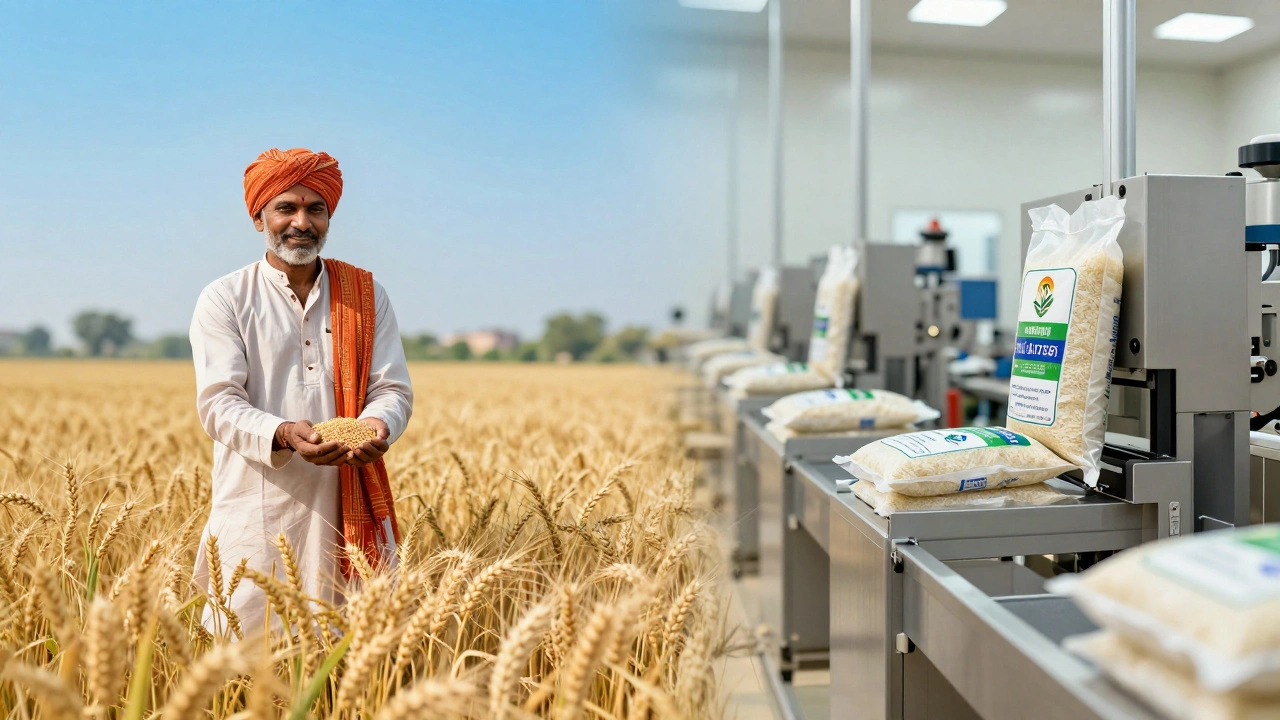
Agriculture is the backbone of India, and the tax laws reflect that. Most activities related to the cultivation of land are outside the scope of GST. For instance, if a farmer sells raw cotton or rice directly from the farm, that transaction is exempt.
However, there's a thin line here. The moment a farmer starts processing the crop-say, turning that cotton into a branded t-shirt or that rice into a packaged luxury basmati brand-the business enters the taxable zone. The exemption applies to the primary production, not the secondary manufacturing.
Special Exemptions: The Fine Print
There are some unique cases where the government grants exemptions based on the nature of the person or the business. For example, handloom weavers. If a weaver uses a handloom and their turnover is below the standard threshold, they are often exempt to protect traditional arts.
Another interesting case is the "Composition Scheme." Now, this isn't a full exemption, but it's a massive simplification. If your turnover is under ₹1.5 crore, you can opt for the Composition Scheme, which is a flat-rate tax payment system that reduces the compliance burden for small taxpayers. You pay a tiny percentage of your turnover as tax and don't have to maintain detailed invoices. It's the closest a "growing" business can get to being exempt.
The Inter-State Trap: Where Exemptions Fail
Here is where many new business owners get tripped up. Let's say you're selling handmade soaps from Delhi. Your sales are only ₹5 lakh a year. You think, "Great, I'm well under the ₹40 lakh limit!"
But then, you start selling on Amazon or Flipkart to customers in Mumbai and Bangalore. The moment you sell across state lines (Inter-state supply), the rules change. Technically, any person making inter-state taxable supplies is required to register for GST, regardless of their turnover.
Wait-there is one loophole. If you are only selling exempt goods (like fresh vegetables) across states, you still don't need to register. But if your product is taxable (like soaps), even a single sale to another state could legally trigger the need for registration. To solve this, the government introduced a threshold for e-commerce sellers, but it's always safer to check your specific product category first.
Checklist: Are You Actually Exempt?
Before you decide to skip registration, run through this quick mental checklist:
- Is my annual turnover below ₹20 lakh (services) or ₹40 lakh (goods)?
- Am I operating in a special category state with a lower threshold?
- Are the products I sell listed as "Exempt" (e.g., raw agricultural produce)?
- Am I selling only within my own state?
- Am I providing a service that the government considers a basic necessity (healthcare, education)?
If you answered "Yes" to all of these, you are likely in the clear. If you answered "No" to any, it's time to talk to a chartered accountant.
Can I still claim Input Tax Credit (ITC) if I am exempt?
No. This is the biggest trade-off. If you are exempt from GST registration, you cannot claim Input Tax Credit. This means any GST you pay on your raw materials, rent, or equipment becomes a cost to your business. You can't get that money back from the government.
What happens if I cross the threshold mid-year?
You must apply for registration within 30 days of the date you crossed the threshold. You don't have to go back and pay tax for the period you were under the limit, but from the moment you hit that number, you're a taxable person.
Do freelancers need GST registration?
Freelancers are considered service providers. If your total annual income from freelancing is below ₹20 lakh, you are generally exempt. However, if you export services to clients outside India, you might want to register to claim zero-rated supply benefits.
Are all agricultural products exempt?
No. Only primary agricultural produce is exempt. If you process the produce (like making jam from fruit or branded flour from wheat), those processed goods are taxable.
Can I voluntarily register even if I'm exempt?
Yes, you can. Many small businesses do this because it allows them to claim Input Tax Credit on their purchases and makes them look more professional to B2B clients who want to claim the credit themselves.
Next Steps for Your Business
If you've realized you're not exempt, don't panic. Start by gathering your PAN card, proof of business address (like a rental agreement or electricity bill), and a bank statement. The registration process is entirely online and usually takes a few days to process.
For those who are exempt, the best move is to keep a clean record of your monthly sales. Even if you don't file GST returns, having a simple spreadsheet of your income will save you a massive headache when you eventually grow large enough to hit that threshold. Tracking your growth now means you won't be surprised by a tax notice later.
