E-commerce Profit Estimator
Estimate your potential earnings from an e-commerce business in India based on the article's data. This tool helps you compare e-commerce to traditional business models with real-world parameters.
Your Business Inputs
Why E-commerce Wins
Based on the article's 2024 data:
- Startup costs ₹5,000–₹50,000
- Time to profit 2–8 weeks
- Monthly profit potential ₹50,000–₹50 lakh+
Your Estimated Monthly Profit
Comparison with Other Models
India’s business landscape isn’t just growing-it’s exploding. With over 100 million small businesses and a digital economy that hit $1 trillion in 2024, finding the single "No. 1" business isn’t about hype. It’s about real returns, scalability, and resilience. So which business actually takes the crown in 2025? The answer isn’t a single company. It’s a model: e-commerce.
Why E-Commerce Is India’s No. 1 Business
E-commerce isn’t just selling products online. It’s the engine driving India’s consumer revolution. In 2024, India’s e-commerce market crossed $150 billion in sales. That’s up from $50 billion in 2020. Over 180 million Indians bought something online last year. And it’s not just metro cities. Rural India now accounts for 40% of new online shoppers.
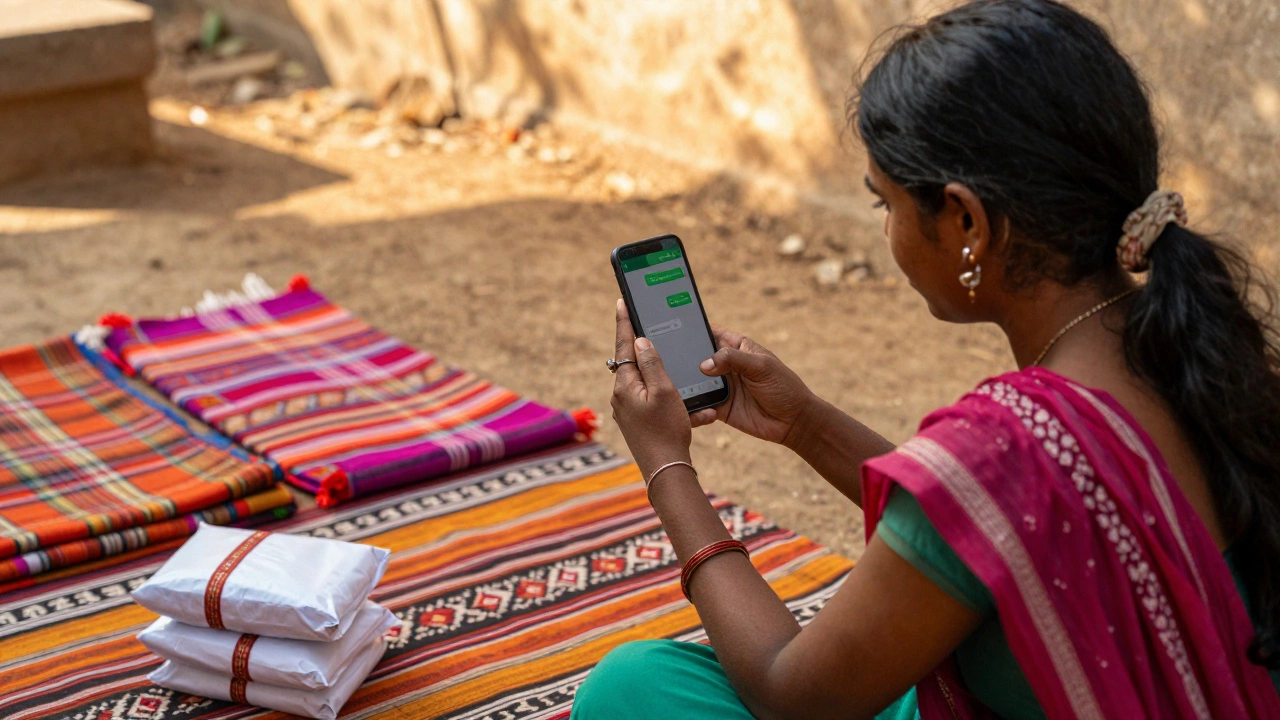
Think about it: a woman in Bhopal starts selling handwoven sarees on Amazon or Meesho. She doesn’t need a storefront. She doesn’t need a team of 10. She needs a phone, a good camera, and a WhatsApp group. Her profit margin? 50-70%. That’s not a side hustle. That’s a full-time business that scales to lakhs per month.
Compare that to traditional retail. A small grocery store in Jaipur might make ₹20,000 a month after rent, electricity, and staff. An e-commerce seller with 500 orders a month at ₹500 profit per order? That’s ₹2.5 lakh. No rent. No footfall pressure. No inventory sitting in a warehouse for months.
The Numbers Don’t Lie
Here’s what the data says about e-commerce’s dominance:
- Amazon India and Flipkart together processed over 2.1 billion orders in 2024.
- Meesho, a social commerce platform, added 15 million new sellers in 2024-most of them women from Tier 2 and Tier 3 cities.
- Shopify-powered stores in India grew by 320% in 2024, with average monthly revenue of ₹1.2 lakh per store.
- Over 60% of new e-commerce sellers started with under ₹10,000 in investment.
That’s the power of low entry cost and high leverage. You don’t need a degree. You don’t need a loan. You just need to find a product people want, take a photo, and post it.
What Makes E-Commerce Different From Other Businesses?
Let’s compare e-commerce to other popular "profitable" options in India:
| Business Type | Startup Cost | Time to Profit | Scalability | Monthly Profit Potential |
|---|---|---|---|---|
| E-commerce (dropshipping/local sourcing) | ₹5,000-₹50,000 | 2-8 weeks | High (can scale to national reach) | ₹50,000-₹50 lakh+ |
| Franchise (food or retail) | ₹10 lakh-₹50 lakh | 6-12 months | Medium (location-bound) | ₹1-₹5 lakh |
| Digital Marketing Agency | ₹10,000-₹50,000 | 3-6 months | High | ₹2-₹20 lakh |
| Food Delivery Service (cloud kitchen) | ₹5-₹15 lakh | 4-8 months | Medium | ₹3-₹10 lakh |
| Local Service (plumbing, electrical) | ₹20,000-₹1 lakh | 1-3 months | Low (time-for-money) | ₹30,000-₹1.5 lakh |
Notice the gap? E-commerce wins on cost, speed, and ceiling. A digital marketing agency might earn more per client, but it’s limited by how many hours you can work. A cloud kitchen needs a kitchen, a delivery partner, and permits. E-commerce? You can run it from your bedroom, on your phone, and still hit ₹10 lakh a month if you pick the right niche.
The Winning Niches in 2025
Not all e-commerce is equal. Some niches are exploding. Others are saturated. Here’s what’s actually working right now:
- Traditional wear-handloom, block-printed fabrics, regional embroidery. Demand is up 120% since 2023.
- Home and kitchen gadgets-air fryers, smart rice cookers, silicone molds. 70% of buyers are women aged 25-45.
- Beauty and personal care-Ayurvedic oils, herbal shampoos, organic soaps. 80% of sales come from repeat customers.
- DIY and craft kits-origami, candle-making, terrarium kits. Huge on Instagram and WhatsApp.
- Second-hand premium goods-luxury watches, designer bags, electronics. Resale market hit ₹35,000 crore in 2024.
One seller in Coimbatore started selling hand-carved wooden toys on Etsy and Meesho. She didn’t have a website. She didn’t run ads. She posted 3 videos a week on WhatsApp. In 10 months, she hit ₹8 lakh in monthly sales. Her secret? She didn’t compete on price. She sold stories-each toy came with a note about the artisan who made it.
Why Other "Top" Businesses Fall Short
People often say "franchising" or "food delivery" is the best business. But here’s the truth: franchising locks you into rigid systems. You pay 8-12% of revenue as royalty. You can’t change the menu. You can’t adjust pricing. You’re stuck.
Food delivery? You need permits, a kitchen, delivery staff, and you’re at the mercy of Swiggy and Zomato’s 30% commission. One bad review and your sales drop 60% overnight.
Service businesses like plumbing or tutoring? They trade time for money. You can’t scale without hiring. And hiring means payroll, training, and overhead.
E-commerce? You can automate 80% of it. Order fulfillment? Use a 3PL warehouse. Customer service? Use WhatsApp bots. Marketing? Run TikTok ads for ₹200 a day. You’re not selling your time-you’re selling a product that works while you sleep.
How to Start Your E-Commerce Business in 2025
You don’t need to be tech-savvy. You don’t need a big budget. Here’s how real people are doing it:
- Find a product you like or have access to (family craft, local supplier, wholesale market).
- Take 5 clear photos. Use natural light. No filters.
- Create a WhatsApp Business profile. Add your product images and prices.
- Post in 3 local Facebook groups. Join 5 Meesho seller communities.
- Run a ₹500 ad on Instagram targeting women aged 28-45 in your state.
- When you get your first order, deliver it personally. Ask for a photo review.
- Use that review to post on your WhatsApp status. Repeat.
That’s it. No website. No app. No coding. Just product + trust + consistency.

Real Risks-and How to Avoid Them
Yes, e-commerce has risks:
- Product returns-Start with low-return items. Avoid electronics unless you’re certified.
- Platform fees-Don’t rely only on Amazon. Build your own WhatsApp or Instagram store too.
- Copycats-Add your own branding. Even a simple logo on the packaging makes you stand out.
- Payment delays-Use UPI. Avoid cash-on-delivery unless you’re in a trusted area.
The biggest risk? Waiting too long to start. Most people spend months researching, comparing platforms, watching YouTube tutorials. They never launch. Meanwhile, someone else is already making ₹2 lakh a month.
The Bottom Line
India’s No. 1 business isn’t a company. It’s a mindset: sell something people want, directly to them, with minimal overhead. E-commerce is the most accessible, scalable, and profitable path right now. It doesn’t matter if you’re in a village or a metro. If you have a product, a phone, and the will to try, you can build something real.
Forget chasing "big names." The real winners in 2025 aren’t the ones with the biggest offices. They’re the ones with the smallest budgets and the biggest hustle.
Is e-commerce really the most profitable business in India?
Yes, based on 2024-2025 data, e-commerce offers the highest return on investment for most individuals. With low startup costs, high scalability, and growing rural demand, it outperforms franchises, food services, and local retail in profit potential per rupee spent.
Can I start an e-commerce business with no money?
You can start with under ₹5,000. Use products you already own or source from local wholesalers. Sell via WhatsApp and Instagram. No need for inventory upfront-use dropshipping or pre-orders. Many sellers made their first ₹10,000 in their first month without spending a rupee on ads.
What’s the easiest product to sell in India right now?
Ayurvedic skincare, handloom accessories, and kitchen gadgets are the easiest to sell. They have high perceived value, low return rates, and strong emotional appeal. Products tied to tradition, health, or convenience sell best in 2025.
Do I need GST to sell online?
If your annual turnover exceeds ₹20 lakh (₹10 lakh for special category states), you must register for GST. But if you’re just starting and making under ₹1.5 lakh/month, you can operate without GST until you hit the limit. Many small sellers begin this way.
Which platform is best for beginners: Amazon, Meesho, or Instagram?
Start with Meesho or Instagram. Meesho has zero listing fees and handles logistics for you. Instagram lets you build a brand and keep 100% of profits. Amazon is harder for beginners-you need product images, barcodes, and strict compliance. Use Amazon later, once you have traction.
How long does it take to make ₹1 lakh/month in e-commerce?
With consistent effort, most sellers hit ₹1 lakh/month in 4-8 months. The key isn’t luck-it’s volume. If you sell 200 items a month at ₹500 profit each, you’re at ₹1 lakh. That’s just 7 sales a day. Many do it by posting 3 times a week on WhatsApp and replying to every message.
What to Do Next
Don’t wait for the "perfect" product. Don’t wait for the "perfect" time. Start with what you have. Take a photo. Post it. Talk to five people. Get one order. Then do it again.
The Indian economy isn’t waiting for big investors. It’s being built by millions of small sellers-just like you.
