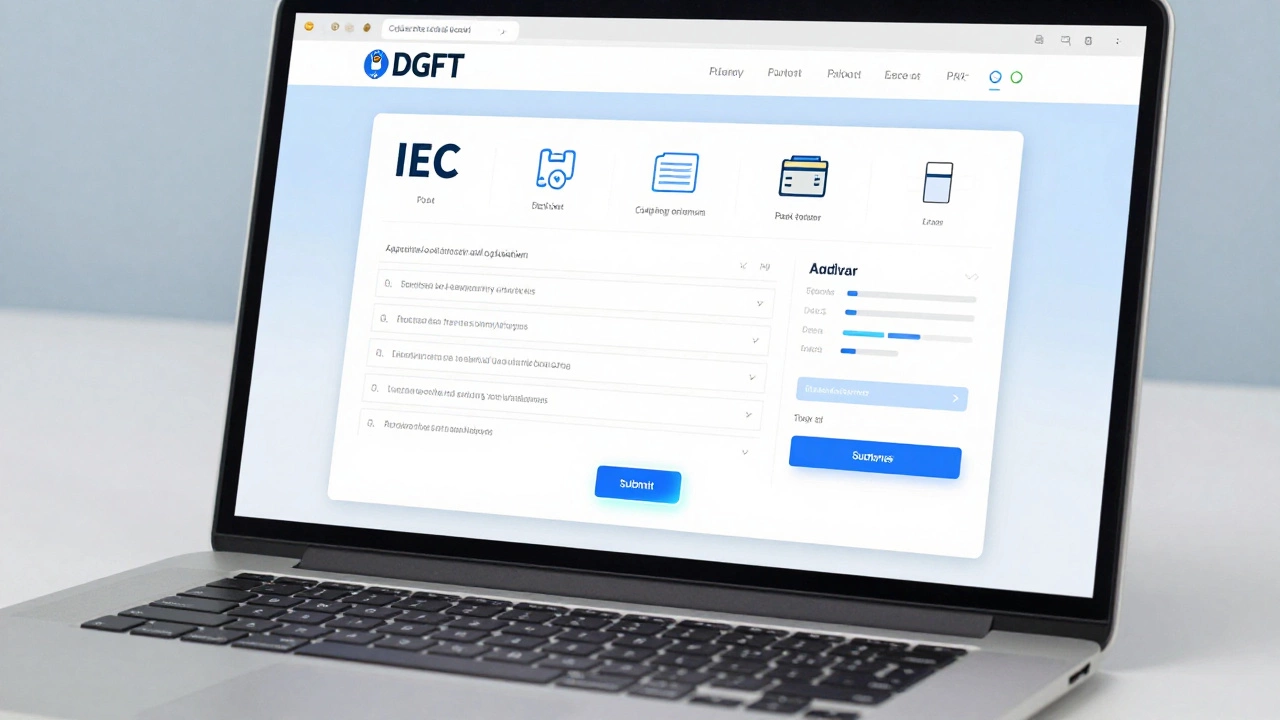
Export Cost Estimator for Indian Exporters
Estimate your export costs based on shipment details. Remember: The IEC code is free and valid for life.
Enter your shipment details to see estimated costs.
Note: The IEC code is free. All costs include potential documentation, inspection, and compliance fees based on your shipment details.
Getting an export license in India isn’t about paying a big fee upfront-it’s about understanding what you actually need to pay for, and what’s free. Many new exporters think they’re buying a license like a permit to drive, but that’s not how it works. In India, the main requirement isn’t a license you buy-it’s an IEC code, or Import-Export Code. And here’s the truth: getting that IEC code costs nothing. Zero rupees. No application fee. No hidden charges. The government doesn’t charge you to register as an exporter.
What Is the IEC Code, Really?
The IEC code is a 10-digit number issued by the Directorate General of Foreign Trade (DGFT), under the Ministry of Commerce. It’s your official ID as an exporter or importer in India. Without it, you can’t clear goods through customs, receive foreign payments, or claim export incentives. Think of it like your business’s passport for international trade.
It’s not a license you renew every year. Once you get it, it’s valid for life. You don’t need to pay again. You don’t need to reapply unless you change your business structure or legal name. That’s why so many small exporters get confused-they hear "license" and assume there’s a recurring cost. There isn’t.
What Costs Actually Come With Exporting?
Even though the IEC is free, exporting isn’t. You’ll still face real expenses. Here’s what you actually pay for:
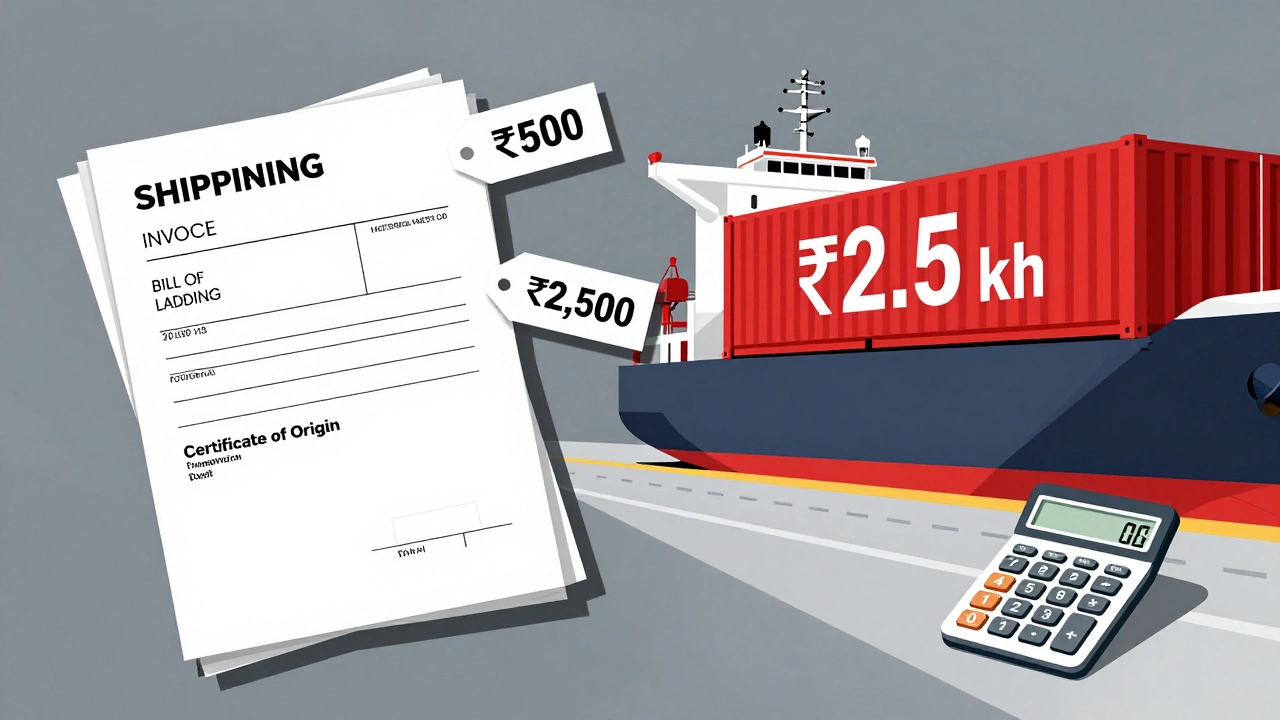
- Documentation fees: Getting your commercial invoice, packing list, bill of lading, or certificate of origin printed and certified can cost anywhere from ₹500 to ₹2,500 per shipment, depending on the port and agent you use.
- Export inspection charges: If your product falls under mandatory inspection (like food, pharmaceuticals, or textiles), you’ll need to pay the relevant agency-like APEDA for agricultural goods or FSSAI for food. These fees range from ₹1,000 to ₹10,000 per inspection, depending on the product and volume.
- Shipping and logistics: This is usually the biggest cost. A 20-foot container from Mumbai to Los Angeles can run ₹2.5 lakh to ₹4 lakh, depending on fuel prices and demand. Smaller shipments via air freight cost ₹300-₹800 per kg.
- Bank charges: When you receive foreign payments, your bank will charge for wire transfers, currency conversion, and compliance checks. Expect 0.5% to 2% per transaction.
- Export incentives: You might qualify for benefits like the RoDTEP scheme (Remission of Duties and Taxes on Exported Products), which refunds taxes you paid on inputs. But claiming these requires paperwork, and some exporters hire consultants to file them-those services cost ₹5,000 to ₹20,000 per claim.
Who Needs an IEC? Who Doesn’t?
Not every small seller needs an IEC. If you’re selling on Amazon Global or eBay and using their fulfillment services, they often handle export documentation under their own IEC. Same goes for freelancers sending digital services overseas-no IEC needed unless you’re shipping physical goods.
But if you’re shipping products yourself-whether it’s handmade jewelry from Jaipur, software from Bengaluru, or spices from Kerala-you need an IEC. Even if you’re exporting just one container a year. The law doesn’t make exceptions for small volumes.

How to Get Your IEC Code (Step by Step)
It takes less than 3 days if you do it right. Here’s how:
- Go to dgft.gov.in and click on "IEC" under "Online Services".
- Log in with your Digilocker or Aadhaar-based credentials.
- Fill out Form IEC-1. You’ll need your PAN card, business address proof, and bank account details.
- Upload scanned copies of your PAN, bank statement, and identity proof.
- Submit. You’ll get an IEC number instantly via email. The physical certificate arrives by post in 2-3 days.
No agent needed. No payment portal. No third-party website asking for ₹2,000 to "process" your application. Those are scams. The DGFT portal is the only official source.
Common Mistakes Exporters Make
People waste time and money because they don’t know the basics. Here are the top three errors:
- Thinking you need a license from the Ministry of Commerce. You don’t. Only the IEC is required.
- Using a middleman to apply. Many consultants charge ₹5,000-₹10,000 to do what you can do yourself in 20 minutes. Save your money.
- Waiting until you have a buyer to apply. Apply for your IEC before you start talking to overseas clients. Some buyers won’t even negotiate until they see your IEC number.
What If You’re Exporting from a Small Town?
Location doesn’t matter. Whether you’re in Ludhiana, Coimbatore, or Guwahati, the process is the same. The DGFT portal works nationwide. You don’t need to visit a city office. Everything is online.
One exporter from Jharkhand told me he started selling handwoven textiles to Germany using his IEC. He didn’t have a warehouse. He just packed orders from his home and used a local courier who handled customs paperwork. He saved ₹15,000 in agent fees just by applying himself.
Is There a Hidden Cost? What About Compliance?
There’s no license fee, but compliance isn’t optional. You must follow product-specific rules. For example:
- Exporting ayurvedic products? You need an AYUSH license.
- Selling electronics? You need BIS certification.
- Shipping textiles? You need a test report from a notified lab.
These certifications cost money-₹5,000 to ₹50,000 depending on the product. But they’re not part of the IEC. They’re separate regulatory requirements. Confusing them with an "export license" is a common mistake.
What About Export Incentives? Do They Cost Anything?
They don’t cost you anything to claim. In fact, they put money back in your pocket. The RoDTEP scheme refunds central and state taxes you paid on raw materials. For example, if you paid ₹1.2 lakh in GST on cotton fabric used to make shirts for export, you might get back ₹80,000 under RoDTEP.
But you need to file the correct shipping documents and link them to your IEC in the ICEGATE portal. Some exporters hire chartered accountants for this. Others learn it themselves. Either way, the incentive itself is free.
Final Reality Check
Let’s say you want to export 100 handcrafted bags to the U.S. Your total cost? The IEC? Free. The shipping? ₹1.8 lakh. The product packaging? ₹15,000. The bank charges? ₹3,600. The inspection fee? ₹2,000. Total? Around ₹2 lakh. That’s your real cost-not some imaginary license fee.
Stop looking for a price tag on a license that doesn’t exist. Focus on what actually matters: product quality, shipping reliability, and documentation accuracy. The government gives you the IEC for free. Now it’s up to you to use it right.
Is there any annual fee to renew the IEC code in India?
No, the IEC code is issued for life and does not require renewal or annual payment. Once you receive it, it remains active unless your business is dissolved or your PAN is deactivated.
Can I apply for an IEC code without a GST number?
Yes, you can apply for an IEC without a GST number. The only mandatory documents are your PAN card, proof of business address, and bank account details. However, if your turnover exceeds ₹20 lakh, you’ll need GST registration for domestic transactions.
Do I need a separate license for each product I export?
No, one IEC covers all products you export. But certain products like pharmaceuticals, food, or electronics require additional certifications (e.g., FSSAI, BIS, AYUSH) before they can be shipped. These are product-specific, not license-based.
Can a sole proprietor apply for an IEC?
Yes, sole proprietors can apply for an IEC using their personal PAN card. The application is submitted under the individual’s name, and the business name can be added as a trade name if desired.
What happens if I don’t get an IEC and still export goods?
Without an IEC, your goods will be held at customs and cannot be cleared for export. Banks will also refuse to process foreign payments. You may face penalties, delays, and loss of buyer trust. It’s not illegal to export without one, but it’s practically impossible.
