
Startup Funding Calculator
Calculate Your Funding Needs
Estimated Funding Needs
Starting a business in India isn’t just about having a great idea-it’s about getting the money to turn that idea into something real. Every founder asks the same question: how to raise money for a startup? The answer isn’t a single bank loan or a government grant. It’s a mix of timing, relationships, and strategy-and India’s ecosystem has changed dramatically in the last five years.
Know Your Funding Stage
Not all money is the same. The type of funding you chase depends on where your startup stands. If you’re just sketching your idea on a napkin, you don’t need a $5 million Series A. You need $200,000 to build a prototype, hire your first engineer, and talk to 100 potential customers.
Here’s how Indian startups typically move through funding stages:
- Pre-seed: $50,000-$250,000. Comes from founders’ savings, family, friends, or small angel investors.
- Seed: $250,000-$2 million. Usually from angel networks, early-stage VCs, or incubators like Y Combinator India or Axilor.
- Series A: $2 million-$15 million. Comes from venture capital firms like Sequoia Capital India, Accel, or SAIF Partners.
- Series B+: $15 million+. For scaling operations, entering new markets, or building tech infrastructure.
Most Indian startups fail not because their product is bad-but because they raise the wrong kind of money too early. Don’t chase big investors until you have traction: 5,000 active users, $50,000 in monthly revenue, or a clear path to profitability.
Use Your Network First
In India, relationships still matter more than pitch decks. You don’t need to cold-email 200 VCs. You need to find three people who already believe in you.
Start with your personal network: friends who work in tech, former colleagues who left corporates to start their own companies, professors who’ve advised startups. These people aren’t just sources of cash-they’re your first validators. If they’re willing to invest $10,000, it signals to others that your idea has legs.
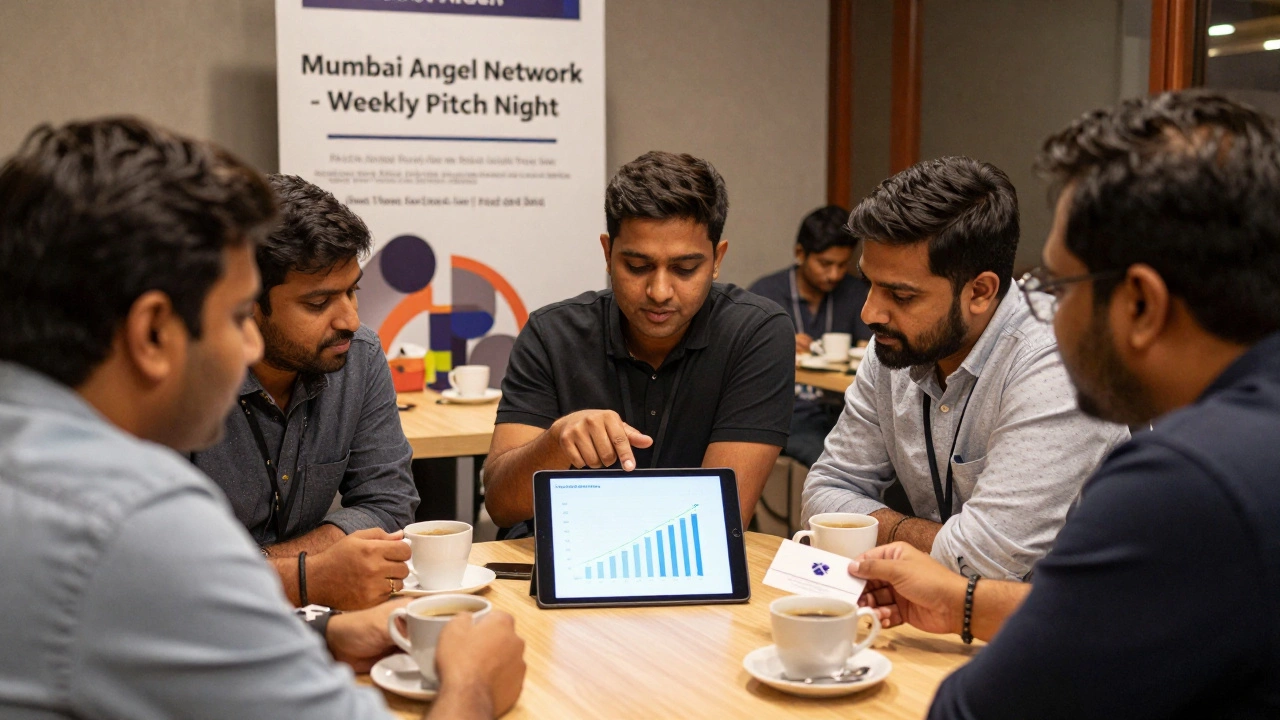
Join local founder communities. Cities like Bangalore, Delhi, and Hyderabad have weekly founder meetups. Attend them. Ask questions. Don’t pitch. Listen. Many early-stage investors in India-like those in the Mumbai Angel Network or Delhi Angels-only invest after meeting founders in person multiple times.
Apply to Incubators and Accelerators
Incubators don’t just give you money-they give you structure. In India, top programs like NSRCEL (IIM Bangalore), T-Hub (Hyderabad), and NASSCOM’s 10,000 Startups offer:
- $25,000-$100,000 in seed funding
- Office space for 6-12 months
- Access to mentors from Flipkart, Ola, and Paytm
- Introduction to investor networks
They don’t take equity in exchange for free advice. They take 5-10% equity for funding and support. That’s a fair trade if you’re early-stage. Many Indian unicorns-like Zomato and Swiggy-went through accelerators before raising big rounds.
Apply early. Most programs have two intakes per year. Deadlines are strict. Your application needs: a 1-page problem statement, proof you’ve tested your idea (even with 10 users), and a clear ask: "We need $150,000 to hire two engineers and launch our MVP in three months."
Angel Investors Are Your Best Bet
Forget Silicon Valley-style venture capital. In India, angel investors are the real engine of early funding. These are retired CEOs, ex-CTOs of big tech firms, or successful entrepreneurs who still want to be involved.
They don’t want 30-page pitch decks. They want:
- A 5-minute demo
- Proof you’ve spent your own money
- A clear exit path
Some top Indian angels: Rajan Anandan (ex-Google India), Vijay Shekhar Sharma (Paytm founder), and Kunal Bahl (Snapdeal). They often invest $50,000-$500,000 per startup.
How to find them? Look for people who’ve invested in similar startups. Check Crunchbase. Search "Indian startup angel investor" + your industry. Then reach out with a short LinkedIn message: "I’m building [your startup]. I noticed you backed [similar company]. Would you be open to a 15-minute chat? I’d love your feedback."
Government Schemes Are Underused
India offers more than 200 schemes for startups. Most founders don’t know about them-or think they’re too bureaucratic.
The Startup India Initiative gives you:
- Self-certification (no inspections for 3 years)
- Income tax exemption for 3 years
- Easy patent filing (80% fee reduction)
- Access to a $10 billion fund-of-funds for VC backing
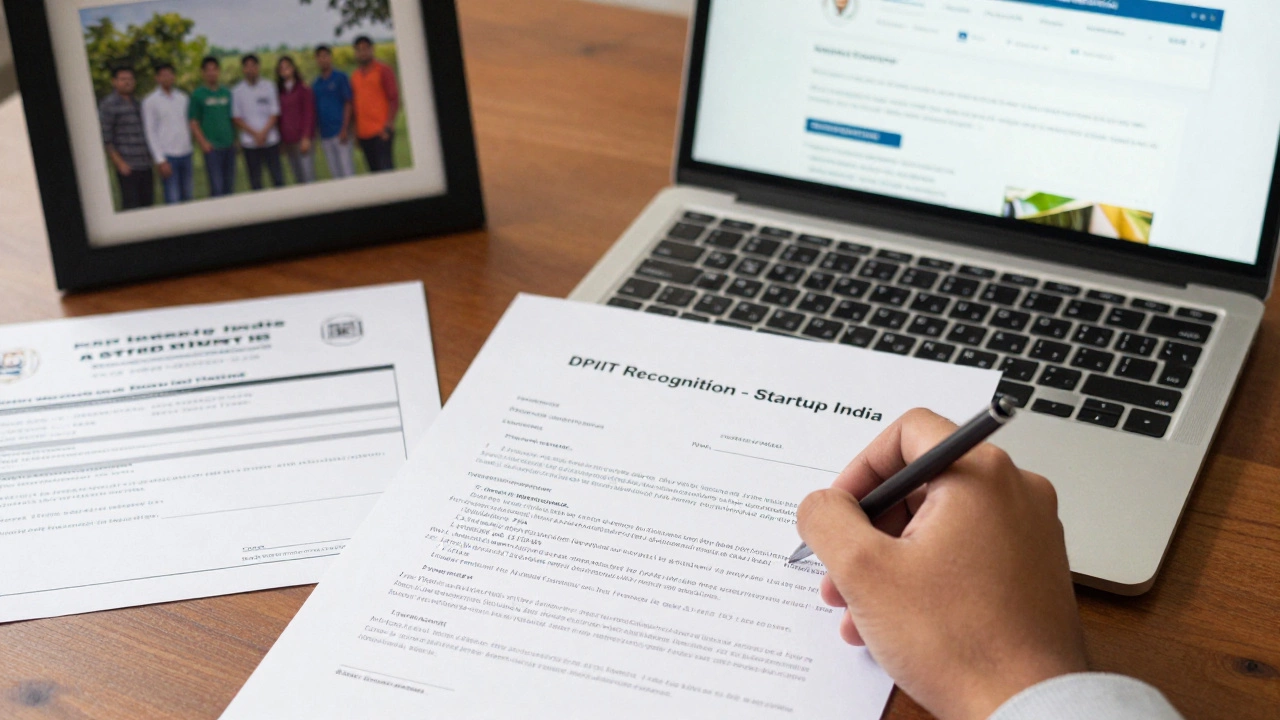
It’s not free money. But it lowers your cost of doing business. Register on the Startup India portal. Get your DPIIT recognition. It takes 15 days. Once approved, you can apply for grants like the Technology Development Board or Atal Innovation Mission grants up to ₹50 lakh ($60,000) for tech prototypes.
Many founders miss this because they think, "I need investors, not paperwork." But in India, government recognition makes you more attractive to private investors. It’s a signal you’re serious.
Don’t Ignore Revenue-Based Financing
Traditional investors want equity. But what if you don’t want to give up ownership? Revenue-based financing (RBF) is growing fast in India.
Here’s how it works: You raise $200,000. You repay 3-5% of monthly revenue until you pay back 1.5x-3x the amount. No equity. No board seat. No pressure to exit.
Platforms like Dezerv, Capillary, and Lendingkart offer RBF for SaaS, e-commerce, and B2B startups. If you’re making $20,000/month in revenue, you can get $100,000 in 72 hours.
This works best for startups with predictable, recurring revenue. If your customers pay monthly-like a subscription app or a B2B SaaS tool-RBF is a quiet, powerful option.
What Investors Really Look For
Indian investors aren’t looking for the next TikTok. They’re looking for:
- Market size: Are you solving a problem for 10 million+ people? If your target is "urban millennials," that’s too vague. Say: "We’re helping 3 million small grocery stores digitize inventory."
- Team: Do you have tech, sales, and operations covered? Investors back teams more than ideas. If you’re a solo founder, show you’ve hired a co-founder or key advisor.
- Progress: What have you built? How many users? How much revenue? Even $1,000/month proves demand.
- Scalability: Can you grow without hiring 50 people? If your model needs 10 sales reps per 1,000 customers, it won’t scale in India. Look for automated, tech-driven models.
One founder in Pune raised $1.2 million because she showed 12 months of financials with 40% month-over-month growth. She didn’t have a fancy pitch deck. She had data.
Common Mistakes to Avoid
- Asking for $5 million too early. Most Indian startups raise under $1 million in their first round.
- Ignoring legal structure. If you’re not a registered company (Pvt Ltd), investors won’t take you seriously.
- Using personal loans. Credit card debt or bank loans for startups? That’s risky. Use equity, not debt, in early stages.
- Chasing prestige. Don’t take money from a VC just because they’re famous. If they don’t understand your market, they’ll be a liability.
- Waiting for "perfect timing." There’s no perfect time. Start fundraising when you have 10 paying customers-not 100.
Where to Look for Investors in India
Here are the top 5 places to connect with Indian startup investors:
- AngelList India - Filter by sector, location, and checkmark "Open to Indian startups."
- LinkedIn - Search "Angel Investor India" + your industry. Message 5 people a week.
- Startup India Portal - Lists accredited investors and government-backed funds.
- Founder Institute India - Monthly pitch nights with investors.
- VC firm websites - Visit Sequoia, Accel, or Blume Ventures. Look for "Apply for Funding" links.
Don’t wait for an invite. Reach out. Send a 100-word email: "I’m building [startup]. We’ve got [X users] and [Y revenue]. We’re raising $500,000 to expand to 5 new cities. Can we schedule a 10-minute call?"
Final Tip: Start Now
The best time to raise money was 6 months ago. The second-best time is today. Don’t wait until you "have more traction." You’ll never feel ready.
Build your pitch deck. Talk to 5 founders who’ve raised. Update your LinkedIn. Register on Startup India. Reach out to 3 angels this week. Fundraising isn’t magic. It’s a series of small, consistent actions.
India has more startup funding than ever before. In 2025, Indian startups raised over $12 billion. But 80% of that went to 100 companies. The rest? It’s still out there-for the founders who show up, ask, and follow up.
Can I raise money without a tech product?
Yes. Many Indian startups in agriculture, logistics, and retail raised funding with just a service model. What matters is proof of demand. If you’ve signed 20 paying clients, even without an app, investors will take you seriously. Focus on revenue, not tech.
How much equity should I give up in the seed round?
In India, most seed rounds involve 10-20% equity. Giving up more than 25% is risky-you’ll lose control too early. If an investor demands 30%, walk away. You can always raise more later. Better to keep 70% and grow slower than lose control and burn out.
Do I need a registered company to raise money?
Yes. Investors won’t write a check to an individual. You need a Private Limited (Pvt Ltd) company. Registering takes 7-10 days in India through the Ministry of Corporate Affairs. Cost: under ₹10,000. It’s non-negotiable.
Are there funding options for rural startups?
Absolutely. The Government of India’s Atal Innovation Mission and NITI Aayog run specific funds for startups in Tier 2 and Tier 3 cities. Programs like "Startup Mahila" support women-led rural ventures. Look for grants up to ₹10 lakh ($12,000) for agritech, clean energy, and rural edtech startups.
How long does fundraising take in India?
From first meeting to closing, it usually takes 3-6 months. Angel rounds can close in 60 days. Series A takes longer-investors do deep due diligence. Start early. Don’t wait until your cash runs out. Keep talking to investors even when you’re not raising.
