
7 P's Marketing Mix Audit Tool
Rate how well your current business strategy aligns with each of the 7 P's. Use this diagnostic tool to pinpoint where you need to focus your efforts.
You probably learned about the 4 P's in school. Product, Price, Place, Promotion. It’s a classic framework, and for decades, it worked fine. But if you’re running a business today-especially one that relies on digital interactions or service delivery-the old model leaves out half the picture. You might have a great Product, but if your staff is rude or your website crashes during checkout, that product doesn’t matter.
The modern standard is the 7 P's of Marketing. This expanded framework adds three critical layers: People, Process, and Physical Evidence. These additions account for the human element and the tangible proof customers need before they trust you with their money. If you ignore them, you’re essentially flying blind in a crowded market.
Why the Old Model Isn't Enough Anymore
Think about the last time you bought something online. Did you just look at the price tag? Probably not. You checked reviews (Physical Evidence), saw how fast support replied to your chat question (Process), and maybe felt a connection to the brand voice (People). The original 4 P's were designed for a manufacturing-heavy economy where goods moved from factory to shelf. Today, services and digital experiences dominate. In Australia alone, the service sector accounts for over 70% of GDP. When you sell an intangible experience, the "how" becomes as important as the "what."
Using the 7 P's isn't just academic box-ticking. It’s a diagnostic tool. When sales dip, you can isolate which P is failing. Is it your pricing structure? Your customer service script? Your physical store layout? By breaking your strategy into these seven distinct buckets, you stop guessing and start fixing specific leaks in your revenue funnel.
Product: Solving a Real Problem
Product is the foundation, but don't confuse the item with the solution. Customers don't buy drills; they buy holes. They don't buy insurance; they buy peace of mind. Your product definition needs to cover features, quality levels, design options, and branding. But more importantly, it needs to address the user journey. Does your software integrate with existing tools? Is your coffee shop’s seating comfortable enough for laptop work?
A common mistake is feature dumping. You list every capability your product has, hoping something sticks. Instead, focus on the core value proposition. For example, if you run a local landscaping business in Sydney, your "product" isn't just grass cutting. It includes the reliability of showing up on time, the cleanliness of the job site after you leave, and the aesthetic result. If you fail on the clean-up, you’ve failed on the product, regardless of how sharp the blades were.
Price: Value vs. Cost
Pricing is the only P that generates revenue; the others generate costs. Yet, many businesses set prices based on what competitors charge or by adding a arbitrary markup to their costs. This is dangerous. Pricing Strategy must reflect perceived value. If you charge $50 for a consultation that saves a client $5,000, you are underpricing. If you charge $500 for a quick tip, you are overpricing unless you justify the premium through expertise or exclusivity.
Consider psychological pricing tactics. Ending prices in .99 works for retail, but B2B clients often prefer round numbers because they signal stability and simplicity. Also, think about discounts carefully. Constantly discounting trains customers to wait for sales, eroding your brand equity. If you offer a subscription model, clarify the cancellation policy upfront. Hidden fees destroy trust faster than high prices do.
Place: Accessibility and Convenience
Place used to mean physical distribution. Now, it means omnichannel presence. Where does your customer encounter you? For an e-commerce brand, "place" includes your website, Amazon storefront, Instagram Shop, and potentially pop-up events. For a service provider, it might mean your Zoom link, your office location, or even your availability hours.
The key metric here is friction. How hard is it for someone to buy from you? If your checkout process requires creating an account, filling out ten fields, and verifying email, you’re losing people who just wanted to click "buy." Reduce steps. Offer multiple payment gateways like PayPal or Afterpay, which are huge in the Australian market. Ensure your mobile experience is flawless, as over 60% of web traffic now comes from smartphones. If your "place" is inconvenient, your superior product won’t save you.
Promotion: Telling the Right Story
Promotion is communication. It’s how you let the world know you exist. This includes advertising, public relations, social media, and email marketing. But promotion fails when it’s disconnected from the other P's. You can’t promote a luxury service using cheap-looking graphics. You can’t use urgent, flash-sale language for a high-consideration B2B software product.
Content marketing is a powerful form of promotion that builds authority. Instead of just saying "we are experts," show it. Write case studies. Share behind-the-scenes videos. Answer common questions in blog posts. This approach lowers the barrier to entry because it provides value before asking for a sale. Remember, promotion isn't just about shouting louder; it's about speaking the same language as your target audience. Use their pain points, their slang, and their priorities in your copy.
People: The Human Touchpoint
This is where the 7 P's diverge sharply from the 4 P's. People refers to everyone involved in delivering your service or product. This includes your employees, freelancers, and even your customers interacting with each other. In a service business, your staff *is* the brand. If your barista is grumpy, your coffee tastes bad, no matter how good the beans are.
Training and culture matter immensely. Do your team members understand the brand values? Are they empowered to solve problems without escalating to a manager? Invest in soft skills training. Technical skills can be taught, but empathy and attitude are harder to instill later. Also, consider the role of user-generated content. Happy customers talking about you are part of your "people" strategy. Encourage reviews and referrals. They act as social proof, which is often more persuasive than any ad you create.
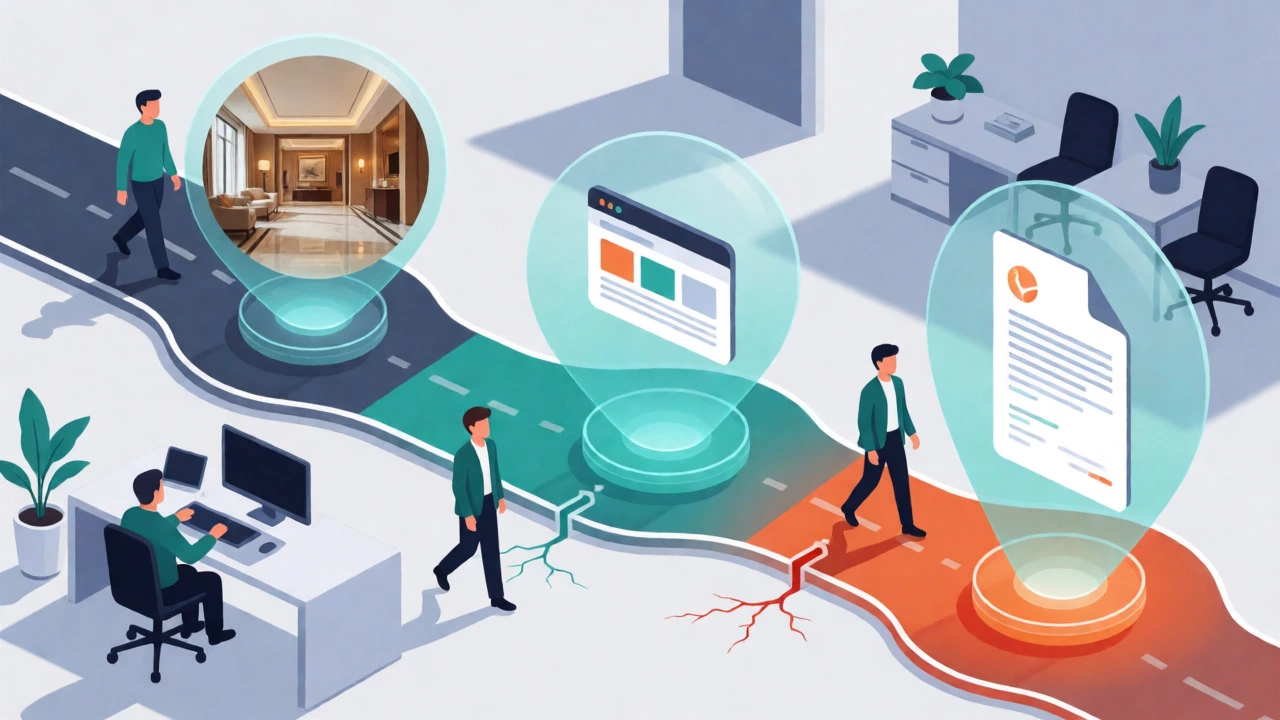
Process: The Customer Journey Map
Process defines the flow of activities that lead to a successful transaction. It’s the end-to-end experience from awareness to post-purchase support. A broken process creates frustration. Imagine ordering food online, paying immediately, but then waiting 45 minutes for a confirmation email that never arrives. That’s a process failure.
Map out your customer journey step-by-step. Identify bottlenecks. Can you automate invoicing? Can you send proactive updates when there’s a delay? Efficiency isn't just about saving time; it’s about reducing anxiety. Clear communication throughout the process builds trust. If you’re a consultant, define your onboarding clearly. Tell the client exactly what happens in week one, two, and three. Ambiguity kills momentum. Standardize your processes so every customer gets the same high-quality experience, regardless of which employee handles their account.

Physical Evidence: Tangible Proof
Since services are intangible, customers need clues to judge quality before buying. This is Physical Evidence. For a hotel, it’s the cleanliness of the lobby and the scent of fresh linen. For a digital agency, it’s the professionalism of your proposal document and the speed of your website loading. For a SaaS company, it’s the free trial interface and the clarity of your help documentation.
Control every touchpoint where evidence is generated. Your packaging matters, even for digital products (think of a well-designed welcome PDF). Your email signature should look professional. Your office decor influences perception if clients visit. Even the tone of your automated responses serves as physical evidence of your brand’s personality. If everything looks polished and consistent, customers assume the service will be too. Inconsistency raises red flags.
| Element | Focus in 4 P's | Focus in 7 P's | Impact on Service Businesses |
|---|---|---|---|
| Product | Features & Specs | Solution & Experience | High - Defines value proposition |
| Price | Cost + Margin | Perceived Value | Medium - Influences conversion |
| Place | Distribution Channels | Omnichannel Accessibility | High - Critical for convenience |
| Promotion | Advertising Reach | Engagement & Content | Medium - Builds awareness |
| People | Not Included | Staff Culture & Training | Critical - Direct impact on retention |
| Process | Not Included | Journey Efficiency | Critical - Reduces churn |
| Physical Evidence | Not Included | Tangible Cues | High - Builds initial trust |
Putting It All Together: A Practical Example
Let’s say you run a boutique fitness studio. Here’s how the 7 P's apply:
- Product: Not just exercise classes, but community, health tracking, and personalized coaching.
- Price: Tiered memberships offering flexibility, positioned against big-box gyms as a premium, results-driven alternative.
- Place: Online booking app, accessible location near public transport, and virtual class options for remote members.
- Promotion: Social media showcasing member transformations, local partnerships with health cafes, and referral incentives.
- People: Certified trainers who remember names, front-desk staff who greet members warmly, and a supportive member community.
- Process: Seamless check-in via QR code, clear class schedules, prompt feedback on performance metrics.
- Physical Evidence: Clean equipment, motivational signage, branded water bottles, and a welcoming changing room environment.
If you neglect the "People" aspect and hire untrained instructors, the "Product" suffers. If your "Process" for booking is glitchy, potential members abandon the sign-up. Each P supports the others. They are interconnected gears in your business machine.
Common Pitfalls to Avoid
One major trap is treating the 7 P's as separate silos. Marketing doesn't happen in isolation. Your finance team sets prices, your operations team manages processes, and HR hires people. All these departments feed into the marketing mix. Communication between teams is vital. If sales promises fast delivery but logistics can’t keep up, you break the "Process" promise.
Another pitfall is trying to optimize all seven simultaneously without prioritizing. Start with the ones causing the most friction. Are complaints mostly about slow response times? Fix "Process." Are people confused about what you actually do? Refine your "Promotion" and "Product" messaging. Audit your current state honestly. Ask your customers why they chose you and why they left. Their answers will point directly to which P needs attention.
Are the 7 P's relevant for small businesses?
Absolutely. Small businesses often compete on service and personalization, which are covered by People, Process, and Physical Evidence. Ignoring these areas gives larger competitors an advantage in consistency and trust.
How often should I review my marketing mix?
Review your 7 P's quarterly or whenever you launch a new product line. Market conditions, competitor moves, and customer feedback change rapidly, especially in digital sectors. Regular audits ensure your strategy stays aligned with reality.
Which P is most important for startups?
While all are critical, 'Product' and 'People' are usually paramount for early-stage startups. You need a viable solution (Product) and a team capable of iterating quickly and serving early adopters well (People). Without these, the other P's cannot function effectively.
Can I skip Physical Evidence if I'm fully digital?
No. Digital businesses still rely on physical evidence cues. This includes website design, load speed, security badges, professional email formatting, and the quality of your downloadable assets. These elements serve as tangible proof of competence and reliability.
How do I measure the success of my Process?
Track metrics like customer effort score, average resolution time, cart abandonment rate, and repeat purchase frequency. If customers find it easy to buy and get help, your process is working. High friction indicates a breakdown in this area.
