
Business Plan Financial Calculator
Financial Projections Calculator
Enter your business's financial details to estimate startup costs, monthly expenses, and when you'll break even. Based on the article's guidance on realistic financial projections.
Financial Results
Writing a business plan isn’t about filling out a fancy template. It’s about answering one simple question: Can this business actually work? If you’re starting a small business in Sydney, applying for a loan, or pitching to investors, your business plan is your roadmap - not a document to collect dust in a drawer.
Start with the executive summary (even if you write it last)
The executive summary is the first thing anyone reads. But here’s the trick: write it after you’ve finished the rest. It’s a snapshot - no more than one page - of what your business does, who it serves, and why it will succeed.
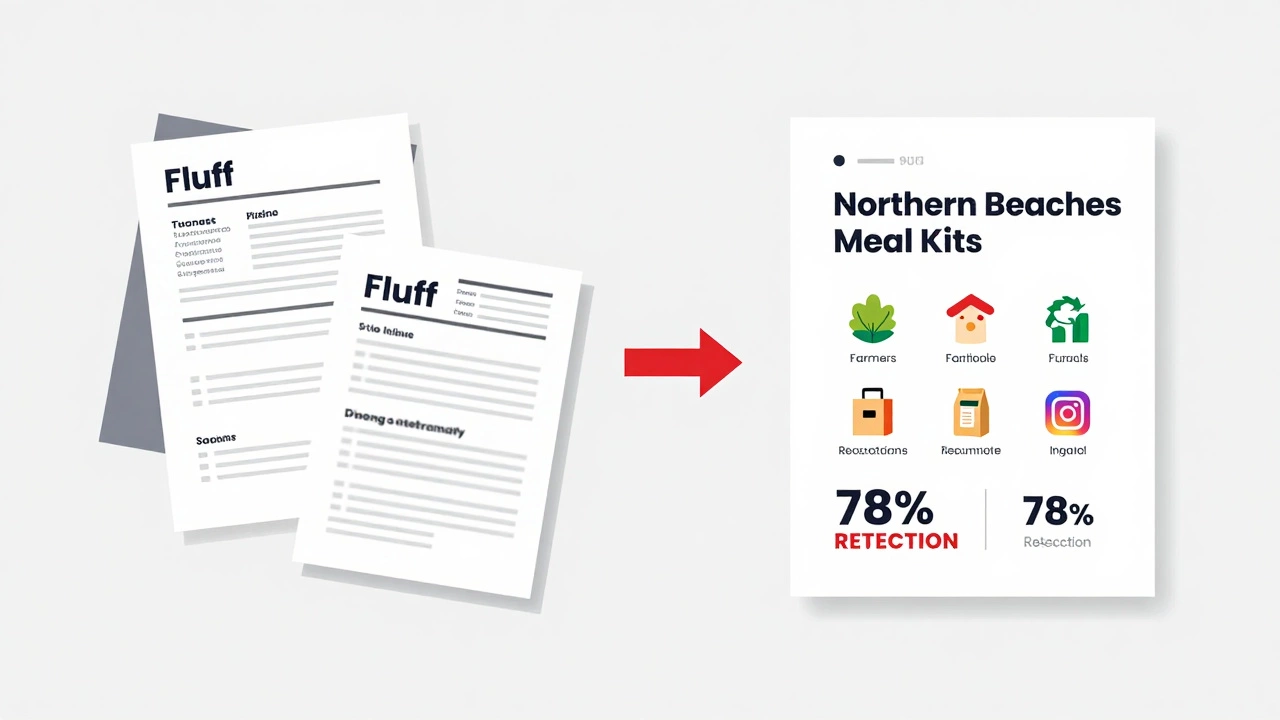
Don’t waste space saying you’re "the next big thing." Instead, say: "We sell organic meal kits to busy parents in Sydney’s northern suburbs, with a 78% customer retention rate after six months. We’re projecting $420,000 in revenue in Year 1 by targeting Facebook and Instagram ads to families with kids under 12."
That’s specific. That’s believable. That’s what investors and banks look for.
Describe your business and what makes it different
What’s your business called? Where is it based? What problem are you solving? Keep it simple. Then explain why you’re not just another option.
For example: "Most meal kit services in Australia deliver nationwide. We focus only on the Northern Beaches and Inner North. That lets us use local farmers, reduce delivery emissions, and offer fresher ingredients. We’re not trying to be everything to everyone. We’re trying to be the best for a small group that values sustainability and speed."
This isn’t fluff. This is your competitive edge. Investors want to know you understand your niche - not just the market.
Know your customers inside out
Don’t say "our target market is women aged 25-45." That’s lazy. Who are they really? What do they care about? What do they hate about current options?
Here’s what works: "Our customers are working parents in Sydney who order groceries online but feel guilty about plastic packaging. They check reviews before buying. They’ll pay 15% more for compostable packaging and a 2-hour delivery window. They find us through Instagram ads and Google searches for 'organic meal kits Sydney'."
Include real data if you have it. If you’ve run surveys, use the numbers. If you haven’t, say so - but explain how you’ll find out. For example: "We’ll survey 200 local parents via Facebook groups in Month 1 to validate pricing and delivery preferences."
Explain how you’ll sell your product or service
How will people find you? Will you use Instagram? Google Ads? Word of mouth? Local markets? Your sales strategy needs to be as clear as your product.
Don’t say "we’ll use social media." Say: "We’ll run targeted Facebook and Instagram ads at $15 per lead, aiming for 300 new customers in the first 90 days. We’ll offer a $10 discount for first-time buyers who sign up through our website. We’ll partner with three local parenting influencers for monthly posts."
Track everything. If you can’t measure it, you can’t improve it. Investors want to see you’ve thought about the cost of getting each customer - not just how much you’ll charge them.
Map out your operations
Who’s doing what? Where will you store inventory? How will you deliver orders? What tools will you use?
For a food business: "We’ll use a commercial kitchen in St. Leonards under a shared-use agreement. Orders will be packed daily from 6 AM to 10 AM. Deliveries happen Tuesday and Friday between 3 PM and 6 PM using a local courier service with refrigerated vans. We use Square for payments and Shopify for online orders."
For a service business: "I’ll handle client consultations and strategy. A part-time admin assistant will schedule appointments and send invoices via Xero. We use Calendly for bookings and Zoom for calls."
Don’t skip this. If your operations are messy, your business will collapse - no matter how great your idea is.
Break down your financials - honestly
This is where most people freeze. But you don’t need to be an accountant. You need to be realistic.
Include three things:
- Startup costs: What do you need to spend before you make your first dollar? (Equipment, licenses, website, initial inventory, legal fees.)
- Monthly expenses: Rent, utilities, payroll, marketing, software, insurance.
- Revenue projections: How many customers will you get each month? What’s the average sale? When will you break even?
Example: "Startup costs: $18,500 (kitchen rental deposit, packaging, website, initial ingredients). Monthly expenses: $5,200. Average order value: $48. Target: 120 orders/month by Month 4. Break-even: Month 6."
If you’re asking for a loan or investment, include a 12-month cash flow forecast. Show when you’ll run out of money - and how you’ll fix it.
Be honest about risks - and how you’ll handle them
Every business has risks. Pretending they don’t exist makes you look naive. Addressing them shows you’re prepared.
Examples:
- "If a major supplier raises prices, we’ll switch to two backup suppliers we’ve already contacted."
- "If delivery delays happen, we’ll offer a free meal on the next order as compensation."
- "If sales are slower than expected, we’ll reduce marketing spend and focus on referral discounts from existing customers."
Don’t just list risks. Show you’ve thought of a fix for each one. That’s what separates serious founders from dreamers.
Use a simple template - but don’t copy-paste
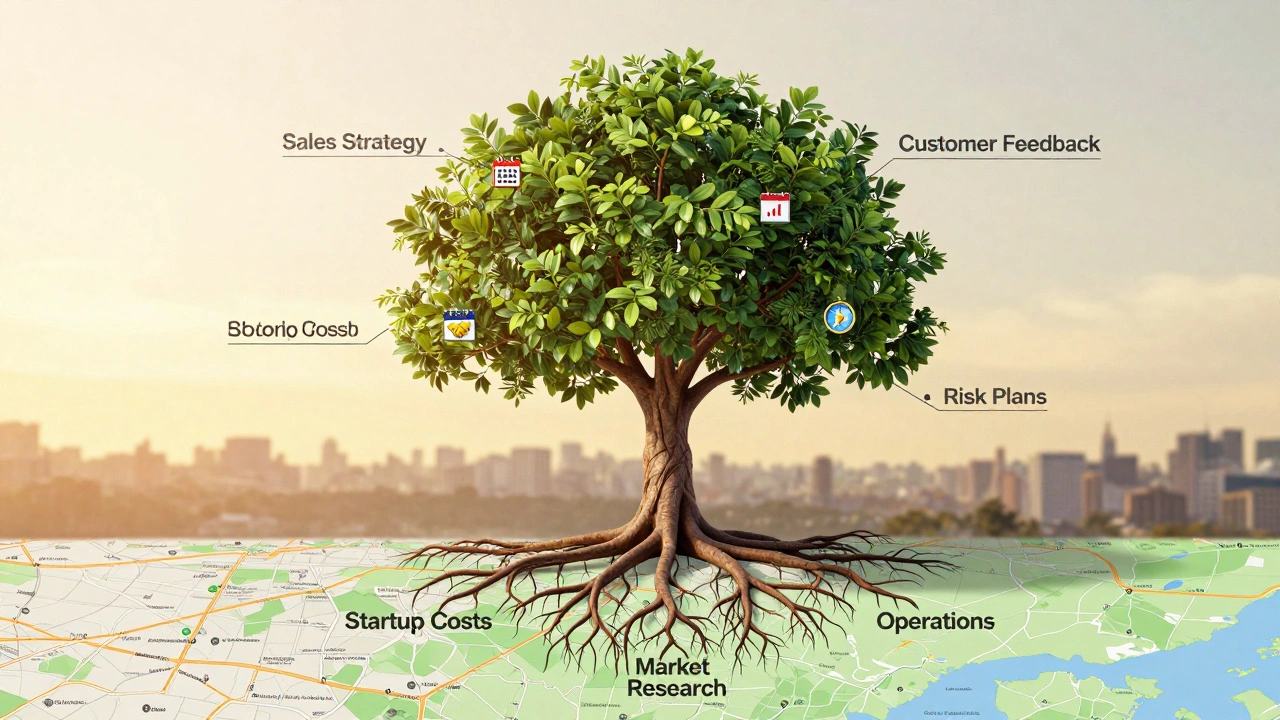
You don’t need a 50-page document. The best business plans are clear, concise, and focused. Use a basic structure:
- Executive Summary
- Business Description
- Market Analysis
- Organization and Management
- Products or Services
- Sales and Marketing Strategy
- Operations Plan
- Financial Projections
- Risk Analysis
There are free templates from Small Business Administration and Business.gov.au. Use them as a guide - not a script. Fill them with your real numbers, your real customers, your real plan.
Update it - every 6 months
Your business plan isn’t a one-time task. It’s a living document. When you hit your first milestone - or miss it - update the plan.
Did you get 200 customers instead of 100? Add that. Did a competitor drop their price? Adjust your marketing strategy. Did you realize your kitchen setup is too slow? Change your operations section.
A business plan that never changes is a plan that’s already outdated.
Final tip: Show, don’t tell
Instead of saying "we have a strong team," say: "Our founder has 8 years in food logistics. Our head chef worked at three Sydney restaurants with Michelin-starred menus. Our marketing lead grew a local coffee brand to $1.2M in sales in 18 months."
Instead of saying "we’re passionate," say: "We tested 17 meal recipes with 60 local families. The top three recipes got 92% approval. We’re launching with those."
Specifics build trust. Vague claims build doubt.
Your business plan doesn’t need to be perfect. It just needs to be real. If you can answer the questions above with clear, honest answers - you’re already ahead of 80% of the people who start businesses.
Do I need a business plan if I’m not asking for a loan?
Yes. Even if you’re self-funding, a business plan keeps you focused. It forces you to think through costs, customers, and risks before you spend your own money. Most small businesses fail because they run out of cash - not because their idea was bad. A plan helps you avoid that.
How long should a business plan be?
One to 15 pages. If it’s longer than 20 pages, you’re probably overcomplicating it. Investors and banks want clarity, not clutter. A 5-page plan with real numbers beats a 30-page plan full of fluff every time.
Can I use a free business plan template?
Absolutely. Free templates from Business.gov.au, SBA, or SCORE are great starting points. But don’t just copy them. Fill them with your own data. A template is a framework - not a finished product. Your real value is in the details only you know.
What’s the most common mistake people make?
Overestimating sales and underestimating costs. Too many people assume they’ll get 100 customers in Month 1. Reality? It takes time. Be conservative. If you hit your numbers early, celebrate. If you don’t, you’ll have a buffer.
Should I include my personal financial info?
Only if you’re applying for a loan or asking for investment. Lenders want to know if you can cover personal expenses while the business gets off the ground. If you’re self-funding, focus on the business’s finances. Your personal credit score matters - but your business plan matters more.
Next steps: Start small, then scale
Don’t wait for the perfect plan. Start with a one-page version. Write down your idea, your target customer, your first 3 costs, and your first 3 sales channels. Test it. Talk to 5 potential customers. See if they’d pay. Adjust. Then build from there.
The best business plans aren’t written in boardrooms. They’re tested on the ground - in markets, on social media, in conversations with real people. Your plan is just the first step. The real work starts after you hit "save."
